
12×12 Microfiber Cloths: Commercial Size Selection Guide
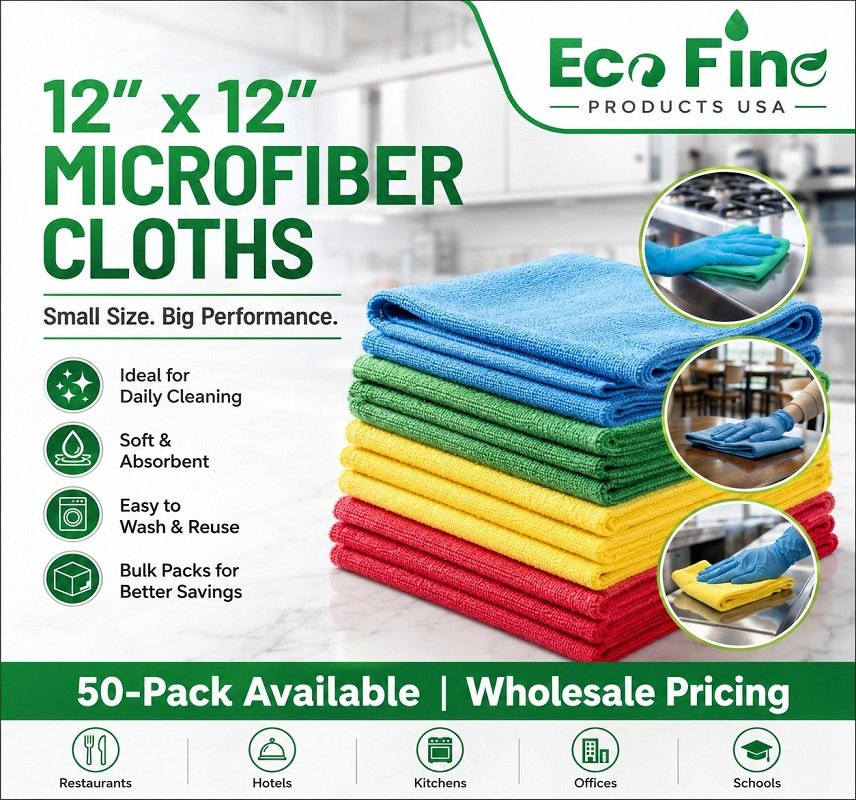
A 12×12 microfiber cloth is a compact format worth assessing when a cleaning assignment involves small surfaces, close control or limited storage. Size alone does not establish cleaning quality, absorbency or compatibility. For commercial teams in Texas and across the USA, the useful question is whether the selected cloth supports the actual task and the approved cleaning method.
Identify the Work Before Choosing the Size
List the surfaces, soil and access conditions that staff encounter. A small desk accessory, a fixture and a large countertop place different demands on the same cloth. Record where hands must reach around edges and where a larger wiping area would be useful. Keep restricted materials and sensitive finishes on a separate approval list. A compact cloth can be convenient without being suitable for every object in the room.
Understand the Dimensions
Twelve by twelve inches describes a nominal square format. Confirm the finished dimensions and any stated tolerance for the selected item. Do not confuse inches with centimeters when comparing catalog entries or purchase orders. A twelve-inch side is approximately 30.5 centimeters, but a metric catalog name may represent its own specified dimensions. Use the supplier’s actual specification rather than treating every nearby size as an exact equivalent.
Assess Folding and Hand Control
Ask operators to fold the cloth as they would during normal work. Check whether the resulting face is comfortable to grip and whether unused surfaces remain accessible. A folding demonstration is more useful than assuming that every worker uses identical technique. Observe coverage, control around small features and how staff recognize a loaded face.
Compare Fabric as Well as Format
Two cloths with the same dimensions can have different textures, edges and fabric mass. Review the selected construction and care instructions before comparing results. GSM measures fabric mass per square meter; it does not state the finished cloth’s cleaning capacity. Avoid assigning an unconfirmed GSM value to a product because it looks similar to another listing. Compare complete configurations under the same working conditions.
Keep Task Assignments Clear
Use approved cloth assignments for each area. A color chart can communicate local rules when colors, labels and staff training agree. Color itself does not clean a cloth or make it safe to move between tasks. Keep used items separate from ready stock, and define where uncertain or damaged cloths go. In regulated settings, follow the applicable site procedures rather than using a general product guide as an infection-control instruction.
Run a Small Representative Trial
Choose a repeatable task that represents ordinary work, then record the product, preparation, surface and acceptance check. Include the normal permitted care cycle before approving repeat supply. Ask more than one operator to comment on handling when possible. Record limitations as well as favorable observations. If a cloth requires extra passes, leaves visible residue or feels awkward, investigate the whole method before concluding that size is the cause.
Plan Stock Around Actual Use
Count ready cloths separately from those being used, washed, dried or held for inspection. Use observed change points and care turnaround to estimate requirements. A compact cloth may fit a storage bin conveniently, but storage capacity should not determine how long it remains in service during a task.
Use a Different Cloth Where the Task Requires It
A small terry cloth and a dedicated glass cloth address different requirements. Review the microfiber cloth range when a task needs another texture or size. Select alternatives through the same approval process instead of stretching one format across unrelated work. Record which configuration was accepted for each assignment so that purchasing can repeat the decision accurately.
Record Practical Limits
Keep trial notes specific enough to guide the next purchase. If the compact format works for fixtures but becomes inconvenient on larger surfaces, record both findings. Do not remove a useful alternative simply to reduce the number of items on the shelf. Ask staff where the approved cloth is stored and how they request replacements. Check that labels still match the current assignment after a delivery.
Maintain the Approved Configuration
Follow the selected product’s care instructions and any approved chemical guidance. Inspect cloths after care and before returning them to ready stock. Keep the original item reference on orders and receiving records so a similarly sized substitute is not accepted automatically. Review the decision when surfaces, chemicals or work patterns change.
Selection and Supply Checklist
| Check | Requirement |
|---|---|
| Task | Identify the approved work and surface |
| Configuration | Confirm the selected item and dimensions |
| Care | Check the permitted process before approval |
| Order | State the item reference and package unit |
Frequently Asked Questions
What does 12×12 mean for a microfiber cloth?
It describes a nominal twelve-inch square format. Confirm the selected item’s actual dimensions and any stated tolerance before comparing it with another size.
Is a smaller cloth better for every business task?
No. Assess the actual surface, soil, access and handling requirements. A compact format may suit one assignment while a different size works better elsewhere.
Does the size tell me the GSM?
No. GSM is fabric mass per square meter and must be confirmed for the selected product. Dimensions alone do not identify construction or performance.
Can the same cloth be used for glass and general wiping?
Approve those tasks separately. Glass appearance may require another construction or method, and cloth assignments should follow the surface guidance and local procedure.
How should staff decide when to change cloths?
Use the approved task procedure and actual condition. The cloth’s dimensions or number of folds do not establish a universal change interval.
How many cloths should I order?
Estimate ready stock from observed work, change points and care turnaround. Confirm the supplier’s package unit before translating that requirement into an order.
Can color establish whether a cloth is clean?
No. Color can communicate a local task assignment, but readiness depends on the approved care, inspection and storage process.
What should a repeat order identify?
State the accepted item reference, dimensions, construction, color and quantity unit. Review proposed substitutions before distributing them to operators.