
OEM/ODM Microfiber Services
Private Label Development
Start with a Defined Product Requirement
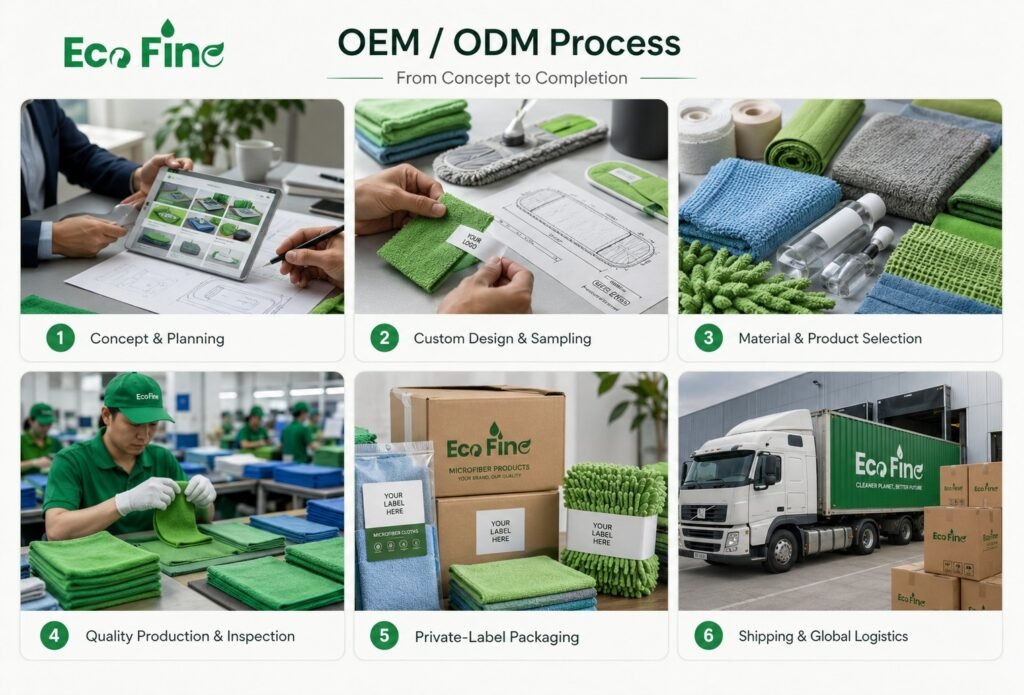
EcoFine’s OEM/ODM microfiber services support business buyers developing cleaning textiles under their own brand. Discuss a defined product specification or request help shaping a proposal for commercial applications.
Begin with the intended use, required quantity and branding direction. Product options, minimum quantities, samples and lead times depend on the proposed project and require confirmation. A clear brief helps connect your brand requirements with the goods being quoted.
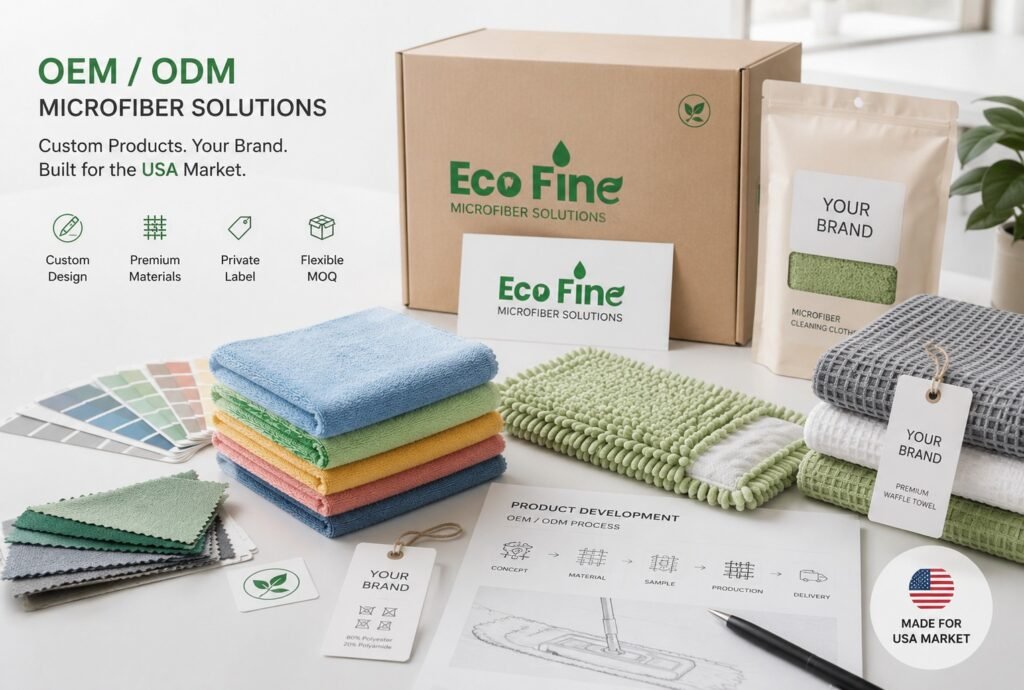
Original Equipment Manufacturing (OEM)
Provide your defined specification for review. Confirm materials, construction, branding and acceptance requirements for the proposed order.
Original Design Manufacturing (ODM)
Describe your product concept and intended application. Discuss development options, samples and the specification needed to evaluate a proposed product.
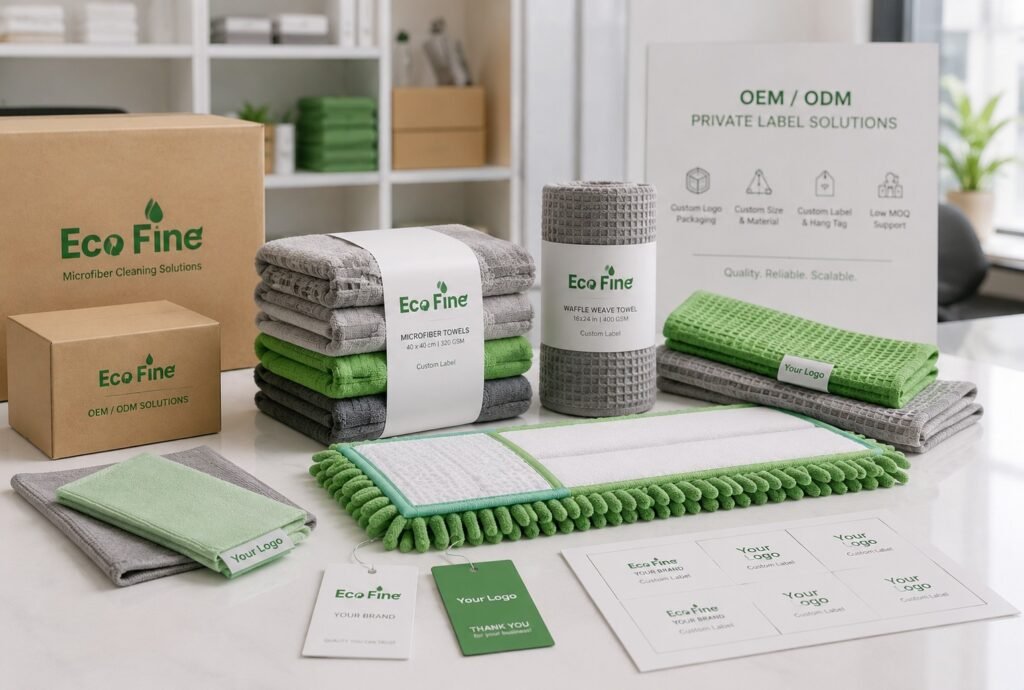
Write a Product Brief
Specify the cleaning task, intended customer and essential product details. Include dimensions, fiber composition, construction, weight or GSM where relevant, color and edge treatment. Identify any required tolerance or acceptance criteria.
Distinguish confirmed requirements from ideas still being evaluated. A reference photograph can communicate appearance, but it does not replace measurable specifications. Identify the approved version when submitting revisions so samples, artwork and quotations refer to the same proposed item.
Cloths and Towels
Discuss general wiping cloths, waffle weaves, glass cloths and vehicle-drying towels as separate applications. Confirm the size, construction and care requirements for each. A higher GSM alone does not establish suitability for every surface or cleaning method.
Use the 16 × 16 terry cloth and 1400 GSM drying towel listings as product references, then identify the differences requested for your branded project. Existing catalog details do not automatically transfer to a custom version.
Mop Pads and Floor-Care Requirements
For a mop pad project, describe the intended frame, attachment method and working dimensions. Include backing, edge, color and packaging requirements. Evaluate retention and handling with the exact equipment proposed for use.
A pad designed for damp floor maintenance has a different role from a dusting head. Keep those uses distinct in your brief and confirm approved care instructions before building a laundry or replacement plan.
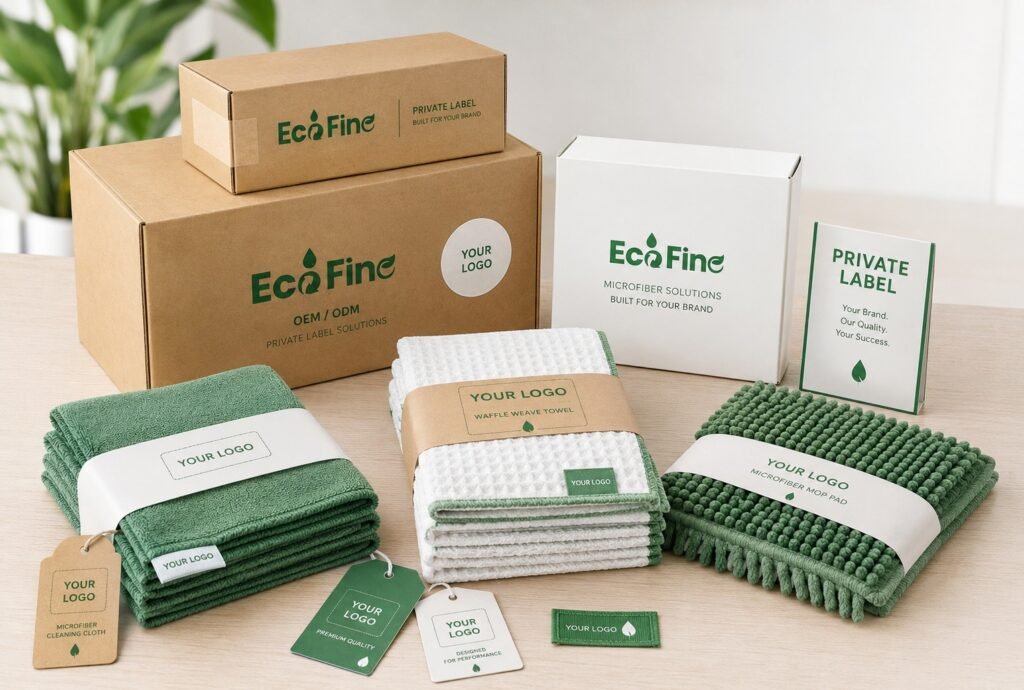
Branding and Packaging Checklist
| Element | Details to provide |
|---|---|
| Product label | Artwork, position and required information |
| Pack format | Pieces per pack and packaging material |
| Carton | Quantity, markings and handling requirements |
| Identification | SKU, barcode and version references |
Confirm available options rather than assuming every branding method works with every product. Review artwork dimensions and the final presentation alongside the item specification.
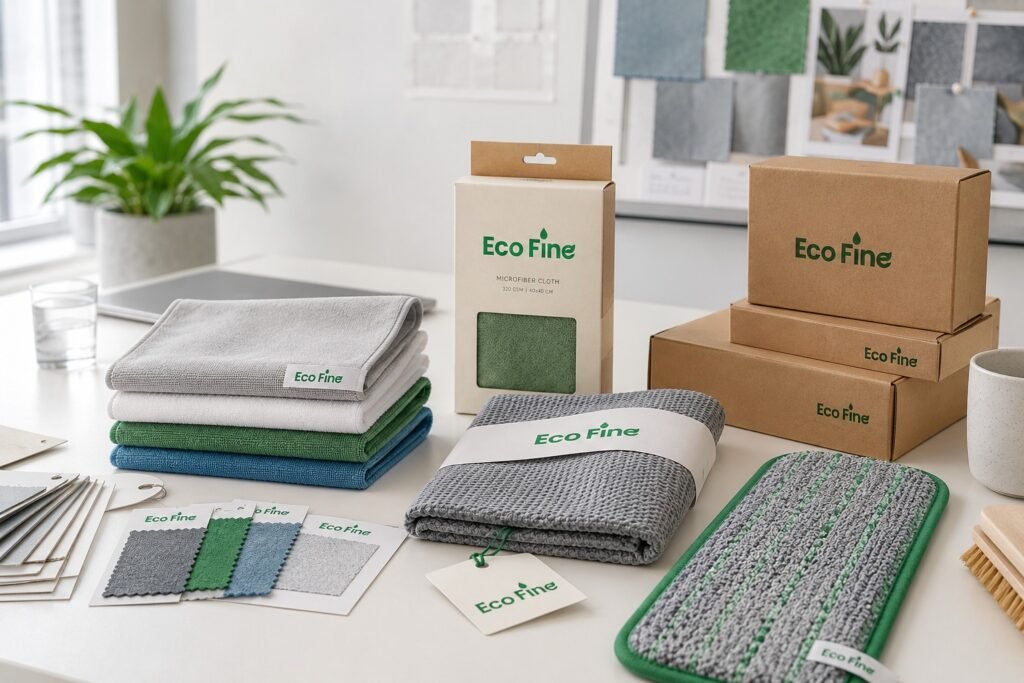
Evaluate Samples Against the Brief
Assess the sample under representative operating conditions. Record the cleaning method, equipment, surface and care process used for evaluation. Compare dimensions, workmanship, labeling and packaging with the proposed specification.
State whether the sample is approved, rejected or awaiting changes. Keep the decision and revised requirements together. Sample approval should identify what was assessed; it does not establish an untested wash life, coverage figure or guaranteed performance saving.
Commercial Project Applications
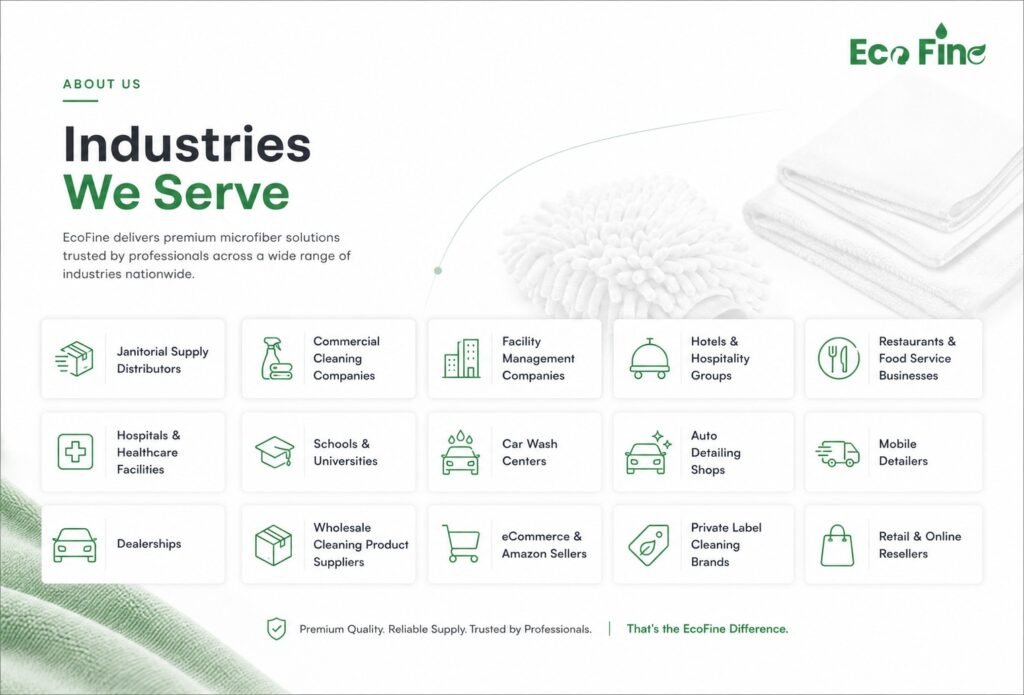
Private-label inquiries may come from janitorial distributors, facility suppliers, hospitality businesses, car-care brands and resellers. Describe the actual customer and use rather than relying only on an industry label.
For specialist facilities, identify the purchasing requirements that apply to the product. Do not infer a certification, antimicrobial property or regulatory approval from the intended market.
Keep Project Decisions Traceable
Review the proposed product, approved sample, artwork, pack quantity and delivery scope before placing the order. Make sure changes agreed during discussions appear in the final project documents.
For repeat supply, reference the approved configuration and identify any changes before production. Keep receiving checks tied to the same specification so discrepancies can be described using a product and version reference.
Plan Receiving and Reordering
Decide how the receiving team will identify the product and pack count. If several similar colors or sizes are included, make the item references clear on the proposed packaging documents. This helps separate a presentation issue from a difference in the cleaning textile itself.
For a launch involving multiple products, review each specification independently. A towel, cloth and mop pad may require different materials, branding positions and packaging methods. Keep a separate approval record for each item rather than treating a mixed collection as one specification.
Clarify the Quotation Scope
Ask whether the quotation includes sampling, labels, packaging and freight. Identify the quantity basis so individual pieces, packs and cartons are not confused. Provide the destination and required date when requesting delivery information.
Send a revised brief if your requirements change. Confirm how the revision affects the proposed goods and timing before accepting the updated project documents.
Use your approved sample and written brief together when checking the first delivered production batch.
Project Review
From Brief to Approved Order
Confirm the specification, sample, artwork and quotation before production.
Discuss your project with EcoFine.
Frequently Asked Questions
What is the difference between OEM and ODM?
OEM begins with your defined specification. ODM involves developing a suitable product proposal from your brief. Confirm the actual project scope with EcoFine.
Which products can I discuss for private label?
Inquire about microfiber cloths, towels, glass cloths, drying towels and mop pads. Available constructions and customization depend on the selected project.
Is there one minimum quantity for every product?
No universal minimum is stated here. Request confirmation for the product, branding method and packaging format you need.
Can I specify dimensions and fiber composition?
Include these requirements in the brief. Availability, tolerances and production feasibility need review before they become an approved specification.
Can labels and cartons carry my branding?
Submit the artwork and placement requirements for review. Confirm the available labeling and packaging options in the project quotation.
Should I approve a sample?
Where practical, evaluate and approve a representative sample against the written specification before committing to production.
Are lead times guaranteed by the website?
No. Confirm sampling, artwork approval, production and delivery timing for your particular order before making launch commitments.
How do I start a project discussion?
Send the product brief, quantities, branding requirements and delivery destination through the contact page or sales@ecofineproducts.com.