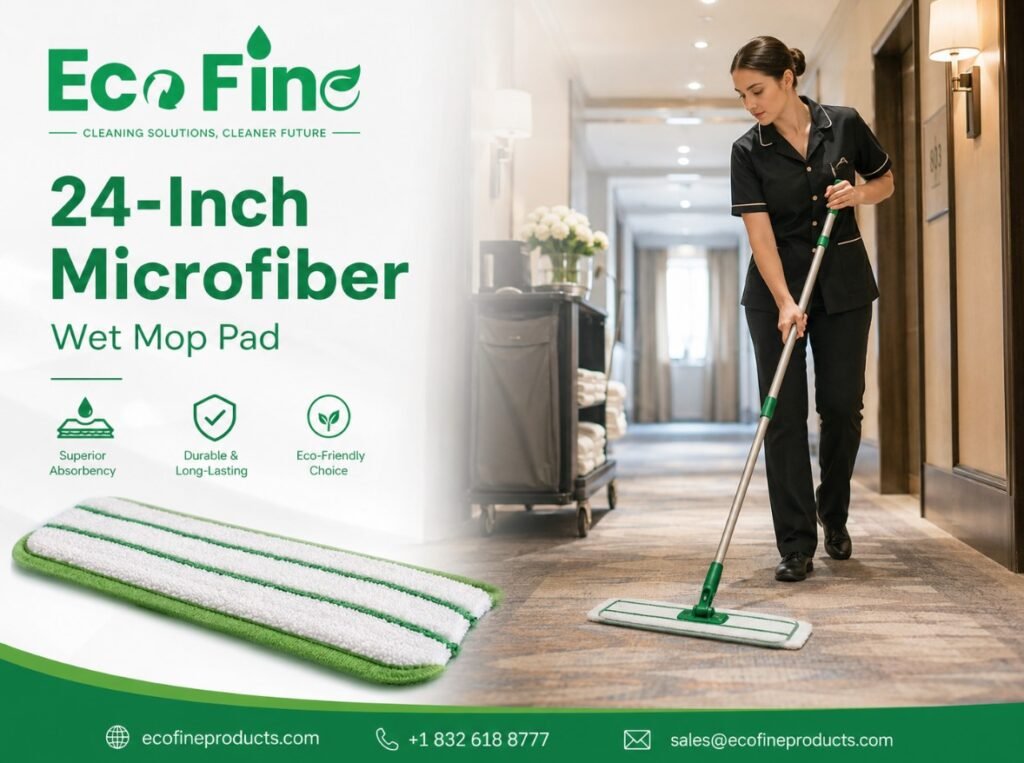
A 24-inch microfiber wet mop pad can be evaluated where a facility needs a balance between working width and frequent transitions. The correct order depends on the actual holder, floor procedure and route rather than a general promise of faster cleaning. This guide focuses on approving a replacement for mixed rooms and corridors. Compare the 24-inch microfiber pad with the intended equipment and record the configuration before placing a bulk order.
Walk the Transitions Between Spaces
Start at the storage point and follow the complete cleaning route. Note entrances, furniture, corners and changes in flooring, not just the open corridor. Record where the full holder can remain positioned and where another method is required. A compact room connected to a broad hallway can change the equipment choice even when total floor area is large. Ask the person normally assigned to the route to identify awkward movements during a representative trial.
Distinguish Pad Width From System Size
Confirm whether the listed dimension describes the pad, holder or nominal system. Measure the finished pad and compare its backing with the intended holder. The complete setup may include projecting parts that affect turning clearance. Ask for the supplier-approved combination and test the attachment during direction changes. Matching a width label alone is insufficient evidence of compatibility, particularly where the facility already owns several generations of flat-mop equipment.
Approve Surface and Solution Together
Review the flooring instructions and the cleaning product used on each part of the route. Confirm the pad’s permitted application and care requirements before introducing it across several surfaces. A microfiber construction does not establish suitability for every coating, chemical or moisture level. Record the approved preparation method in the trial instructions. If a route includes a surface requiring another procedure, make that boundary explicit so staff do not extend the sample approval beyond the work assessed.
Use a Repeatable Handling Trial
Assess the prepared pad on the intended holder with the normal operator. Check turning, attachment security, edge support and visible results. Include the normal pad-change and return procedure in the trial instead of timing only uninterrupted passes. Record repeated work and employee feedback. Compare any alternative under similar conditions, then repeat checks after approved care. These observations help identify a usable setup without converting nominal width into a guaranteed coverage or labor claim.
Plan Stock Around the Route
Count the pads needed to complete each scheduled assignment using the approved change rules. Include items in use, awaiting cleaning, drying and clean reserve. Review the time between collection and return, especially where laundry serves several locations. Keep used equipment separate from clean stock during transport and storage. Determine replacement quantities from these observations rather than assigning a fixed number of pads to every room or assuming one pack covers an entire shift.
Make the Order Description Unambiguous
Record actual dimensions, backing arrangement, edge construction, available color and the supplier item reference. Confirm the number supplied in each pack and carton for the selected order. State whether hardware is required and list it separately. Provide destination requirements and requested timing for confirmation.
Review Changes Before Accepting Stock
Request notification of substitutions affecting size, backing, construction or pack format. Compare any alternative with the approved holder and care requirements. Keep the accepted specification and sample notes available to receiving staff, who should resolve discrepancies before distributing replacements. Separate packaging changes from working-product changes in the record. A revised label may be administrative, while a different attachment can require a new equipment trial even if the product name remains familiar.
Revisit the Standard After Layout Changes
Furniture moves, room conversions and revised cleaning schedules can alter the usefulness of the original width decision. Ask operators to report new restrictions rather than compensating indefinitely with awkward repositioning. Review the route, stock and holder condition together. When changes are needed, update the specification and explain them to purchasing and relief staff. Send EcoFine the confirmed dimensions and order requirements when requesting the next supply arrangement.
Compare Alternatives Without Changing the Task
If another width is being considered, keep the surface, route and preparation method comparable during the assessment. Ask staff to record where each setup needs repositioning and how pad changes are handled. A different holder may introduce another variable, so document the complete configuration rather than naming only the pad width. Review the completed result as well as movement through the space. Keep any decision specific to the assigned route, and state where a second size remains approved instead of trying to describe one format as the best option for every room.
Specification and Use Checklist
| Check | Requirement |
|---|---|
| Finished size | Confirm actual pad dimensions |
| Backing | Match the approved holder |
| Care | Use product-specific instructions |
| Order units | Confirm pads, packs and cartons |
Frequently Asked Questions
Which part of a route should be assessed first?
Walk the transitions, turns and furnished areas as well as the open floor. Record where the complete holder can remain positioned.
Is the nominal size the complete system size?
Not necessarily. Confirm what the dimension describes, measure the finished pad and check the complete holder’s working clearances.
Can one approval cover every floor on a route?
Only where the relevant surface, solution and product requirements permit it. Record exceptions requiring another tool or procedure.
What should the handling trial include?
Include turns, pad changes, return handling and visible results, then repeat checks after approved care. Compare alternatives under similar conditions.
How much clean stock is needed?
Use actual route consumption and care turnaround. Count pads in service, awaiting cleaning, drying and ready reserve separately.
What belongs in a bulk order description?
Include the approved dimensions, backing, construction, color, item reference and quantity units. Identify any required hardware as separate components.
When should a substitution be reviewed?
Review changes affecting the working pad, attachment or care requirements before acceptance. A familiar product name does not establish equivalence.
When should the width decision be revisited?
Reassess after furniture moves, route changes or recurring handling problems. Review actual clearances, equipment condition and operator feedback together.