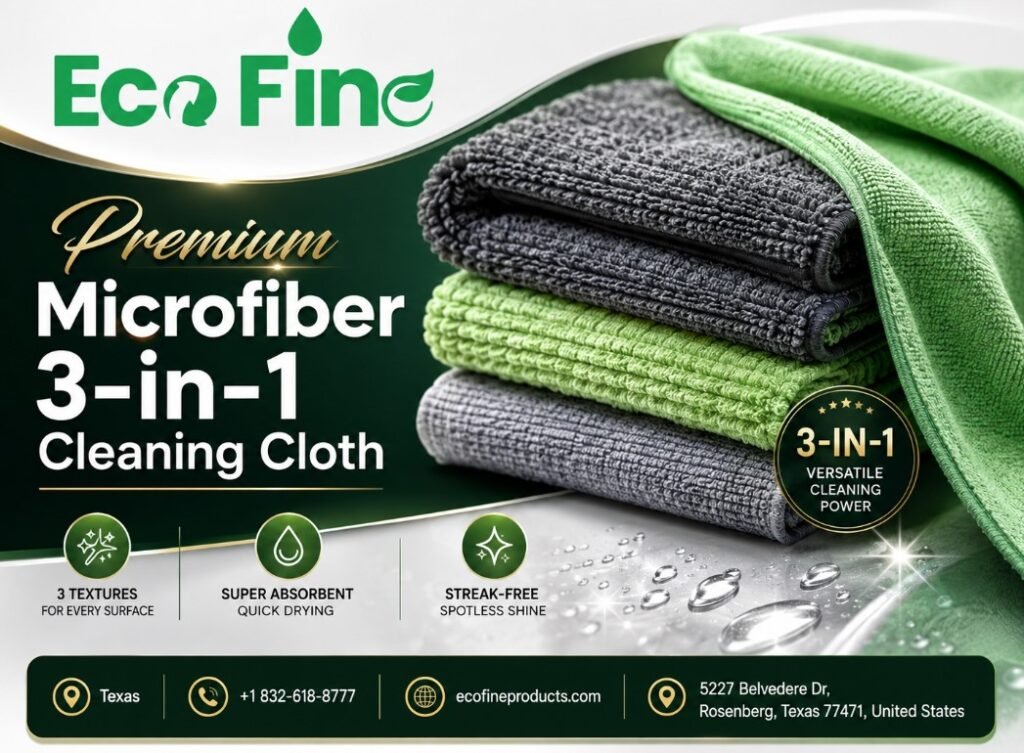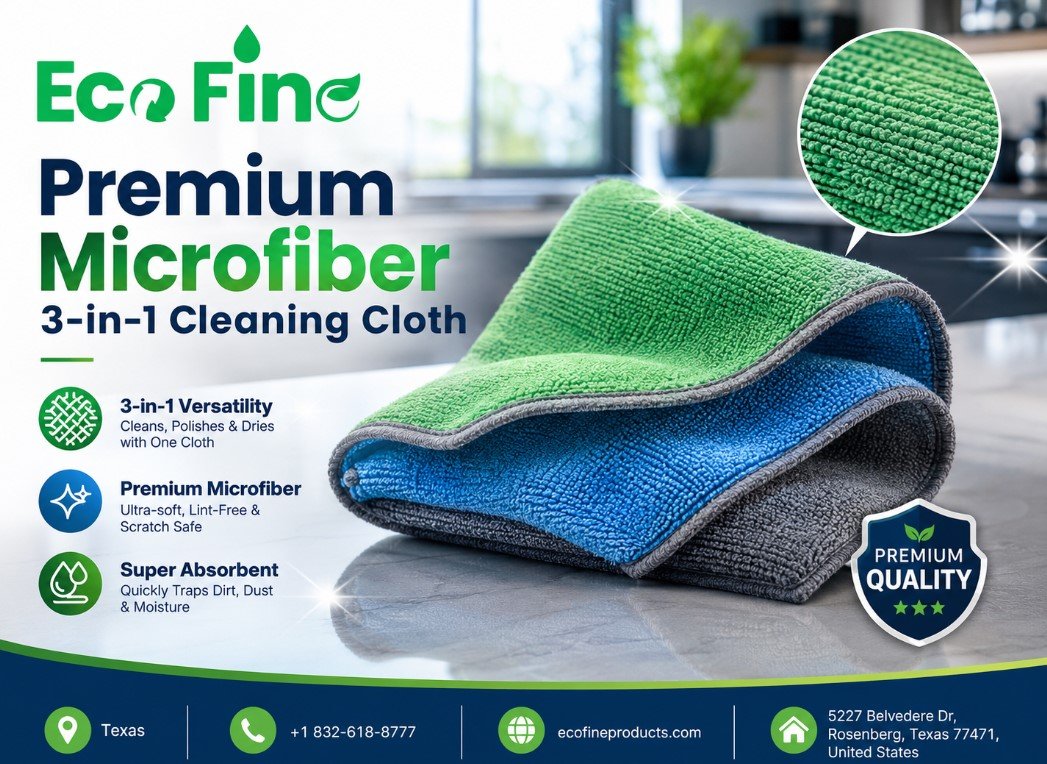
The 3-in-1 description of a microfiber cleaning cloth refers to functions: suitable light scrubbing, wiping and polishing. It does not establish three physical layers or permit one loaded cloth to complete an entire janitorial route. Evaluate the 3-in-1 cleaning cloth within a defined surface-care method. This operations guide focuses on choosing the appropriate stage, recognizing change conditions and keeping the routine clear across janitorial teams.
Start With the Assigned Surface
Identify the surface, ordinary soil and approved cleaning product before selecting a function. Keep delicate finishes and specialist work under their applicable instructions. A multifunction description is useful only when staff understand where each action is permitted. Record any task needing another tool or method. Employees covering another route should not need to interpret the product name as permission for unrestricted scrubbing, wiping or polishing across every fixture they encounter during a shift.
Use Light Scrubbing Only Where Appropriate
Confirm that the intended surface and method permit the action required to loosen the residue. Follow the relevant product and surface instructions rather than inventing a pressure rule. Remove ordinary loose material as the approved procedure requires and inspect the cloth before use. Explain when an unexpected result or persistent mark needs supervisor review. The aim is controlled work on a suitable assignment, not a claim that a general-purpose cloth can replace every abrasive or specialist cleaning tool.
Treat Wiping as a Defined Stage
Show staff how the prepared cloth collects the loosened soil and moisture in the approved method. Define the point at which loading or another condition requires a fresh item. Do not assume that exposing another fold authorizes movement into a different hygiene zone. Keep task boundaries and used-stock return clear. A recognizable wiping stage helps employees understand what has been completed and which following step remains necessary, rather than relying on the appearance of a multifunction product to establish the entire process.
Finish With Suitable Clean Fabric
Where polishing or final wiping is part of the approved assignment, explain the required cloth condition and method. A cloth carrying soil from an earlier stage should not be assumed ready for finishing. Inspect the completed result under normal viewing conditions and record residue or repeat work.
Train the Sequence on Real Work
Demonstrate the permitted functions, preparation, holding or folding, change conditions and return process using a representative assignment. Have staff practice the method and explain when another item is needed. Observe initial shifts to identify confusion between stages or task boundaries. Keep point-of-use reminders consistent with the demonstration. A short functional description should support the approved routine, not replace the application instructions that determine what the cloth can appropriately do on a particular surface.
Keep Cart Stock and Care Distinguishable
Separate clean replacements from used cloths throughout cart loading, work, collection and return. Confirm any color assignment against the product actually supplied. Follow the care label for cleaning and drying rather than assuming that every microfiber cloth uses one method. Inspect fabric and edges after maintenance. Count items in care separately from ready reserve, and review shortages against actual use and turnaround. The number owned is less useful than the number available when the assigned stage needs a suitable item.
Monitor the Function Used When Problems Occur
Record the surface, preparation, action used and cloth condition when rework or handling issues recur. Ask whether the permitted sequence and change rules were followed. Compare maintained cloths as well as new stock and review solution or surface changes before replacing the specification. Keep observations tied to the assignment assessed. They can support a local operating decision without establishing a universal service life, cleaning strength or number of tasks that one cloth should complete.
Connect Training With the Supplied Item
Retain the approved item reference, confirmed construction, dimensions, color, pack units and care instructions with the task record. Review substitutions affecting use or maintenance before distribution. For supply questions, send EcoFine the intended functions and confirmed requirements. Update demonstrations and handover notes when an accepted change affects the routine. A new employee should be able to identify the supplied cloth and reproduce the approved method without guessing what 3-in-1 means.
Review a Changed Route Before Extending Approval
New surfaces, products or client instructions can change which functions remain appropriate. Ask the supervisor to review those changes through the company’s normal process. Keep exceptions accessible to covering staff and explain them at handover. A cloth that remains useful for an established wiping task may still need a different method at another fixture. Record that distinction so a familiar multifunction label does not conceal a new application requiring assessment.
Specification and Use Checklist
| Check | Requirement |
|---|---|
| Light scrubbing | Assess only on a suitable approved surface |
| Wiping | Define loading and fresh-cloth conditions |
| Polishing | Use fabric suitable for the finishing stage |
| Specification | Confirm construction, dimensions and pack units |
Frequently Asked Questions
What does 3-in-1 describe?
It refers to suitable light scrubbing, wiping and polishing functions. It does not establish three physical layers or approval for every surface.
How should a task be assigned?
Identify the surface, ordinary soil and approved method. Record where another tool or specialist procedure is required.
Can light scrubbing be used on any finish?
No. Follow the relevant surface and product instructions and assess the intended assignment before extending the action.
Can the same loaded cloth complete every stage?
Do not assume that. Define loading, task boundaries and the fabric condition required for finishing within the approved method.
What should practical training demonstrate?
Show preparation, permitted functions, holding or folding, change conditions and return using a representative task. Observe initial use.
How should care and stock be organized?
Follow the supplied care label and separate clean from used items. Count unavailable stock separately from ready reserve.
What should recurring issues prompt?
Record surface, preparation, function used and cloth condition. Review method and care together before changing the specification.
When should the routine be reviewed?
Review new surfaces, products or client requirements before extending approval. Update demonstrations and handover notes for accepted changes.