
320 GSM Microfiber Cloths: Specification and Buying Guide
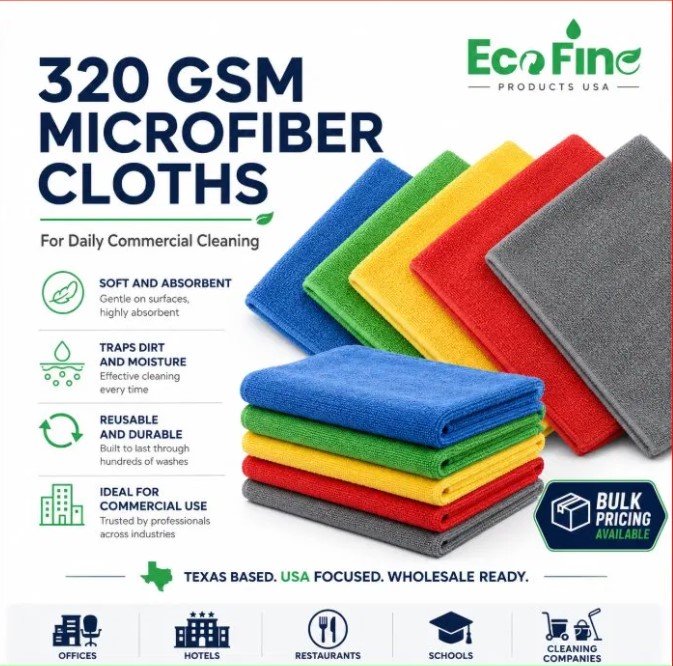
320 GSM microfiber cloths can be specified accurately when buyers connect fabric mass with finished dimensions, construction and the intended task. A GSM number alone does not establish absorbency, lifespan or a universal quality level. EcoFine’s commercial cloth range can be reviewed against a written requirement, with the selected item’s specification confirmed before ordering. This guide focuses on interpreting 320 GSM, asking useful measurement questions and approving a configuration without unverified market-price tables or fixed savings promises.
Read GSM as a Defined Characteristic
GSM means grams of fabric mass per square meter. At equal fabric area, 320 GSM describes more material mass than 300 GSM and less than 360 GSM. That comparison does not independently rank cleaning results. Construction, dimensions, composition, edges, preparation and care can also differ. Keep the distinction clear in the purchasing record. A measurable fabric-weight requirement is useful, but it should not stand in for a complete description of the product or the operating task it must support.
Use Confirmed Dimensions With the Fabric Calculation
An illustrative 16×16-inch fabric area at 320 GSM corresponds to about 52.9 grams before finished-item details such as edges, labels and tolerances. This is not a verified weight claim for a particular SKU. Confirm actual dimensions and supplier information rather than testing a finished towel’s mass against an oversimplified assumption. A change in area can alter total fabric mass even when GSM remains the same.
Ask for the Selected Item Details
Confirm the product reference, finished length and width, construction, composition, edges, colors and care instructions. Include any stated tolerances relevant to the requirement. Do not copy GSM from another product because both are described as microfiber or terry. A photograph can support identification but cannot establish an unavailable measurement or material value. Keep unresolved characteristics visible until the supplier confirms them, so the sample and final order can be reviewed against the same specification rather than an informal appearance judgment.
Define the Commercial Assignment
Identify the surface, soil and approved method the cloth will support. Keep specialist work and required sanitation stages under their own procedures. Specify whether the request replaces a locally accepted item or introduces an alternative for assessment. The requirement should explain why the selected construction matters to the task without inventing a performance advantage from density alone. Application notes help future buyers recognize where approval applies and when another surface or method needs separate review.
Approve Representative Use and Care
Have regular staff assess an identified sample using the approved preparation and normal result check. Record handling, visible residue, repeated work and change conditions. Compare alternatives under similar circumstances and reassess maintained samples after permitted care. Review soil, moisture, solution and technique when results differ. Keep the exact configuration with the findings. A local assessment can support the item selected without proving that every 320 GSM cloth produces the same result or lasts a fixed number of cycles.
Keep Quantity Units Separate From Fabric Values
State whether the request counts individual cloths, packs or cartons and confirm their contents for the actual order. Keep packaging counts distinct from dimensions and GSM. A fabric-weight specification does not tell receiving how many items should arrive. Identify destination and color allocations using consistent units and ask about changes from earlier arrangements.
Review the Incoming Configuration
Give receiving the approved specification, item reference, quantities and sample notes before delivery. Check representative products according to the organization’s procedure and keep discrepancies identifiable while they are resolved. Do not expect receiving staff to establish application performance from fabric feel alone. Request review of substitutions affecting dimensions, construction, composition, edges or care before stock is distributed. Keep accepted alternatives recorded and notify operations when the working method or maintenance requirement changes.
Maintain the Accepted Specification
Retain the confirmed product details, application limits, sample findings, care and quantity units with the current item reference. For supplier questions, send EcoFine the intended task and required specification. Review demand and ready stock through the actual use and care cycle rather than an invented service-life figure. Another buyer should be able to repeat the accepted configuration without inferring GSM from an old title or treating a calculated fabric-mass example as a verified finished-product measurement.
Review New Requirements Separately
A changed surface, construction or care arrangement can require another sample assessment even where 320 GSM remains in the request. Record what changed and which part of the earlier approval still applies. Keep superseded descriptions distinguishable from the current version and explain accepted revisions at handover. This preserves the usefulness of a precise fabric specification while recognizing that density is only one characteristic of the item used by the commercial cleaning team.
Planning and Approval Checklist
| Check | Requirement |
|---|---|
| GSM | 320 grams of fabric mass per square meter |
| Dimensions | Confirm the actual finished size |
| Construction | Identify the selected fabric and edges |
| Approval | Assess representative work and permitted care |
Frequently Asked Questions
What does 320 GSM establish?
It describes fabric mass per square meter, not a universal ranking of cleaning performance or an absorption guarantee.
Why include finished dimensions?
Area affects total fabric mass. Confirm actual measurements and construction rather than interpreting a finished towel’s weight using density alone.
Is 52.9 grams a verified SKU measurement?
No. It illustrates a 16×16-inch fabric area at 320 GSM before edges, labels, tolerances and other finished-item details.
What should the supplier specification confirm?
Confirm the exact reference, dimensions, construction, composition, edges, colors, required GSM, care and relevant tolerances for the selected configuration.
How should application approval be assessed?
Use representative work and permitted care with normal staff, keeping preparation, result checks and acceptance limits with the identified sample.
Does GSM identify pack contents?
No. State cloth, pack and carton units separately and confirm their contents and allocations for the actual order.
What should receiving compare?
Compare representative delivered items and quantity units with the current approved record, keeping discrepancies identifiable until resolved.
When should the specification be reviewed?
Review changed applications, construction, care or substitutions, keeping superseded descriptions distinguishable from the current accepted version.