
360 GSM Microfiber Towels: Compare With Your Baseline
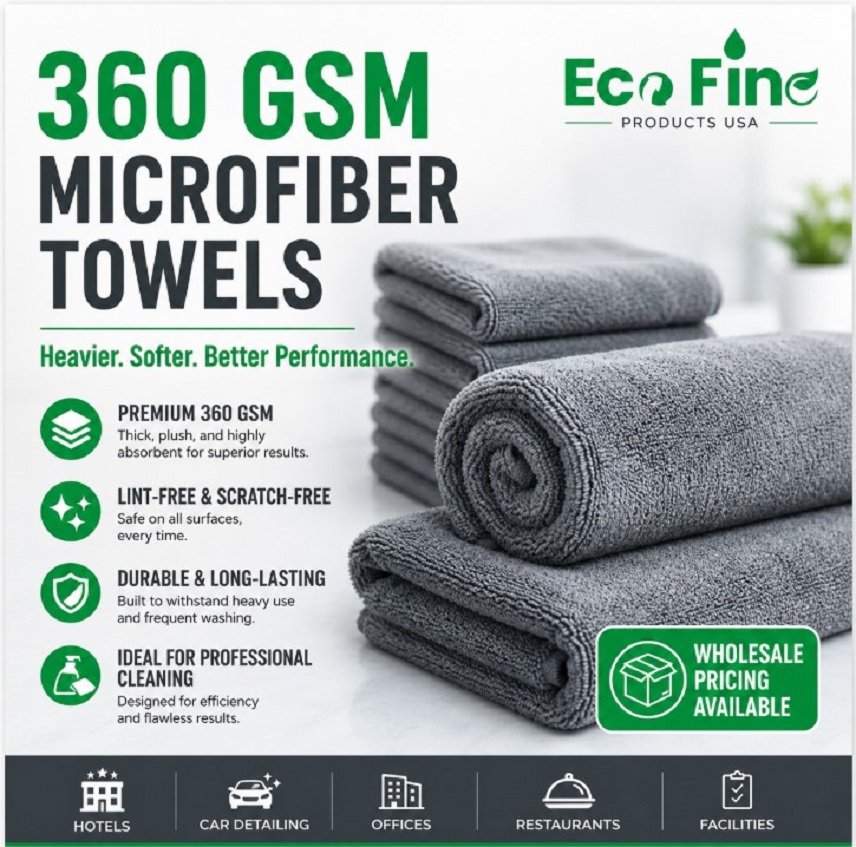
360 GSM microfiber towels describe a fabric-weight specification that commercial buyers can evaluate alongside dimensions, construction and care. The number does not establish that a facility should upgrade every wiping item or that businesses across Texas prefer the same format. Review a confirmed configuration within the intended task. EcoFine’s cloth range provides formats for inquiry, but the selected item’s GSM still needs confirmation. This guide focuses on comparing a proposed 360 GSM specification with an established operating baseline.
Define the Baseline Before the Change
Record the approved item, surface, preparation and method currently used for the assignment. Identify the problem the proposed alternative is intended to address, such as handling or an aspect of the completed result. Keep that question narrow enough to observe. A higher fabric-weight number is not a reason by itself to replace suitable stock. Clear baseline information helps the team distinguish a useful change from differences caused by another size, construction or preparation method during the comparison.
Understand the Weight Specification
GSM means grams of fabric mass per square meter. For an illustrative 16×16-inch fabric area, 360 GSM corresponds to about 59.5 grams before allowing for finished-item details such as edges, labels and tolerances. This is a calculation, not a verified weight for every towel sold under that description. Confirm actual dimensions and supplier information. The number does not directly state absorption volume, required chemical use, working life or the result an operator will obtain on every commercial surface.
Confirm the Complete Alternative
Ask for the exact item reference, finished dimensions, construction, composition, edges, colors and care information associated with the proposed GSM. Do not label a general terry, glass or multipurpose cloth as 360 GSM merely because its name looks relevant. Keep unconfirmed characteristics visible until resolved. Where several variables differ from the baseline, record them before attributing every observed result to density alone.
Compare Equivalent Work
Have normal staff assess the baseline and proposed item under comparable approved conditions. Use the same surface assignment, preparation and result check where appropriate. Record holding or folding, visible residue, repeated work and change conditions. Include the complete task rather than a short isolated demonstration. Review soil, moisture, solution, technique and fabric condition when results vary. A local comparison can support a selected configuration without proving that every 360 GSM towel outperforms every lighter fabric.
Assess Working Handling
Ask operators to identify whether the selected size and construction remain manageable through normal use. Dry feel alone does not establish how the cloth behaves during the assignment. Review folding, repositioning and access to the surface. A larger or denser fabric can change handling without automatically improving the result.
Include the Care Process
Obtain written cleaning and drying instructions for the selected product and confirm the available process at intended locations. Reassess maintained samples and inspect fabric and edges. Count items awaiting care separately from ready stock. Do not invent a fixed wash-cycle lifespan or infer lower replacement needs from density alone. Keep care findings with the baseline comparison, because a proposed item that looks acceptable when new still needs a workable route back to suitable condition through the organization’s actual maintenance arrangement.
Review the Proposed Change Against Evidence
Compare the original question with handling, result and care observations. Identify unresolved concerns instead of averaging them into an invented overall score. An accepted decision can be limited to an assignment or location while another item remains appropriate elsewhere. Record why the configuration was accepted and which characteristics were confirmed. A commercial program does not need every cloth to share one GSM; it needs approved items that support the actual tasks and can be supplied and maintained consistently.
Keep Order Details Linked to Approval
State the selected dimensions, confirmed GSM, construction, blend, edges, color and pack units. Ask EcoFine to confirm a configuration against the intended requirement. Review substitutions before distribution and notify operations when an accepted change affects the method or care. Keep the current specification distinguishable from earlier samples. Receiving should compare delivery with the item assessed locally, rather than infer suitability from the 360 GSM label or a claim about an industry-wide upgrade trend.
Reassess Changed Requirements
A new surface, cleaning product, work schedule or care arrangement can alter the baseline used in the comparison. Ask the supervisor to identify the change and review the relevant instructions before extending approval. Keep established stock assigned to suitable work while new requirements are assessed. Updating the record preserves useful local evidence without treating a density number as permanent proof that one construction or allocation fits every later commercial assignment.
Planning and Approval Checklist
| Check | Requirement |
|---|---|
| GSM | 360 grams of fabric mass per square meter |
| Dimensions | Confirm the actual finished size |
| Construction | Identify the selected fabric and edges |
| Approval | Assess representative work and permitted care |
Frequently Asked Questions
Does 360 GSM guarantee an upgrade?
No. Define the local problem and compare the complete configuration with the existing baseline instead of treating density as automatic superiority.
What does 360 GSM measure?
It describes 360 grams of fabric mass per square meter, not absorption volume, chemical reduction or a guaranteed service life.
Is the 59.5-gram example a verified towel weight?
No. It is an illustrative calculation for a 16×16-inch fabric area, before finished-item details, labels, edges and tolerances.
Which configuration details should be confirmed?
Confirm the exact item, finished dimensions, construction, composition, edges, color, GSM and care rather than inferring values from a general cloth name.
How should the baseline and sample be compared?
Use comparable assignments, preparation and result checks with normal staff. Record handling, residue, repeated work and relevant configuration differences.
Why include permitted care?
The proposed item needs a workable route back to suitable condition. Reassess maintained samples and actual ready-stock availability.
Must every program use one GSM?
No. Standardize only where local evidence supports the configuration and retain other approved constructions where tasks require them.
When should acceptance be reviewed?
Review changed surfaces, methods, care or substitutions before extending the earlier approval, keeping current specifications and application limits identifiable.