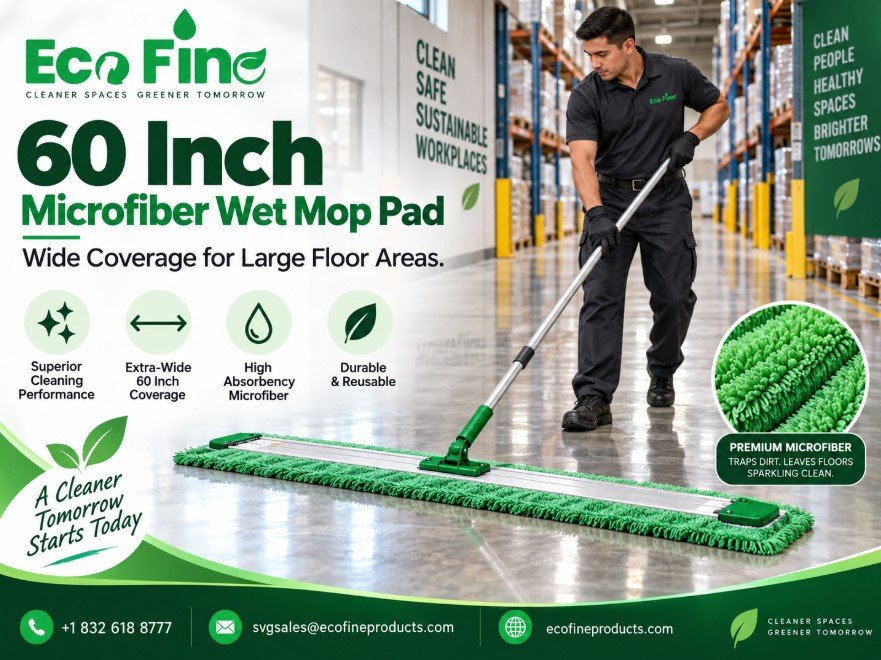
A 60-inch microfiber wet mop pad needs an airport route that can make practical use of its extra width. A broad concourse and a furnished gate area create very different handling requirements. Evaluate the complete setup through the airport’s approved cleaning procedure, including floor suitability, pedestrian control and equipment care. This operations guide focuses on route deployment rather than assuming a cleaning speed from nominal pad width. Review the 60-inch microfiber replacement pad alongside its confirmed hardware requirements.
Identify Continuous Working Space
Map where the full holder can travel without repeated lifting or rotation. Include seating groups, columns, queue barriers, retail entrances and narrow transitions. A concourse’s total area does not reveal how much usable width remains during operation. Mark sections requiring another size or method. Schedule trials under representative access conditions rather than judging the equipment only on an empty floor. Keep the selected route within the airport’s own operating requirements and maintain clear instructions for handovers between teams.
Plan Access Around the Cleaning Area
Wet maintenance in a public terminal requires the airport’s established area-control procedure. Coordinate the work with the responsible operations team and follow the applicable instructions for barriers, signs and reopening. Do not assume a fixed drying time or that one wide pass leaves the floor ready for passengers. Identify who checks completion and how staff respond when the planned area cannot be controlled.
Test the Holder, Handle and Attachment
Confirm actual pad dimensions and the complete backing arrangement with the supplier. Match them to the intended holder rather than assuming a similarly named dust-mop frame is appropriate. Check support across the working surface and inspect the handle connection. Assess the prepared pad during starts, turns and direction changes. Record slippage, unsupported edges or repeated adjustment.
Standardize Preparation and Pad Changes
Give staff a written method for solution preparation, moisture control and fitting. Follow floor, chemical and pad instructions for the exact combination used. Remove loose debris first where the approved procedure requires it. Define the conditions for changing a loaded or damaged pad and show the return process. Keep clean stock and used equipment separate on the service cart. When zones are identified by color, document the local meaning and confirm the required colors are actually supplied.
Check Handling Under Working Conditions
A wider cleaning surface can alter the effort needed to guide the setup. Let operators assess the prepared system on the proposed route, including turns and access transitions. Record whether the head stays supported and whether staff can control it consistently. Compare another width where space is restricted. Nominal coverage is useful only where the route allows it to be maintained. Avoid converting geometric width into a staffing reduction or time guarantee without observations from that airport’s own procedure.
Coordinate Care Across Shifts
Identify where used pads are collected, how approved cleaning is performed and when clean stock returns. Count active pads, items awaiting care, drying items and reserve stock. Include the time between collection rounds when setting quantities. Obtain written care restrictions before standardizing laundry. Inspect the backing, seams and attachment after care, and keep damaged equipment out of the usable count.
Use a Route Trial to Approve Deployment
Choose a defined area and repeat the trial over representative shifts. Record preparation, route completion, visible residue, repeat work, pad changes and employee feedback. Compare results after the approved care process. Review any issues with floor condition, solution and technique before changing the specification. Keep the decision tied to the route tested. Save the approved setup and handover instructions so another terminal team can repeat the assessment instead of assuming that one successful area proves suitability everywhere.
Maintain an Equipment Record
Record the approved pad, dimensions, backing, holder, handle connection and pack quantity. Include inspection criteria and the authorized care method. Request review of substitutions that change any of these details. For configuration questions, contact EcoFine with the intended airport application and equipment measurements. Product descriptions support the initial comparison, while the written record gives receiving and operations staff a consistent reference when replacements arrive.
Reassess After Terminal Changes
Terminal layouts can change when seating, queuing or retail arrangements are revised. Review the usable working width and access procedure when those changes affect an approved cleaning route. Ask operators to identify new turning restrictions and places where a smaller setup is needed. Keep the route description current at shift handover. If preparation or care arrangements change, assess their effect on available clean stock as well.
Pad Specification Checklist
| Check | Planning point |
|---|---|
| Dimensions | Confirm actual pad measurements |
| Attachment | Match backing to the approved holder |
| Order unit | Confirm pads per pack and packs per carton |
| Care | Use written product-specific instructions |
Frequently Asked Questions
Where is the extra-wide format worth testing?
Consider sufficiently open routes where the full holder can stay supported. Check seating, barriers, columns and turns under representative operating conditions.
Does 60 inches establish a cleaning rate?
No. Effective coverage depends on layout, overlap, preparation, pad changes and access controls. Measure the actual route before making scheduling assumptions.
Can a dust-mop frame hold this wet pad?
Do not assume that. Confirm the pad’s backing and the exact compatible holder. Similar width alone does not establish the correct attachment.
How should passenger access be managed?
Follow the airport’s approved procedure for controlling the work area and confirming readiness for reopening. Do not assume a fixed drying time.
Can the pad use any cleaning solution?
Follow the surface, solution and pad manufacturers’ instructions. Confirm the intended combination before introducing it across terminal routes.
What should a route trial record?
Record preparation, completion, repeat work, visible results, pad changes, handling and condition after permitted care. Keep findings specific to the tested route.
How should spare stock be planned?
Count pads in service, awaiting care, drying and clean reserve. Include collection and laundry turnaround when determining the available quantity.
When does the setup need review?
Review recurring slippage, unsupported edges, difficult handling or declining results. Inspect pad condition, holder support and preparation separately before changing the specification.