
300 GSM Microfiber Cloths: Build an Operating Baseline
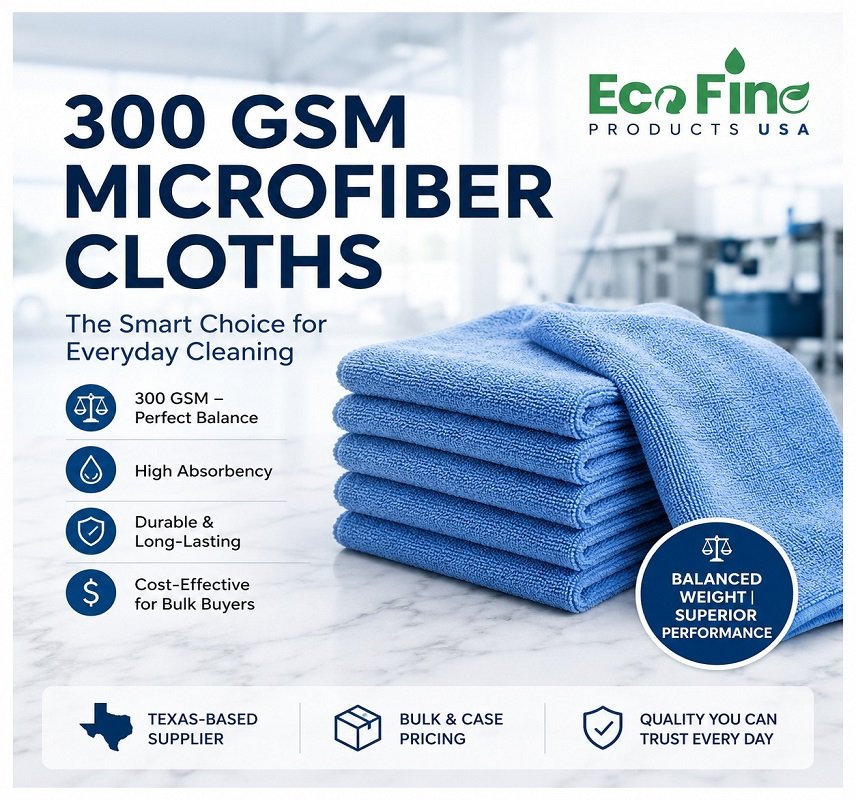
300 GSM microfiber cloths describe a fabric-weight specification that can be evaluated for a defined commercial cleaning routine. The number does not automatically establish the best everyday cloth, a fixed service life or an approval for every surface. Review EcoFine’s microfiber cloth options against the intended assignment and confirm the selected item’s actual GSM. This guide focuses on establishing an operating baseline, testing a configuration and standardizing it only where the local evidence supports the decision.
Define the Local Baseline Assignment
Identify the surface, ordinary soil, approved preparation and method the cloth must support. Keep specialist procedures and required sanitation stages separately described. State whether the program replaces an established item or creates a new standard for a defined route. A broad everyday-cleaning label should not become permission for unrestricted use. Record task boundaries so relief staff and future buyers can recognize where the item was assessed and which assignments still require another cloth, tool or review.
Understand the Fabric-Weight Number
GSM means grams of fabric mass per square meter. For an illustrative 16×16-inch fabric area, 300 GSM corresponds to about 49.5 grams before allowing for finished-item details such as edges, labels and tolerances. This is a calculation rather than a verified SKU weight.
Confirm the Working Configuration
Ask for the exact reference, dimensions, construction, composition, edge finish, colors and care instructions proposed for the order. Do not infer a 300 GSM value from a general microfiber or terry product name. Keep any unanswered characteristic visible until resolved. Where another candidate differs in size or construction as well as density, record those differences before interpreting the result. A consistent item identity gives the program a usable standard instead of a generic fabric label that can cover several unreviewed cloths.
Observe Regular Staff on Representative Work
Use the approved preparation and normal inspection conditions to assess the sample. Record holding or folding, visible residue, repeated wiping and change conditions through the complete task. Compare alternatives under similar circumstances if needed. Review soil, moisture, solution and technique alongside cloth condition when results vary. Keep findings specific to the assignment tested, rather than turning a favorable demonstration into a universal claim that every 300 GSM cloth is suitable for every commercial cleaning program.
Document the Method Accepted Locally
Record the selected item, surface, preparation, working-face sequence, change conditions and return arrangement. Include any exception requiring another tool or procedure. Have staff explain the next step during observation so the supervisor can identify unclear instructions. A concise point-of-use reminder should support the demonstration and current task record, not replace them. Keep the reason for the item choice understandable to another team rather than relying on an unsupported assertion that a particular GSM is always the smartest option.
Confirm Maintenance and Ready-Stock Return
Obtain written cleaning and drying instructions and confirm that the available process matches the selected item. Reassess maintained samples and inspect fabric and edges before reissue. Keep clean replacements separate from used items under the organization’s handling procedure. Count active stock, items in care, drying and reserve separately. A reusable description does not establish an invented wash-cycle lifespan. Review actual demand and return timing so standardization remains workable during ordinary shifts rather than only during the initial sample demonstration.
Standardize Only Matching Requirements
When another department or site adopts the item, compare its surface, method and care arrangement with those assessed locally. Record any difference that needs another review. Do not assume the same size or GSM settles every application question. A commercial program may need more than one approved construction while retaining clear purchasing and storage identification. Keep locally accepted stock assigned to suitable work and use the task record to explain where the standard applies, instead of forcing one cloth into every role.
Make Reordering Specific
State the confirmed GSM, finished dimensions, construction, blend, edges, color and quantity units. Confirm cloth, pack and carton contents for the actual order. Ask EcoFine to review the proposed configuration and operating requirement. Request review of substitutions affecting working characteristics or care before distribution. Receiving should compare the delivered item with the approved specification, while operations retains the evidence that the configuration suited the task and maintenance process assessed.
Keep the Baseline Reviewable
Retain sample findings, method, care, item identity and acceptance limits with the purchasing record. Revisit the decision when routes, surfaces, products or return timing change. Record why a revised configuration was accepted and notify staff about changes affecting use. A maintained baseline supports consistent local work without turning a fabric-weight number into permanent proof of universal superiority, fixed savings or suitability for every later commercial assignment.
Planning and Approval Checklist
| Check | Requirement |
|---|---|
| GSM | 300 grams of fabric mass per square meter |
| Dimensions | Confirm the actual finished size |
| Construction | Identify the selected fabric and edges |
| Approval | Assess representative work and permitted care |
Frequently Asked Questions
Does 300 GSM establish the best everyday cloth?
No. Assess the confirmed configuration against the assigned task, preparation, care process and actual local results.
What does 300 GSM mean?
It describes 300 grams of fabric mass per square meter rather than a guaranteed absorption capacity, chemical-use reduction or service life.
What does the 49.5-gram example represent?
It is an illustrative calculation for a 16×16-inch fabric area before finished-item details, not a verified weight for a particular SKU.
Which product details need confirmation?
Confirm the exact reference, dimensions, construction, composition, GSM, edges, colors and care instead of inferring values from a general product name.
What should the operating baseline record?
Identify the approved item, surface, preparation, method, change conditions, return arrangement and exceptions requiring another tool or review.
How should care affect acceptance?
Follow product-specific instructions, assess maintained samples and count unavailable stock separately from ready reserve and active use.
Does approval transfer to every department?
Not automatically. Compare surface, method and care requirements before extending the standard to another assignment or location.
What should remain available for reorders?
Keep confirmed specifications, quantity units, sample findings, care and application limits together, reviewing substitutions and changed requirements before distribution.