
Microfiber Glass Cleaning Towels: Application Guide
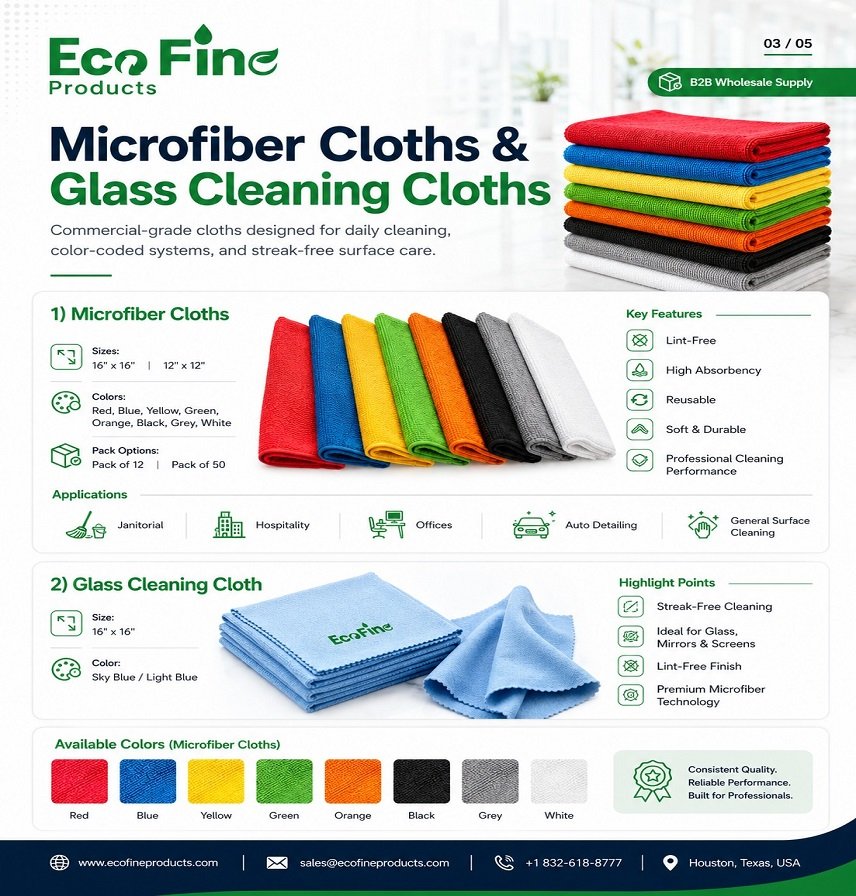
Microfiber glass cleaning towels should be assessed against the actual surface and the stage they will support. A window, mirror, partition and coated panel can present different requirements even when all appear glass-like. EcoFine offers glass-cloth formats that commercial teams can evaluate within approved procedures. This guide focuses on building an application matrix and identifying when a different item or method is needed, rather than declaring one fabric best for every surface or guaranteeing a streak-free finish.
Buying Glass Cleaning Cloths for Your Business?
Request a wholesale quote for your cleaning team, facility or distribution business. Include the cloth type, estimated quantity, preferred dimensions and delivery ZIP code. Ask EcoFine to confirm available options, pack quantities and ordering details.
List Surfaces Before Choosing a Format
Ask the responsible team to identify the reachable surfaces, finishes and approved instructions for the assignment. Keep specialist access and glazing work under existing procedures. Do not extend a trial on ordinary glass to an unreviewed coating or polished material. Record exceptions where another item or method is required. A practical surface list gives relief staff a usable boundary, while a generic glass-care description can leave them to guess whether every shiny fixture belongs to the same routine.
Identify the Cleaning Stage
State whether the towel supports ordinary soil removal, moisture pickup or a following finishing stage in the approved method. Keep required specialist or sanitation procedures separate. A cloth carrying soil from an earlier stage should not be assumed ready for final wiping. Record the fabric condition and preparation expected at each stage. The application matrix should explain what the item completes and what follows, rather than treating a glass-cloth name as proof that the entire process has been performed.
Compare the Actual Fabric Configurations
Confirm dimensions, construction, edges, composition where required and care for the selected item. EcoFine separately lists ordinary glass, shiny glass and fish-scale cloths; their names do not establish identical specifications or universal suitability. Keep samples identified by exact reference. A texture or low-pile appearance can guide a comparison, but it should not be used to invent a fabric weight, absorption figure or a guarantee that an item will leave every coating clear under any preparation method.
Standardize Preparation for the Trial
Use the surface-approved cleaning product and the cloth’s confirmed method. Demonstrate moisture control and the intended holding or folding sequence. Ask normal staff to perform representative work, including changes and return handling. Compare alternatives under similar soil and viewing conditions. Without consistent preparation, a difference attributed to the weave may reflect several employees using different solutions or loading levels. Keep those conditions with the sample record so another supervisor can understand the findings.
Define a Practical Appearance Check
Inspect the completed surface under the organization’s usual viewing and lighting conditions. Record residue, haze, missed areas and repeated attention without inventing a laboratory performance score. Review soil, solution, moisture, technique and towel condition when results vary. A local trial supports the configuration and assignment tested, not a universal scratch-free or streak-free statement.
Build the Application Matrix
Connect each approved surface and stage with the exact item, preparation, change conditions and relevant exceptions. Give the record an owner and make the current version available to operating staff. Where another format remains necessary, identify it explicitly instead of forcing one cloth into every assignment. Keep surface changes and accepted substitutions reviewable. The matrix is a practical operating reference, not evidence that a product has been independently tested for every material a commercial cleaner may later encounter.
Include Care and Ready Stock
Follow the selected item’s written cleaning and drying instructions and review maintained samples as well as new cloths. Inspect fabric, edges and persistent residue after care. Count items awaiting maintenance separately from clean reserve and track losses independently from condition-based withdrawals. Keep assignments clear during storage, transport and return under the organization’s handling procedure. A reusable description does not establish a fixed service life or remove the need to provide suitable replacements when the approved method calls for a fresh item.
Keep Purchasing Connected to the Matrix
Record confirmed dimensions, construction, color, care and pack units with the approved item reference. Review changes affecting the fabric or method before distributing alternatives. For configuration questions, send EcoFine the actual glass-care assignment and requirements. Receiving should compare the delivery with the item assessed by operations, while task staff use the application matrix to recognize where approval applies. Similar product names should not conceal an unreviewed change to the working cloth.
Review New Surfaces Separately
A replaced mirror, new coating or changed cleaning product can alter the earlier assessment. Ask the responsible supervisor to identify the change and review the relevant instructions before extending use. Update the matrix and explain exceptions at handover. A cloth can remain suitable for established work while another assignment requires a separate format or procedure.
Planning and Approval Checklist
| Check | Requirement |
|---|---|
| Task | Record the approved assignment |
| Item | Confirm the complete configuration |
| Availability | Count usable and unavailable stock separately |
| Review | Retain local findings and accepted changes |
Frequently Asked Questions
What should a glass application matrix identify?
Connect approved surface and stage with the exact item, preparation, change conditions and exceptions requiring another method or review.
Why standardize preparation before comparison?
Different solutions, moisture or techniques can distort fabric comparisons. Use the same approved method on equivalent work with normal operators.
What should a practical inspection record?
Review haze, residue, missed edges and repeated work under normal client conditions. Retain surface and preparation details with the observations.
What should recurring residue prompt?
Review soil, solution, moisture, loading, technique and maintained cloth condition together before changing the specification across accounts.
How should mobile teams keep assignments clear?
Follow the company’s task and zone identification system and separate clean from used stock through transport, cart loading and return.
Why assess cloths after care?
The operating standard needs maintained items as well as new stock. Confirm written care instructions and review fabric, edges and persistent residue.
Does one successful account approve every other site?
No. Review differences in surfaces, products, methods and care arrangements before extending the approval to another assignment.
When should the matrix change?
Review new coatings, surfaces, products, care or substitutions before extending an earlier approval and explain accepted revisions at handover.