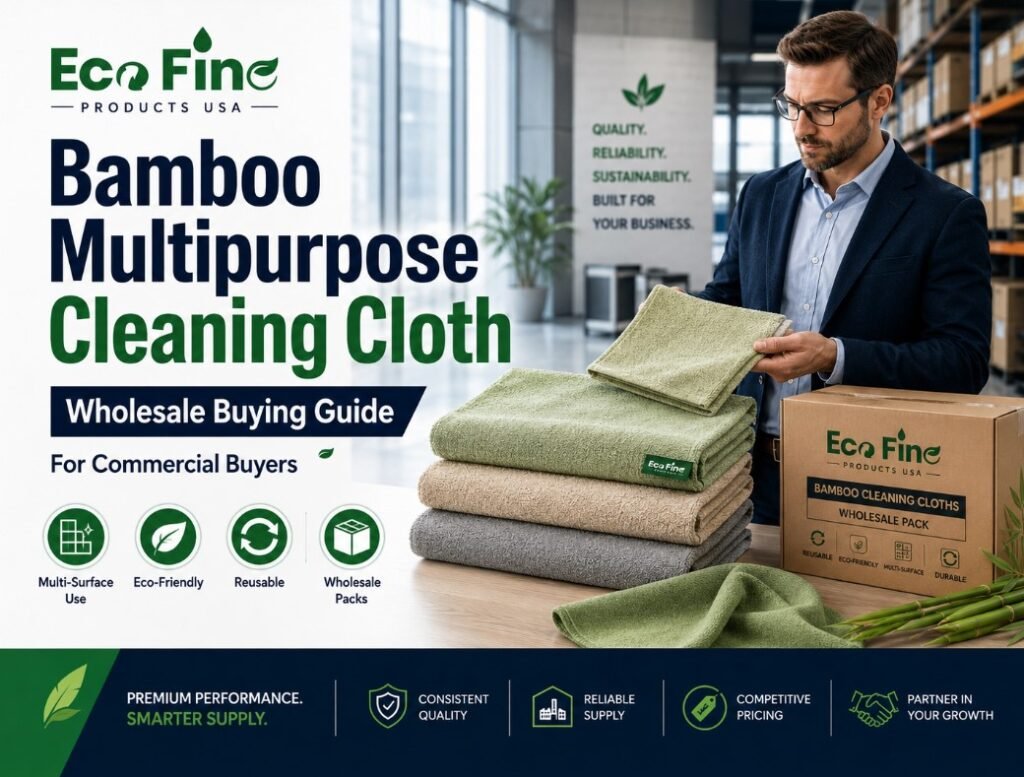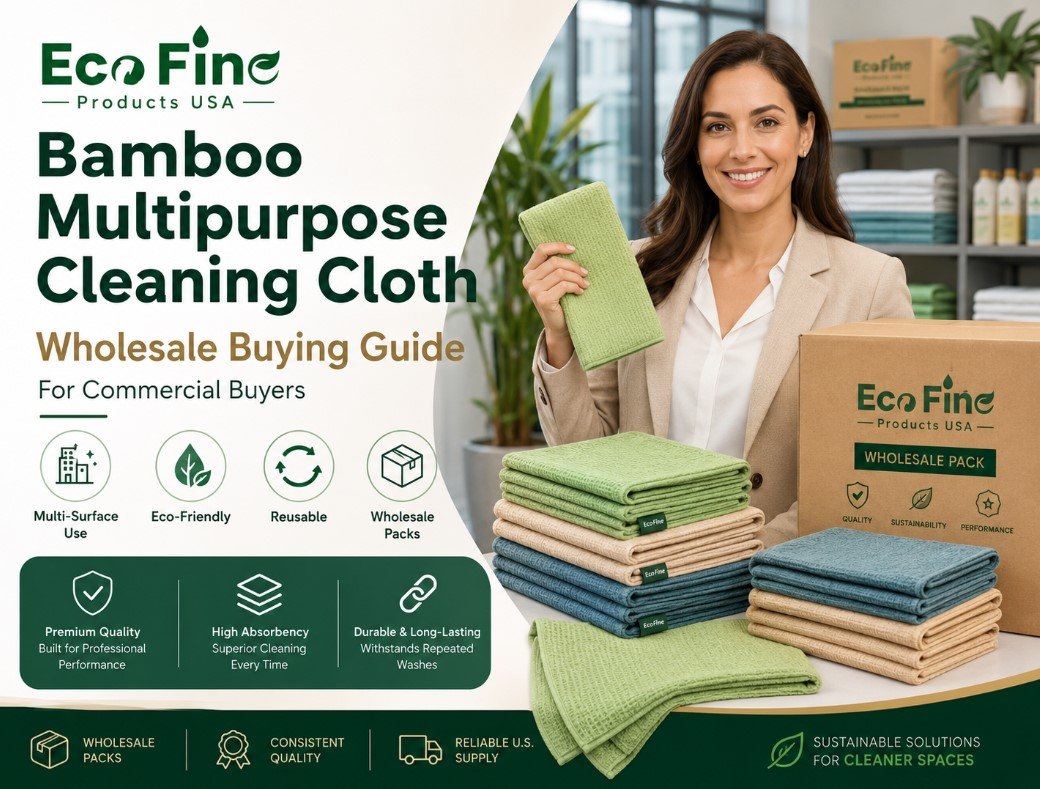
Wholesale bamboo multipurpose cloth orders should be built on confirmed fiber information and a clearly assigned surface-cleaning role. The name alone does not establish a composition, certification or antibacterial performance. Start with the bamboo multipurpose cloth and request the specification for the selected item. This guide focuses on separating documented product details from marketing assumptions, assessing a sample and keeping repeat supply consistent across commercial cleaning programs.
Define the Working Role Before the Material Requirement
Identify the surfaces, ordinary soil, preparation and care process the cloth will support. Keep guest-use or personal-drying textiles separately specified. Explain whether the order replaces an established cleaning item or evaluates a new format. A supplier needs the operating requirement behind a broad request for bamboo cloths. Attach application limits to the record so another buyer can distinguish an accepted replacement from a product that shares a material-related name but has not been assessed on the intended task.
Request Exact Fiber Information
Ask for the selected item’s fiber names, blend and percentages, along with supporting product information relevant to the requirement. Do not infer a pure bamboo composition or a particular processed fiber from the product title. Keep verified details distinguishable from an unanswered question. If the intended packaging needs a material description, confirm that description for the actual product before approval. The aim is an accurate specification, not substituting an unsupported environmental or performance statement for unavailable composition data.
Confirm Dimensions and Construction
Obtain the finished length and width, fabric weight where required, edges, available colors and any stated tolerances. Confirm care instructions for the selected configuration. Avoid copying values from another bamboo towel or cloth because the names look similar. Keep the supplier item reference and proposed pack details with the specification. A photograph can support identification, but it should not establish an exact measurement, pack quantity or performance value that has not been supplied.
Approve a Sample on Representative Work
Use the intended surface and approved preparation with normal employees. Record handling, visible result, repeated wiping and cloth condition. Compare candidates under equivalent conditions. Review soil, solution, moisture and technique when results differ. Keep the approval tied to the tested application rather than using a favorable demonstration as proof that a whole material category performs better. Separate any environmental or antibacterial claim from the ordinary use assessment; a successful cleaning trial does not establish those properties.
Assess the Care Process Before Quantity
Follow the supplied cleaning and drying instructions and reassess the maintained sample. Confirm that intended locations can perform the required process. Inspect fabric, edges and material remaining after care. Count items awaiting cleaning or drying separately from ready reserve when planning supply. A reusable description does not guarantee a fixed number of cycles. Record the maintenance arrangement with the accepted item so a proposed alternative can be reviewed against the actual process that returns cloths to service.
Define Order Units and Packaging Needs
State whether quantities count cloths, packs or cartons and confirm their contents for the actual order. Identify destination and color allocations using consistent units. Keep custom labels or packaging requirements separate from working-product details, with availability and approval confirmed by the supplier. Do not treat an earlier carton arrangement as permanent without checking.
Review Substitutions Against the Documented Product
Ask for review of changes in fiber composition, dimensions, construction, edges or care. Compare the alternative with the approved application and sample findings. A familiar bamboo name does not establish an equivalent item. Tell operations when an accepted change affects preparation or maintenance. Keep the current specification accessible to receiving and distinguish it from superseded descriptions. Uncertain stock should remain identifiable while questions are resolved, rather than being distributed on the strength of a general material claim.
Maintain the Record for Repeat Purchasing
Check incoming identification, quantities and representative product details against the approved configuration. Track usable stock, items in care, losses and condition-based withdrawals when planning further supply. Ask EcoFine to confirm the selected specification and quantities for the next order. Retain verified fiber information and application notes with the item reference, allowing another buyer to repeat the accepted configuration without reconstructing a marketing description or assuming that every bamboo-labeled cloth has the same construction.
Keep Claims Separate From Local Trial Results
Document what the organization actually established through its use and care assessment. If another claim is important to the purchasing requirement, request appropriate product-specific support rather than treating the cloth’s name or appearance as evidence. Keep unanswered details open until they are resolved through the supplier discussion. This preserves a useful distinction between an item that suits the cleaning task and additional characteristics that the local sample trial was not designed to establish.
Specification and Use Checklist
| Check | Requirement |
|---|---|
| Role | Define the intended application |
| Composition | Confirm exact fiber names and percentages |
| Dimensions | Use the selected finished measurements |
| Care | Follow supplied product-specific instructions |
Frequently Asked Questions
Why define the cleaning role first?
The application connects the specification with actual work. Keep personal-use or guest textiles separately identified rather than combining them in one request.
What composition information should be requested?
Ask for exact fiber names, blend and percentages for the selected item. Keep documented answers separate from unresolved questions.
Does a bamboo name establish certification?
No. Request product-specific support for any important claim rather than inferring it from the title or appearance.
Which measurements should be confirmed?
Confirm finished length, width, required fabric weight, edges and tolerances for the selected configuration. Do not copy details from another towel.
How should a sample be approved?
Assess representative work and permitted care with normal users. Keep the findings tied to the application and conditions tested.
Which order units need confirmation?
State cloths, packs or cartons and confirm their contents. Identify destination and color allocations using consistent units.
What changes require review?
Review composition, dimensions, construction, edges and care against the approved record before accepting an alternative.
What should repeat purchasing retain?
Keep verified product information, application limits, sample findings, care and quantity units with the current item reference.