
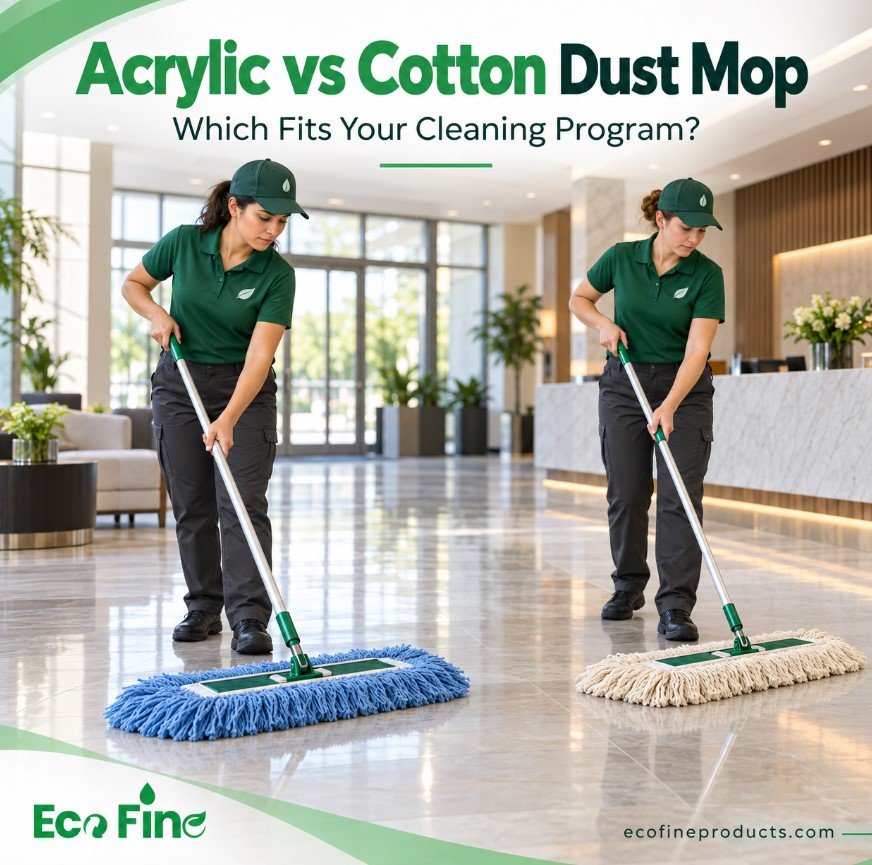
Choosing an acrylic vs cotton dust mop starts with the cleaning task, equipment fit, and maintenance routine. Both are options for collecting loose dry debris from suitable hard floors. Neither replaces wet cleaning for spills or stuck-on soil. For commercial buyers, the better choice is the head that fits existing hardware, works across the cleaning route, and can be maintained consistently.
A lower purchase price matters, but so do replacement availability, handling, and care requirements. Compare those factors before ordering equipment for an entire school, hotel, office building, or warehouse.
Start With the Soil You Need to Remove
A commercial dust mop belongs in the dry-maintenance stage of floor care. Its job is to gather loose dust, hair, lint, and lightweight debris before those materials spread or interfere with subsequent cleaning.
Ecofine describes both its acrylic and cotton dust mop products as tools for routine dry-floor maintenance. Its commercial dust mops for daily hard-floor cleaning category lists both materials in multiple widths. ecofineproducts.com
Consider an illustrative office cleaning route: loose paper fibers in a corridor call for dry debris removal, while a sticky beverage spill requires a suitable wet-cleaning process. Buying a larger dust mop will not solve the second problem.
Identify the soil first. Then select the cleaning tool and follow the floor manufacturer’s instructions.
Acrylic and Cotton: Compare the Complete Head
Material is useful information, but it does not tell you everything about construction. Backing, stitching, yarn arrangement, attachment design, and care instructions also affect whether a replacement head will work in your program.
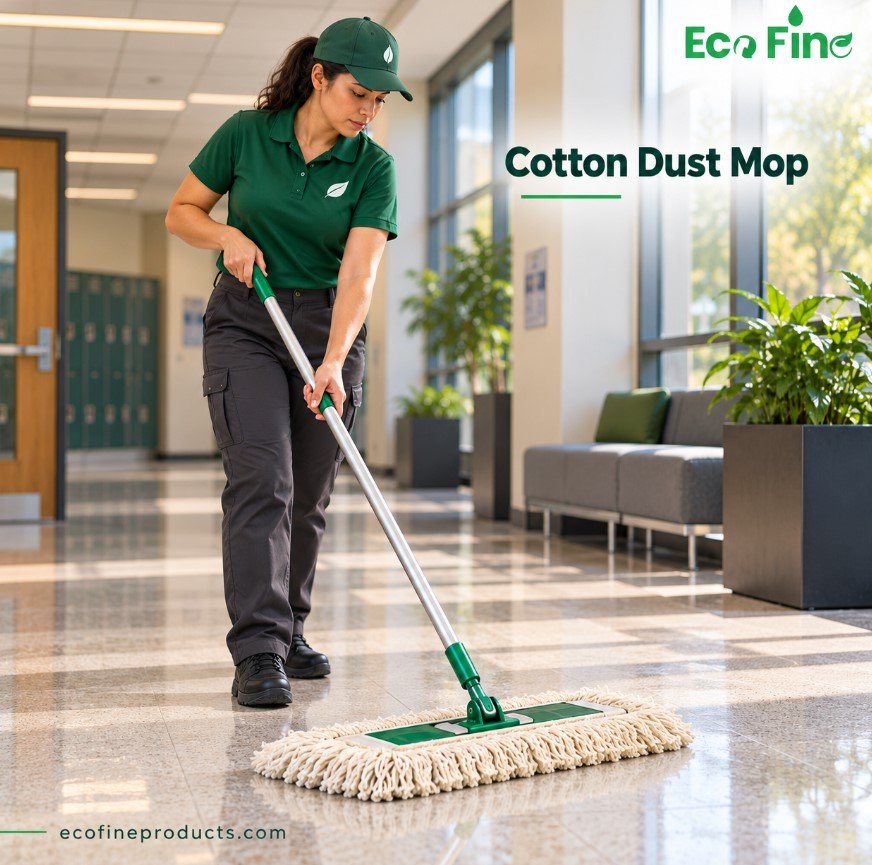
Ecofine’s 24-inch acrylic dust mop for compact commercial cleaning routes is described for dry collection of dust, hair, lint, and lightweight debris. Its 24-inch cotton dust mop for everyday dry floor care serves a similar maintenance purpose. Those descriptions do not establish that one universally outperforms the other.
If you are considering changing materials, compare samples under the same conditions. Use the same floor, cleaning route, and operator instructions. Assess debris collection, handling, head fit, and condition after the approved care process.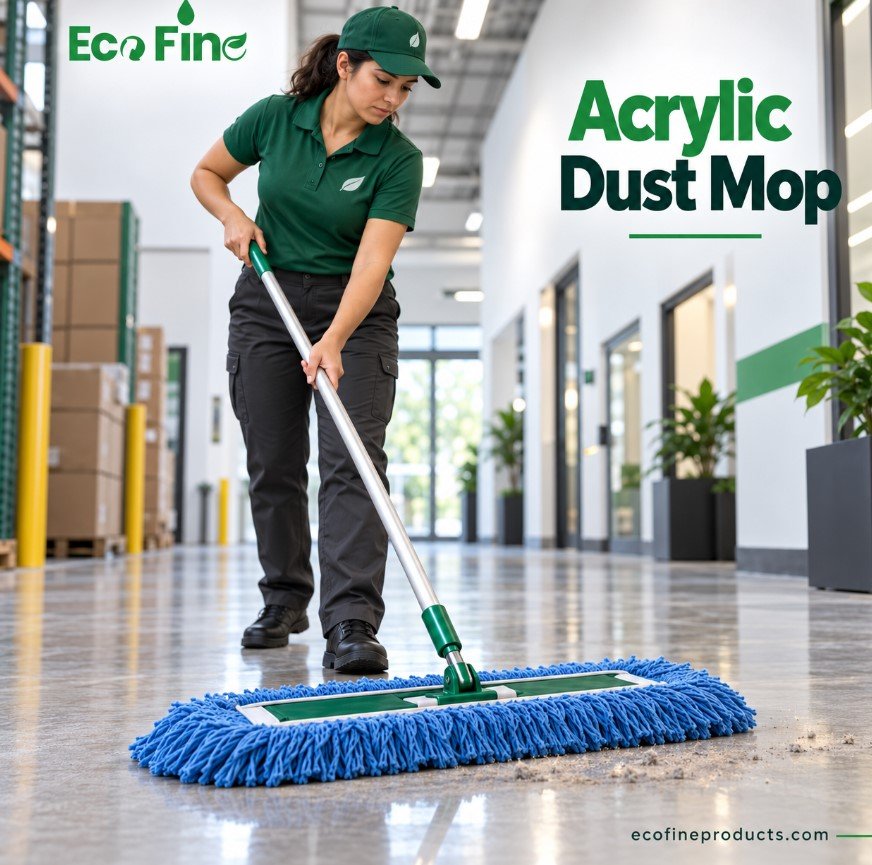
Product and Quality Comparison
| Product or mop type | Material | Relevant size/attachment | Best use | Quality checks | Limitations |
|---|---|---|---|---|---|
| Acrylic dust mop | Acrylic yarn | Ecofine lists 24-, 36-, 48-, and 60-inch options; confirm backing and frame fit | Routine loose-debris collection | Stitching, backing integrity, even floor contact | Not intended to remove spills or adhered soil |
| Cotton dust mop | Cotton yarn | Ecofine lists the same four widths; confirm attachment | Routine dry floor maintenance | Yarn condition, seams, backing fit | Cotton material alone does not establish wet-cleaning suitability |
| Microfiber flat wet mop pad | Microfiber | Listed pad sizes vary; confirm matching holder | Suitable wet-maintenance tasks | Attachment security, pad condition, care instructions | A wet pad is not automatically a dust mop replacement |
| Wet string mop | Cotton, blend, or other specified yarn | Confirm headband, clamp, and wringer requirements | Appropriate floor washing and spill pickup | Secure headband, yarn construction, equipment fit | Requires a separate wet-cleaning setup |
The product types and listed ranges above reflect Ecofine’s reviewed categories. Exact attachment specifications require confirmation before purchasing.
Choose Width Around the Cleaning Route
The widest mop is useful only where workers can keep it positioned effectively. Furniture, doorways, turns, and storage arrangements can make a smaller head more practical.
A 24-inch dust mop is worth considering for furnished spaces and tighter routes. A 36-inch option may suit corridors and mixed layouts. Wider 48- or 60-inch heads deserve consideration where floors are sufficiently open.
For school and office routes, read Ecofine’s discussion of 36-inch acrylic dust mops for Texas schools and offices. For wider spaces, its article on 48-inch acrylic dust mop selection for warehouse floors explains the relationship between coverage and maneuverability. ecofineproducts.com
An illustrative warehouse program might use a wider head for open staging areas and a smaller head for administrative rooms. That arrangement can make more sense than requiring one width everywhere.
Measure the narrowest working spaces on the actual route. Do not estimate productivity from nominal width alone.
Confirm Frame and Handle Compatibility
A replacement head is useful only when it fits the hardware correctly. Matching the advertised length is a starting point, not proof of compatibility.
Before ordering, compare the frame dimensions, head backing, closure method, and handle connection. Ask the supplier to identify the exact compatible components, preferably with measurements or photographs.
This matters particularly when replacing heads on older equipment. A head that bunches, slips, or sits unevenly can interrupt the cleaning routine even when its stated width seems correct.
Confirm whether the quoted item includes the head, frame, handle, or a complete system. Keep those components separate on the purchase order so receiving staff can check the delivery accurately.
Keep Dust Mops Separate From Wet-Cleaning Equipment
The word cotton mop can describe different products. A cotton dust mop is a dry-maintenance tool; a cotton wet string mop belongs to a different cleaning setup.
Similarly, microfiber describes a material rather than one universal application. Ecofine’s microfiber mop pads and commercial floor-cleaning equipment category includes wet pads, frames, and other mop formats. Read each listing before selecting a replacement. ecofineproducts.com
For appropriate floor washing or spill pickup, review the separate commercial wet mop options for floor washing and spill cleanup. Choose cleaning solution, moisture level, and equipment according to the floor and product instructions. ecofineproducts.com
Dry debris removal can precede wet cleaning, but it does not disinfect the floor or replace a required sanitation procedure.
Compare Displayed Prices With the Confirmed Order
A useful price comparison separates replacement heads from hardware and complete systems. It also distinguishes a displayed listing price from a confirmed case quotation.
The following snapshot uses Ecofine’s dust mop category prices checked on 2026. Pack quantities and included components should be confirmed before ordering; no case discount is assumed. ecofineproducts.com
| Product | Pack quantity | Verified displayed price, USD | Calculated unit price | Price drivers | Source/date checked |
|---|---|---|---|---|---|
| 24-inch acrylic dust mop listing | Confirm with supplier | $8.99 | Not calculated; pack basis unconfirmed | Material, construction, included components | Ecofine dust mop category; Oct. 3, 2026 |
| 24-inch cotton dust mop listing | Confirm with supplier | $6.99 | Not calculated; pack basis unconfirmed | Material, construction, included components | Same source/date |
| 36-inch acrylic dust mop listing | Confirm with supplier | $10.99 | Not calculated; pack basis unconfirmed | Width, construction, order quantity | Same source/date |
| 36-inch cotton dust mop listing | Confirm with supplier | $8.49 | Not calculated; pack basis unconfirmed | Width, construction, order quantity | Same source/date |
These are website display prices, not complete-system or delivered-cost quotations. Request current pricing for the exact head, pack, hardware, and destination.
For ongoing costs, include replacement heads, approved laundering, spare inventory, and damaged hardware. A cheaper head may offer little benefit if it creates compatibility problems or additional handling.
Plan Care Before Buying in Bulk
Ask for written care instructions before adding either material to your program. Confirm whether the specific head is washable and which detergent, temperature, and drying method are permitted.
Avoid assigning one wash procedure to every mop in the building. Different backing materials and constructions may require different treatment.
Inspect heads for damaged seams, deteriorating yarn, poor attachment, and debris that remains after approved cleaning. Assess frames separately for damage that prevents proper support.
Keep enough spare heads to support the cleaning schedule while used heads undergo their approved care process. Replacement decisions should follow condition and performance, rather than an invented fixed lifespan.
FAQs About Commercial Dust Mop Purchasing
1. Is acrylic always better than cotton for dust mopping?
No. Both can serve routine dry-floor maintenance. Compare the specific head’s construction, fit, handling, and care requirements. A controlled sample comparison on your actual cleaning route is more useful than assuming every acrylic head will outperform every cotton alternative.
2. Are dust mops and dry mops different products?
The terms often overlap in janitorial purchasing. Confirm what the supplier means by checking material, intended application, dimensions, and attachment. A familiar product name does not establish whether the listing includes a replacement head, hardware, or a complete mop system.
3. Can a cotton dust mop clean up liquid spills?
Select equipment designed for the spill and floor involved. Cotton material alone does not make a dust mop suitable for wet cleaning. A cotton wet string mop has a different format and equipment requirements, so check the intended application before purchasing.
4. Which dust mop size works around desks and furniture?
A 24-inch head is a reasonable size to evaluate in tighter commercial spaces. Check actual clearances and turning areas before standardizing it. A building with both furnished rooms and open corridors may benefit from more than one mop width.
5. Will any 24-inch replacement head fit my existing frame?
Do not assume compatibility from length alone. Check frame width, backing dimensions, closure design, and the supplier’s fit guidance. Send photographs and measurements of existing equipment when necessary, and confirm one sample before placing a large replacement order.
6. Can acrylic and cotton dust mop heads be machine washed?
Follow the instructions for the exact product. Confirm washability, detergent restrictions, temperature, and drying requirements before laundering. Material names do not provide a complete care specification, particularly when the head includes backing, stitching, or closures with separate requirements.
7. Should I apply dust mop treatment?
Use treatment only when both the mop instructions and floor manufacturer’s guidance permit it. Check whether the head is supplied pretreated or intended for untreated use. Do not add oils or other products simply because another dust mop program uses them.
8. When should a commercial dust mop head be replaced?
Replace a head when damage or deterioration prevents reliable use after approved cleaning. Relevant signs include failed seams, insecure attachment, damaged backing, or persistent debris retention. Check the supporting frame as well, since hardware problems can affect how the head contacts the floor.
9. Does the listed dust mop price include the handle?
Confirm the included components in writing. A listing may cover a replacement head, hardware, or a bundle. Ask for separate descriptions and quantities for heads, frames, and handles so the price comparison and purchase order reflect the same equipment.
10. What information should I provide for a bulk quote?
Provide material preference, mop width, attachment details, quantity, existing frame information, and delivery ZIP code. State whether you need heads alone or complete systems. Also request pack quantities, written care instructions, and the specification for future replacement orders.
Choose a Dust Mop Your Team Can Maintain Consistently
The strongest purchasing decision combines suitable material, workable width, confirmed hardware fit, and a practical care routine. Test a sample before committing to a large equipment change.
To request a dust mop quote for your facility’s cleaning requirements, provide your floor type, preferred size, attachment details, required quantity, and delivery location. Ask for confirmation of pack quantities and included components before approving the order.