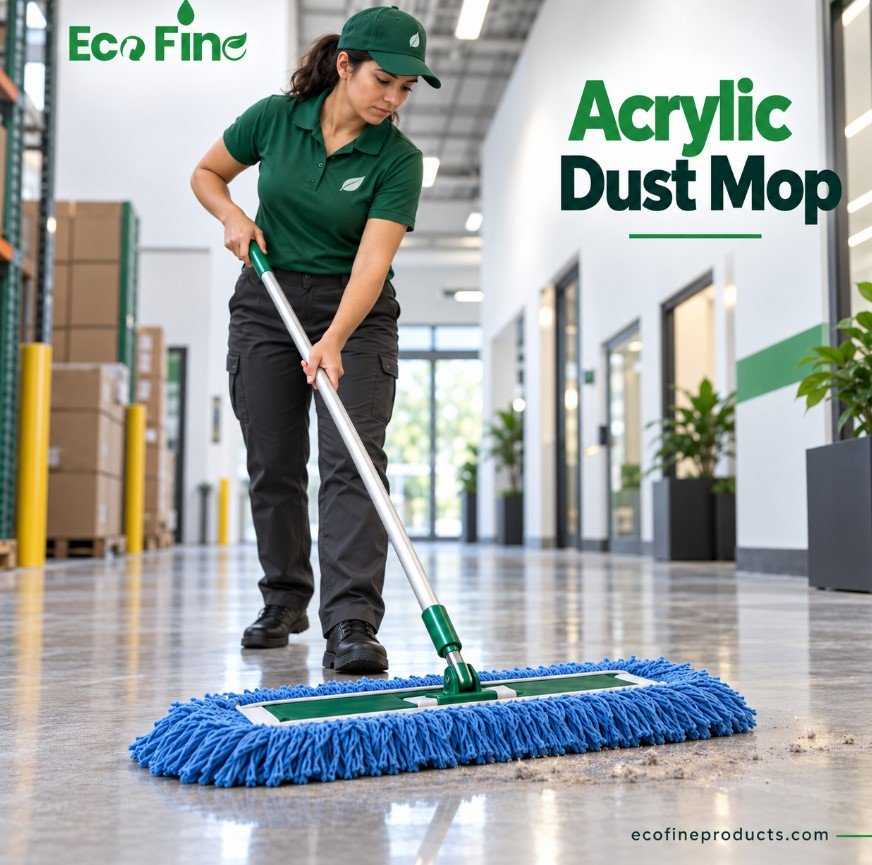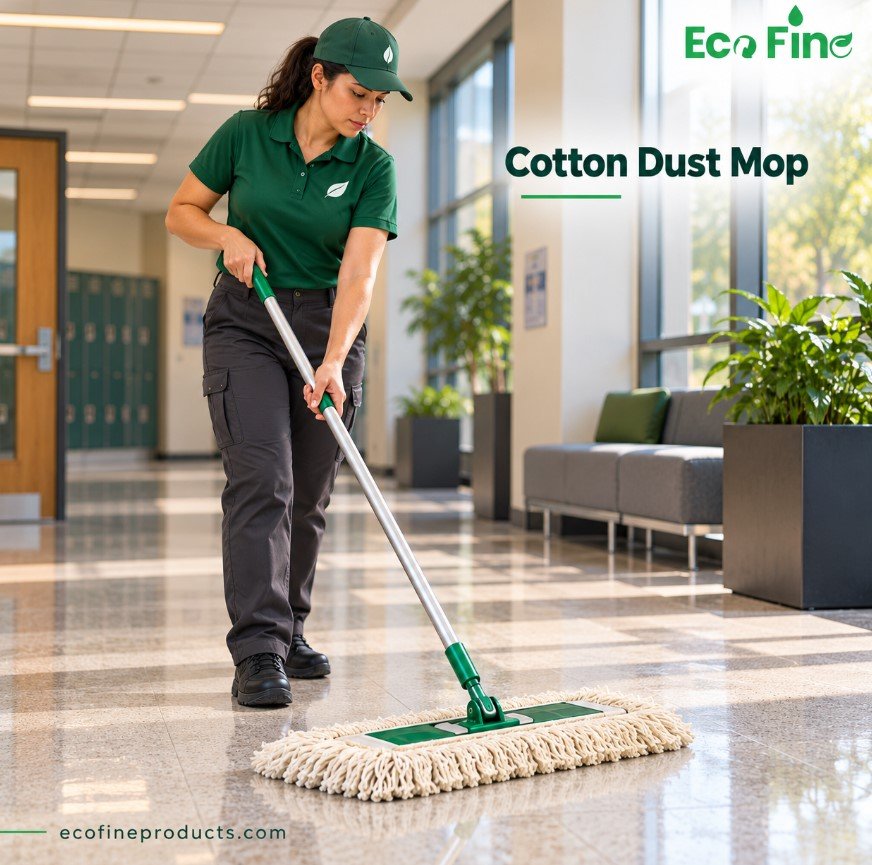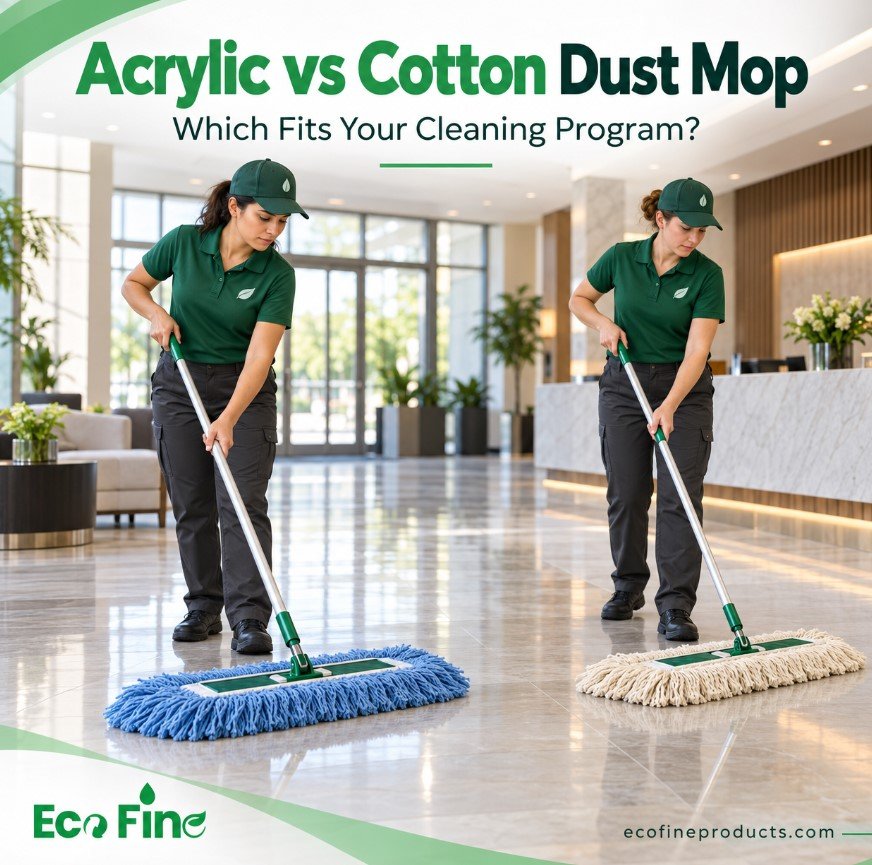
Choosing an acrylic vs cotton dust mop starts with the cleaning task, equipment fit, and maintenance routine. Both are options for collecting loose dry debris from suitable hard floors. Neither replaces wet cleaning for spills or stuck-on soil. For commercial buyers, the better choice is the head that fits existing hardware, works across the cleaning route, and can be maintained consistently. A lower purchase price matters, but so do replacement availability, handling, and care requirements. Compare those factors before ordering equipment for an entire school, hotel, office building, or warehouse.
Start With the Soil You Need to Remove
A commercial dust mop belongs in the dry-maintenance stage of floor care. Its job is to gather loose dust, hair, lint, and lightweight debris before those materials spread or interfere with subsequent cleaning. Ecofine describes both its acrylic and cotton dust mop products as tools for routine dry-floor maintenance. Its commercial dust mops for daily hard-floor cleaning category lists both materials in multiple widths. Consider an illustrative office cleaning route: loose paper fibers in a corridor call for dry debris removal, while a sticky beverage spill requires a suitable wet-cleaning process.
Acrylic and Cotton: Compare the Complete Head
Material is useful information, but it does not tell you everything about construction. Backing, stitching, yarn arrangement, attachment design, and care instructions also affect whether a replacement head will work in your program. Ecofine’s 24-inch acrylic dust mop for compact commercial cleaning routes is described for dry collection of dust, hair, lint, and lightweight debris. Its 24-inch cotton dust mop for everyday dry floor care serves a similar maintenance purpose. Those descriptions do not establish that one universally outperforms the other.
Choose Width Around the Cleaning Route
The widest mop is useful only where workers can keep it positioned effectively. Furniture, doorways, turns, and storage arrangements can make a smaller head more practical. A 24-inch dust mop is worth considering for furnished spaces and tighter routes. A 36-inch option may suit corridors and mixed layouts. Wider 48- or 60-inch heads deserve consideration where floors are sufficiently open. For school and office routes, read Ecofine’s discussion of 36-inch acrylic dust mops for Texas schools and offices. For wider spaces, its article on 48-inch acrylic dust mop selection for warehouse floors explains the relationship between coverage and maneuverability.
Confirm Frame and Handle Compatibility
A replacement head is useful only when it fits the hardware correctly. Matching the advertised length is a starting point, not proof of compatibility. Before ordering, compare the frame dimensions, head backing, closure method, and handle connection. Ask the supplier to identify the exact compatible components, preferably with measurements or photographs. This matters particularly when replacing heads on older equipment. A head that bunches, slips, or sits unevenly can interrupt the cleaning routine even when its stated width seems correct.
Plan Care Before Buying in Bulk
Ask for written care instructions before adding either material to your program. Confirm whether the specific head is washable and which detergent, temperature, and drying method are permitted. Avoid assigning one wash procedure to every mop in the building. Different backing materials and constructions may require different treatment. Inspect heads for damaged seams, deteriorating yarn, poor attachment, and debris that remains after approved cleaning. Assess frames separately for damage that prevents proper support. Keep enough spare heads to support the cleaning schedule while used heads undergo their approved care process.
Equipment Comparison Checklist
| Check | Options | Decision |
|---|---|---|
| Cleaning task | Loose dry debris | Use a suitable dry-maintenance head |
| Working width | 24, 36, 48 or 60 inches | Match clearances and turning space |
| Hardware | Head, frame and handle | Confirm dimensions and attachment |
| Maintenance | Product-specific care | Inspect backing, yarn and closures |
Frequently Asked Questions
Is acrylic always better than cotton for dust mopping?
No. Both can serve routine dry-floor maintenance. Compare the specific head’s construction, fit, handling, and care requirements. A controlled sample comparison on your actual cleaning route is more useful than assuming every acrylic head will outperform every cotton alternative.
Are dust mops and dry mops different products?
The terms often overlap in janitorial purchasing. Confirm what the supplier means by checking material, intended application, dimensions, and attachment. A familiar product name does not establish whether the listing includes a replacement head, hardware, or a complete mop system.
Can a cotton dust mop clean up liquid spills?
Select equipment designed for the spill and floor involved. Cotton material alone does not make a dust mop suitable for wet cleaning. A cotton wet string mop has a different format and equipment requirements, so check the intended application before purchasing.
Which dust mop size works around desks and furniture?
A 24-inch head is a reasonable size to evaluate in tighter commercial spaces. Check actual clearances and turning areas before standardizing it. A building with both furnished rooms and open corridors may benefit from more than one mop width.
Will any 24-inch replacement head fit my existing frame?
Do not assume compatibility from length alone. Check frame width, backing dimensions, closure design, and the supplier’s fit guidance. Send photographs and measurements of existing equipment when necessary, and confirm one sample before placing a large replacement order.
Can acrylic and cotton dust mop heads be machine washed?
Follow the instructions for the exact product. Confirm washability, detergent restrictions, temperature, and drying requirements before laundering. Material names do not provide a complete care specification, particularly when the head includes backing, stitching, or closures with separate requirements.
Should I apply dust mop treatment?
Use treatment only when both the mop instructions and floor manufacturer’s guidance permit it. Check whether the head is supplied pretreated or intended for untreated use. Do not add oils or other products simply because another dust mop program uses them.
When should a commercial dust mop head be replaced?
Replace a head when damage or deterioration prevents reliable use after approved cleaning. Relevant signs include failed seams, insecure attachment, damaged backing, or persistent debris retention. Check the supporting frame as well, since hardware problems can affect how the head contacts the floor.