
Car Drying Towel Condition Checks for Commercial Teams
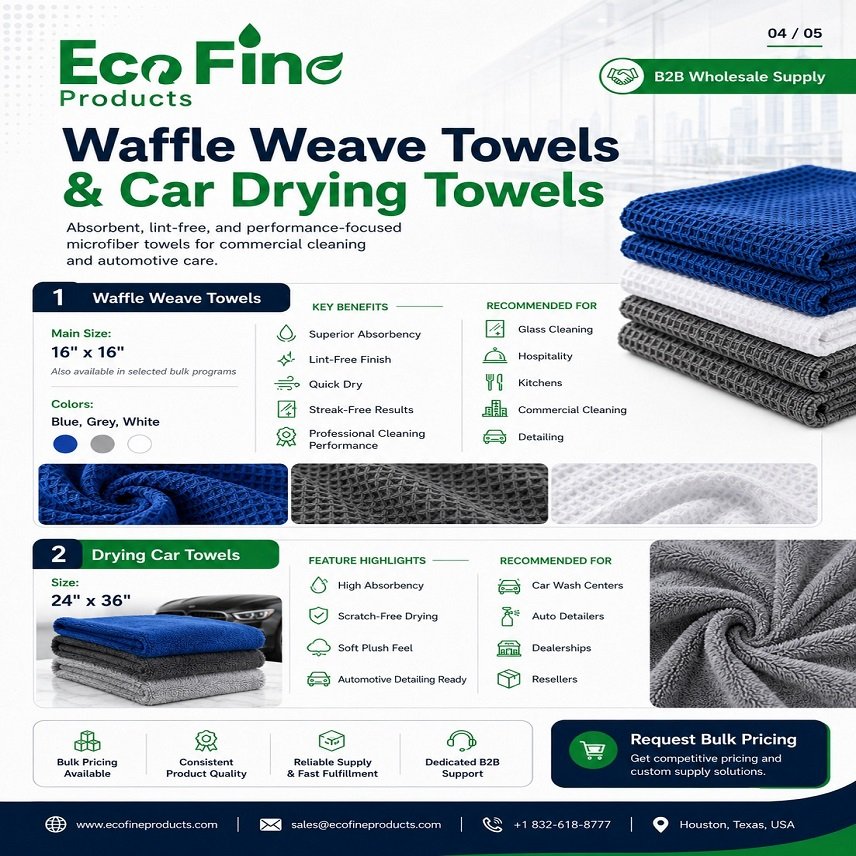
Car drying towel condition checks help commercial teams distinguish a suitable ready item from a towel needing care or withdrawal. A premium microfiber label does not independently guarantee a scratch-free finish. The towel works within an approved wash, preparation and exterior-drying process. EcoFine’s drying-towel options can be assessed as part of that program. This guide focuses on practical checks, change decisions and records that keep condition concerns connected to the item and method actually used.
Keep the Check Connected to the Task
Identify which configuration and exterior-drying assignment the towel is approved to support. Keep it separately assigned from cloths used for wheels, interiors or other cleaning tasks under the business’s handling procedure. A condition check should not become permission to extend a familiar towel into every vehicle-care role. Record the applicable method and who reviews an uncertain item.
Inspect Before the Assignment
Review the working fabric, edges and any material remaining from earlier use according to the approved process. Confirm that the towel came from suitable ready stock and that the selected item is identifiable. Refer concerns for review rather than assuming a new-looking face establishes suitability. The purpose is a practical readiness decision, not a claim that visual inspection proves the absence of every possible issue.
Distinguish Loading From Damage
Explain the conditions that require a fresh item during the assignment and which concerns need maintenance or supervisor review. A towel awaiting the permitted care process is not necessarily retired, while damaged fabric should not remain counted as ready stock. Record those states separately. Do not assume one towel should complete every vehicle or that another fold always extends use appropriately. Change decisions should follow the approved method and observations from normal work rather than an unsupported universal task allowance.
Observe Handling During Use
Have regular operators report repeated adjustment, awkward control or a change in how the selected configuration handles. Confirm actual dimensions and assess the towel in the working condition, not only when dry. Compare any concern with the method and vehicle assignment recorded at approval. A handling problem may need a different folded arrangement, configuration review or care investigation.
Review the Completed Result
Use the normal inspection method to record remaining moisture, missed areas and repeated attention. Keep vehicle preparation, loading, technique and towel condition with the observation. A mark or residue concern should prompt review of the complete process instead of an immediate assumption about the fabric alone. Keep findings tied to the actual assignment and configuration. A practical result check helps the business decide what needs attention without turning a local trial into a universal scratch-free or performance guarantee.
Check After Permitted Care
Obtain the selected item’s care label and confirm cleaning, drying and treatment requirements. Inspect fabric and edges before returning maintained towels to service. Record persistent residue or deterioration that prevents dependable use for the approved task. Do not invent a fixed wash-cycle lifespan. Keep care findings available to the supervisor, allowing a recurring issue to be reviewed alongside preparation, handling and storage rather than treated as an isolated product failure with no record of how the towel was maintained.
Use Clear Inventory States
Separate ready stock, active use, towels awaiting care, drying items and condition-based withdrawals. Track losses independently from items removed because of condition. A large overall inventory can conceal a shortage of suitable towels at the station. Review collection and care turnaround when ready replacements run short. The count should explain availability for the next assignment, not simply the number owned or an unsupported expectation that a high GSM towel can stay in use indefinitely.
Keep Withdrawals Reviewable
Record the item reference and reason when a towel is removed from the usable count. Look for recurring patterns by configuration, assignment or care arrangement. Keep uncertain items distinguishable while they are reviewed and explain the next step to staff. For specification questions, contact EcoFine with the identified towel and application details. A maintained record gives purchasing evidence for a targeted decision instead of relying on a general premium-versus-cheap comparison or an invented retirement schedule.
Review the Process When Conditions Change
New vehicles, products, methods or care arrangements may require the readiness and change instructions to be reassessed. Tell operating and maintenance staff about accepted revisions and keep superseded instructions distinguishable from the current version. A useful condition-check routine remains connected to the actual towel and assignment. It supports consistent handling and stock decisions while preserving a clear boundary between observed local suitability and a guarantee that no towel or process could ever produce an unwanted result.
Planning and Approval Checklist
| Check | Requirement |
|---|---|
| Task | Record the approved assignment |
| Item | Confirm the complete configuration |
| Availability | Count usable and unavailable stock separately |
| Review | Retain local findings and accepted changes |
Frequently Asked Questions
What should a condition check support?
Decide whether the identified towel is suitable for its approved task, needs care or requires withdrawal, without treating appearance as a universal guarantee.
Does a premium label establish a guaranteed finish?
No. Preparation, handling, towel condition and the selected configuration affect the local result. Assess the complete method on representative work.
How should loading and damage be distinguished?
An item awaiting permitted care is not necessarily retired. Keep ready stock, care needs and condition-based withdrawals separately identified.
Can one towel be assumed sufficient for every vehicle?
No. Set change conditions around the approved process and observed work, with suitable replacements available at the station.
What should the result check record?
Review remaining moisture, missed areas and repeated attention under normal inspection conditions, retaining relevant vehicle and preparation details.
How should used stock return?
Keep it separate from ready replacements and follow the selected product’s care label. Inspect maintained fabric and edges before reissue.
What should be saved with the task instructions?
Retain the approved item, dimensions, GSM, blend, edge and care requirements so the supplied configuration remains identifiable.
When should the check routine be reviewed?
Review new vehicles, methods, products or care arrangements and keep staff instructions linked to the actual towel and assignment.