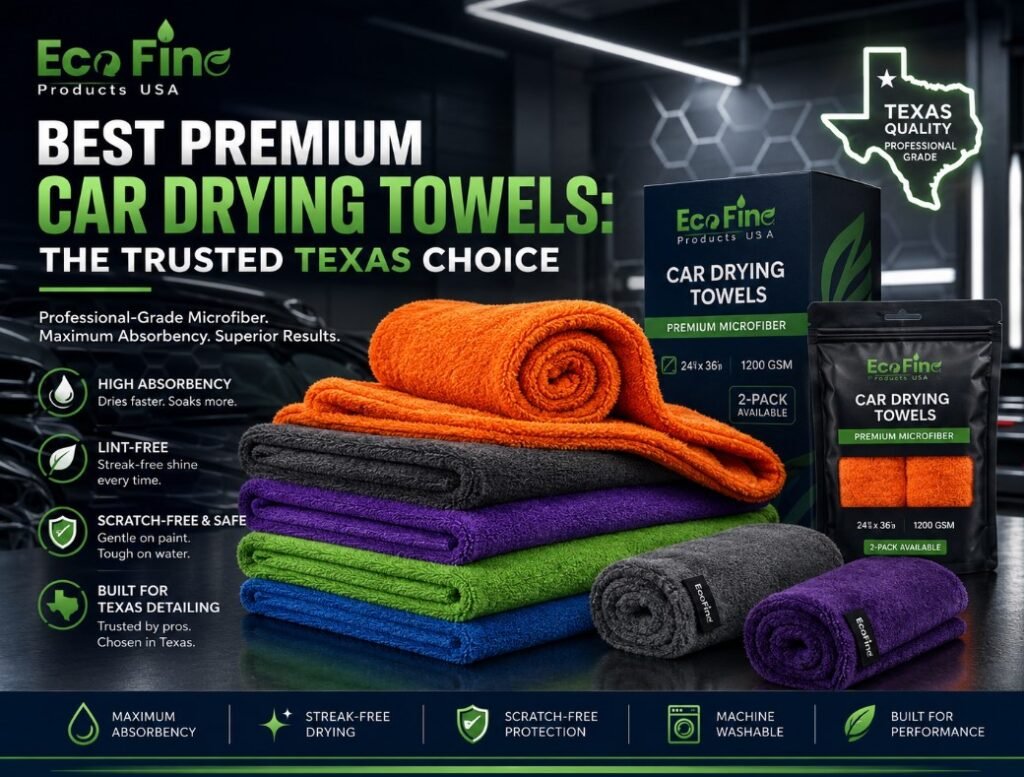

Choosing a car drying towel is easier when the comparison starts with vehicle size, operator handling and the complete wash process. A premium label or high GSM value does not by itself guarantee a particular drying speed or a mark-free finish. EcoFine offers 1200 GSM, 1400 GSM and 1600 GSM twisted-loop microfiber drying-towel options. This guide focuses on selecting and testing a configuration for the detailing program rather than declaring one towel best for every vehicle.
Understand What GSM Describes
GSM means grams of fabric mass per square meter. It describes a fabric-weight characteristic, not a guaranteed volume of water absorbed or a cleaning-speed rating. Compare it alongside dimensions, construction, blend and edge finish. Two towels with the same GSM can differ in total fabric area and handling. A heavier specification is therefore one part of the decision, not proof that the towel will suit every operator or complete a whole vehicle without a change.
Choose Dimensions Around the Vehicle Mix
Identify the bodywork and access conditions staff normally handle. Broad panels and tighter areas can need different folded control. Confirm the selected length and width instead of relying on labels such as XL. EcoFine lists several metric formats in its supply programs, with U.S. equivalents described as approximate. Ask for the exact configuration for the chosen item. Assess how the towel is unfolded, repositioned and controlled under normal working conditions rather than selecting area alone as a productivity promise.
Assess Handling in the Working Condition
Have the regular operator evaluate the sample through the intended exterior-drying method after the approved wash and rinse process. Record control, access, visible moisture remaining and the need for fresh stock. Include the way the towel handles during use, not only how it feels when dry. A large or dense towel may suit one assignment while another format is easier to manage elsewhere. Compare candidates on equivalent vehicles and conditions before standardizing a size or fabric weight.
Confirm the Entire Towel Configuration
EcoFine’s reviewed drying-towel listings describe double-sided twisted-loop construction with size, blend, edge, color and packaging options. Confirm the exact item rather than assuming every listed combination is held in stock. Available blend options include 80/20 or 70/30 polyester/polyamide for the reviewed programs; ask which applies to the selected order. Keep dimensions and edge finish with the specification.
Keep Exterior Drying Stock Dedicated
Identify towels assigned to exterior drying separately from cloths used for other vehicle-cleaning tasks. Follow the detailing program’s handling and return procedure so ready drying stock remains distinguishable from used items. Inspect the towel before the assignment and use the approved method for the surface involved. The construction does not eliminate the importance of towel condition and the preceding wash process.
Compare the Result Fairly
Use the same approved method and comparable vehicle conditions when assessing alternatives. Record remaining moisture, repeated attention, handling and towel changes. Review the completed result under the program’s normal inspection conditions. If performance varies, assess preparation, residue, technique, towel loading and condition together. Keep findings specific to the trial rather than describing a fabric density as a guarantee against every mark, scratch or drying issue. A clear record gives another supervisor a practical basis for repeating the comparison.
Include Care and Turnaround in Selection
Obtain the care label for the selected towel and confirm cleaning, drying and treatment requirements. Reassess maintained samples as well as new stock, inspecting fabric and edges. Count towels awaiting care separately from clean reserve. Track losses independently from condition-based withdrawals and review the time between collection and return. A dense reusable towel still needs a workable process for returning it to suitable condition; an invented wash-cycle lifespan should not replace that assessment.
Make Commercial Orders Specific
State the chosen fabric weight, dimensions, blend, edge finish, color and packaging, with the required quantity units. Confirm what each pack or carton contains and which configuration is available for the actual order. Keep custom branding requests separate from the working towel specification, with supplier approval where required. For further confirmation, send EcoFine the intended vehicle-drying workflow and order requirements.
Select From Local Evidence
Retain the sample configuration, vehicle conditions, approved method and care findings with the purchase record. Review demand and ready-stock availability as the vehicle mix or work schedule changes. A towel can be a useful choice for one program without being the best option for every business. Keep the final selection connected to observed handling and results, giving future buyers and staff a clear reason for the specification instead of an unsupported ranking or dated price comparison.
Specification and Use Checklist
| Check | Requirement |
|---|---|
| 1200 GSM | Reviewed double-sided twisted-loop option |
| 1400 GSM | Reviewed double-sided twisted-loop option |
| 1600 GSM | Reviewed double-sided twisted-loop option |
| Selected order | Confirm size, blend, edge and pack quantity |
Frequently Asked Questions
Does higher GSM guarantee faster drying?
No. GSM describes fabric mass per square meter. Dimensions, construction, preparation, handling and towel condition also affect the local result.
Which listed GSM options can be compared?
The reviewed EcoFine programs include 1200, 1400 and 1600 GSM twisted-loop drying-towel options. Confirm the chosen configuration for the actual order.
Why assess the towel during use?
Working handling can differ from dry handling. Evaluate control, access, remaining moisture and towel changes through the intended exterior-drying method.
Does XL establish an exact size?
No. Confirm selected length and width. Keep listed metric formats and approximate U.S. equivalents distinguishable in the order record.
Are all listed supply options ready to ship?
Do not assume that. Confirm the exact size, blend, edge, color, packaging and availability for the proposed order.
Can one towel be assumed sufficient for every vehicle?
No. Define change conditions around the approved process and observed use. Keep suitable clean replacements available for the assignment.
What should a fair trial record?
Record the towel configuration, comparable vehicle conditions, method, handling, moisture remaining, repeated attention and condition after permitted care.
How should commercial purchasing remain specific?
State fabric weight, dimensions, blend, edges, color, packaging and quantity units. Review substitutions and branding requirements separately before approval.