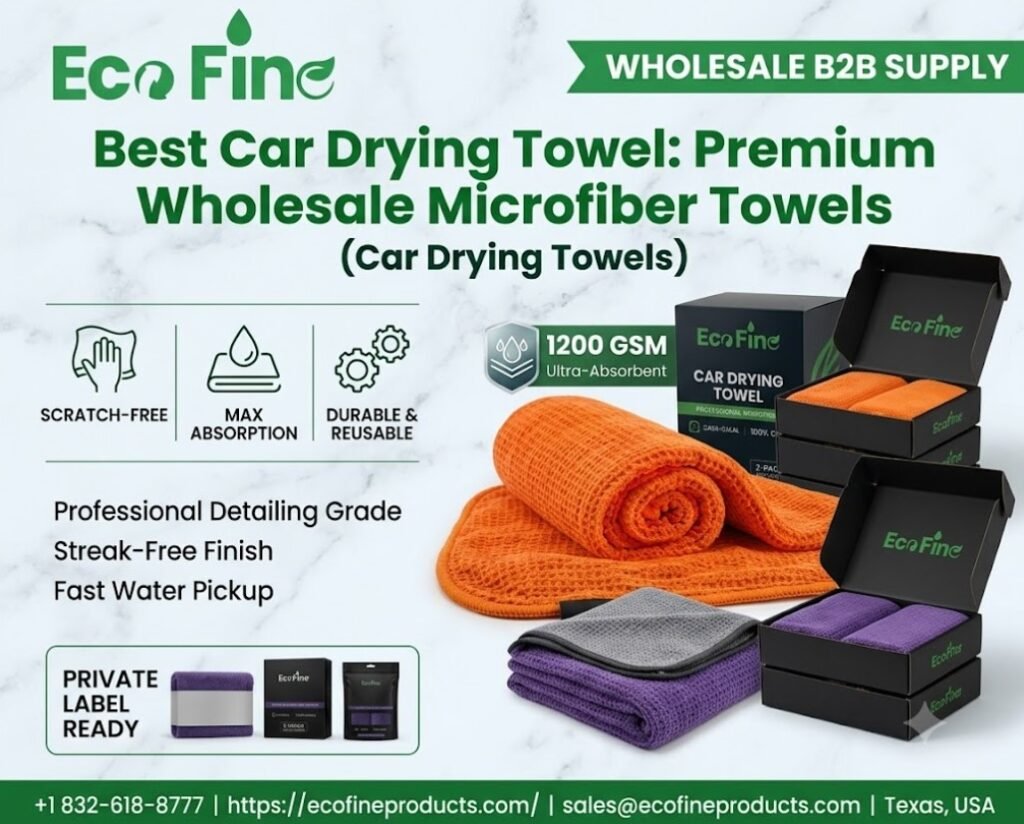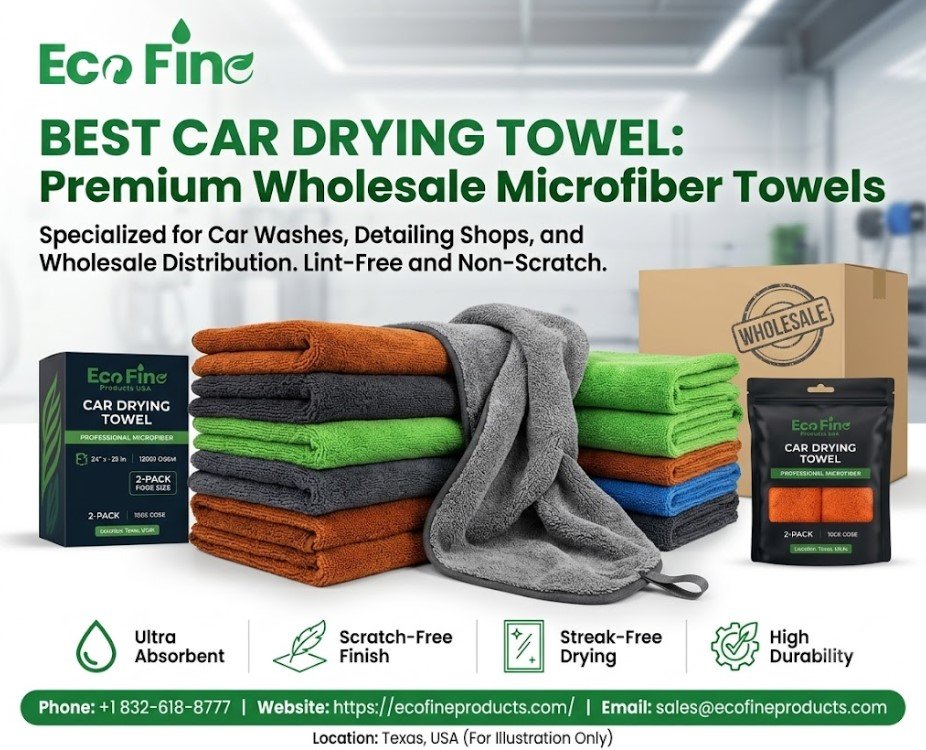
Comparing car drying towel samples is useful only when the conditions and the configuration tested are recorded. A towel described as best or premium may still handle differently for another operator, vehicle or care process. EcoFine offers several twisted-loop drying-towel configurations that commercial buyers can evaluate. This guide focuses on designing a practical sample trial and retaining evidence for approval, rather than publishing a universal ranking or a dated price comparison.
Comparing Drying Towels for a Bulk Purchase?
Tell EcoFine about your car wash or detailing operation, the towel configuration you are considering, estimated quantity and delivery ZIP code. Ask about current product options, sample availability, pack quantities and quotation details before placing an order.
Write the Trial Question Before Comparing Samples
Identify the decision the team needs to make, such as whether a size is manageable or whether a construction fits the established drying routine. Keep the question narrow enough to observe during representative work. Record the current approved method and the conditions under which the comparison will occur. Without that context, a favorable demonstration can become an unsupported general claim. A clear question helps staff collect relevant feedback instead of simply stating that one new towel feels more premium than another.
Identify Every Sample Precisely
Label the sample record with the product reference, finished dimensions, GSM, construction, blend and edge finish where confirmed. Keep missing information open for supplier confirmation rather than borrowing details from another listing. Similar colors or size names can conceal different items.
Keep the Preparation Comparable
Use the approved wash, rinse and exterior-drying process and record relevant differences between the vehicles assessed. Avoid comparing a new sample on one method with another towel under materially different loading or preparation. Let regular employees perform the work. Include normal unfolding, repositioning and towel changes rather than only a short pass on an easy panel. Comparable conditions improve the usefulness of observations without turning the local assessment into a laboratory test it was not designed to be.
Observe Handling in the Working Condition
Ask staff to record control, access, folding and any repeated adjustment as the towel is used. A dry sample’s feel does not establish how the complete assignment will handle. Review the dimensions alongside the vehicle mix and operator technique. A larger towel may suit a broad panel while a different folded arrangement is easier elsewhere. Keep those findings specific, so the approval explains where the sample was useful rather than declaring one size automatically superior for every commercial drying task.
Define a Consistent Result Check
Use the program’s normal inspection conditions to review remaining moisture, missed areas and repeated attention. Record towel changes and any issue needing further review. Assess the surface preparation, loading, residue and technique alongside towel condition when results vary. Avoid inventing an absorption score or guaranteed scratch-free result from a short demonstration. A practical record should let another supervisor understand the completed result and repeat the relevant check without relying on a broad statement that the towel worked better.
Include Care Before Final Approval
Follow the supplied cleaning and drying instructions and reassess the maintained sample. Inspect fabric and edges, and record any handling or result change relevant to the task. Confirm that the intended locations can perform the care process. A towel that suits the first assignment may still be awkward for the program if ready stock cannot return on time. Keep these findings with the sample identity, rather than approving an item on new-fabric appearance alone or assuming a fixed number of successful cycles.
Compare Evidence With the Original Question
Review operator observations, result checks and care findings against the decision stated at the start. Identify unresolved issues instead of averaging them into an invented overall rating. A useful approval can include a limited assignment or a need for another size in part of the workflow. Keep the reason understandable to purchasing staff. The local evidence supports a specific configuration and method, not a public claim that all towels in the same material or GSM category perform identically.
Retain the Accepted Sample Record
Save the item reference, configuration, assessed conditions, method and acceptance notes with the purchasing specification. Keep superseded or rejected alternatives distinguishable from the approved version. For configuration questions, contact EcoFine with the sample and intended drying assignment. Ask for review when a proposed substitution changes dimensions, construction, blend, edge or care. This lets receiving and future buyers identify the configuration accepted by operations instead of guessing from an old product photograph.
Review Approval When Conditions Change
A revised vehicle mix, drying method or care arrangement can require another assessment. Ask the supervisor to identify what changed and which part of the earlier trial remains applicable. Keep established stock assigned to suitable work while the revised requirement is reviewed. Update the record and staff instructions after an accepted change, so later users inherit a current decision rather than a sample result whose operating conditions no longer match the program.
Planning and Approval Checklist
| Check | Requirement |
|---|---|
| Sample identity | Confirm the exact configuration |
| Working method | Use representative approved conditions |
| Result check | Record handling and completed appearance |
| Care | Reassess maintained samples before approval |
Frequently Asked Questions
What should a sample trial decide?
State a specific local question, such as manageable size or fit with the approved method, before collecting observations.
How should samples be identified?
Record the exact reference, dimensions, GSM, construction, blend and edge where confirmed. Keep unresolved details visible for supplier confirmation.
What makes a comparison useful?
Use comparable work, approved preparation, normal operators and the same result check. Record relevant differences in vehicle or soil conditions.
Why include towel changes?
Changes and return affect normal work. A short uninterrupted pass does not represent the complete drying assignment.
What should handling observations cover?
Assess control, access, folding and repeated adjustment in the working condition rather than relying only on dry sample appearance.
Should maintained samples be assessed?
Yes. Follow the supplied care instructions and review fabric, edges, handling and results after permitted maintenance.
Does local approval establish a universal ranking?
No. Keep the decision tied to the configuration, task and conditions assessed, including any application limits.
When should the trial record be revisited?
Review changed vehicles, methods, care arrangements or substitutions before extending an earlier approval to another configuration or assignment.