
Color-Coded Cloth Assignments: Review and Stock Guide
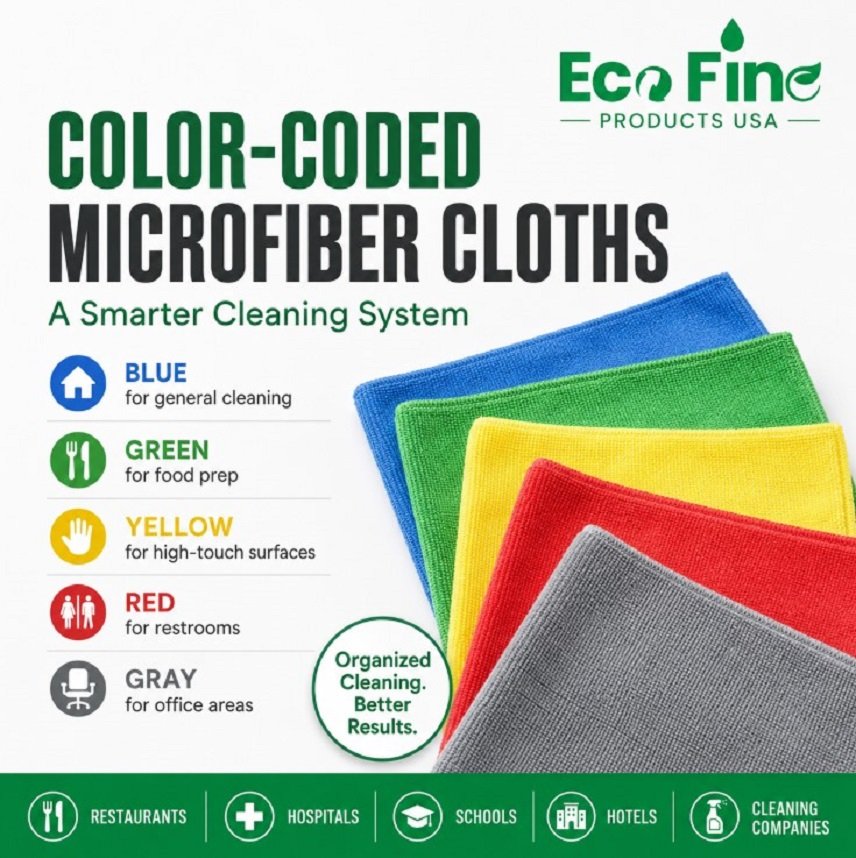
Color-coded cloth assignments are useful when staff can connect the local color with a defined task, approved item and handling rule. Color does not independently establish cleanliness or a universal meaning across every facility. EcoFine’s color-coded workflow guide covers the operating sequence. This article focuses on reviewing the assignment chart and stock consistency, so changes in products, staffing or care do not quietly undermine the system the organization intended to use.
Confirm the Local Meaning of Each Assignment
Ask the responsible supervisor to identify the current task and zone rules. Record who maintains the chart and where the accepted version is available. Do not assume that a color used at another facility has the same meaning locally. Keep specialist and required sanitation procedures under their existing instructions. The chart should support the approved method, not replace it or imply that a particular colored cloth is automatically suitable for every surface within a broadly named department.
Connect Color With the Exact Item
Record the approved cloth reference, dimensions, construction and care requirements as well as the assigned color. Several different fabrics can share a color, and similar names can conceal a changed working product. Confirm availability of the actual option supplied rather than assuming every catalog item comes in every required shade. Keep the chart and purchasing record linked. This lets staff identify a mismatch without relying on appearance alone or treating color as evidence that two products are equivalent.
Review the Point of Issue
Check how clean replacements are labeled and selected on shelves, carts or service stations. Ask regular employees and covering staff to explain the intended assignment using the current chart. Review whether several colors or textures are stored in a way that creates uncertainty. Keep used items separate from ready stock under the organization’s handling procedure. A well-written chart has limited value if the physical stock arrangement makes staff search through returned items or choose a similar-looking alternative.
Follow the Item Through Return and Care
Observe how used cloths are collected, transported, maintained and returned to ready stock. Preserve the relevant task and clean-versus-used distinctions under the organization’s procedure. Follow product-specific care instructions rather than assigning one method solely because every item is microfiber. Count unavailable stock separately from ready reserve.
Check Availability Against the Chart
Compare the colors and confirmed item references actually supplied with the current assignments. Record missing or unreviewed alternatives and give staff a clear route for resolving a shortage. Do not let an unavailable option become an informal permanent change in meaning. Review quantity needs alongside task demand and care turnaround. A large total cloth count can conceal a shortage in one approved assignment, so ready stock should be understandable by item and role rather than only by an overall inventory number.
Review Training Against Real Work
Demonstrate selection, preparation, working-face changes and used-stock return on the actual assignment. Observe initial shifts and ask covering employees to explain the next step. Keep point-of-use reminders consistent with the current chart and remove superseded versions from the work area. A color system should make the correct process easier to repeat, not encourage staff to memorize colors while guessing about surface instructions or when a fresh cloth is required.
Control Changes to the System
Review proposed changes to colors, fabric, task boundaries, labels or care arrangements before distribution. Identify who approves the revision and notify operating, purchasing and maintenance teams. A new shade or item reference should not silently inherit an earlier assignment. Keep the current chart distinguishable from superseded versions. Where another location joins the program, confirm its actual method instead of assuming the same colors settle all local requirements.
Use an Assignment Review Record
Note the date, current chart version, approved item references, stock gaps and actions requiring review. Keep observations practical rather than inventing a universal compliance score. For supply questions, send EcoFine the confirmed construction, color and quantity requirements. A receiving check should compare the delivered item with the approved record, while operations retains responsibility for the local assignment. This preserves the distinction between buying a colored cloth and maintaining a working identification system.
Revisit the Chart When Conditions Change
New surfaces, departments, products or staffing arrangements can affect the assumptions behind a color assignment. Review the applicable instructions and update the chart through the organization’s normal process before extending use. Keep the meaning clear to relief staff and explain accepted revisions at handover. A periodic review remains useful when it connects the written system with actual stock and work, rather than treating a familiar set of colors as permanent proof that the routine is being followed.
Planning and Approval Checklist
| Check | Requirement |
|---|---|
| Assignment | Use the current local task chart |
| Color | Confirm the option actually supplied |
| Item | Identify construction, dimensions and care |
| Review | Keep changes and stock gaps documented |
Frequently Asked Questions
Does a color have a universal facility meaning?
Do not assume that. Use the organization’s current approved task and zone assignments and identify who maintains the chart.
Does color establish cleanliness?
No. Keep clean and used stock distinct through issue, work, collection, care and return under the organization’s handling procedure.
What should the assignment chart identify?
Connect task or zone, local color, exact item, method and relevant exceptions, keeping the current version accessible to staff.
Why confirm fabric as well as color?
Different constructions can share a color. Confirm the approved item, dimensions and care instead of treating appearance as evidence of equivalence.
How should shortages be handled?
Give staff a clear review route and check available colors, approved items, demand and care turnaround rather than making an informal permanent substitution.
What should practical training demonstrate?
Show selection, preparation, changes and return on actual work. Keep point-of-use reminders consistent with the current chart.
Which changes should receive review?
Review colors, fabric, task boundaries, labels and care before distribution, notifying operating, purchasing and maintenance teams.
When should the chart be revisited?
Review new surfaces, departments, products or staffing arrangements and compare written assignments with the stock and method actually used.