
Dust Mop vs Wet Mop: Which Should Your Facility Use?
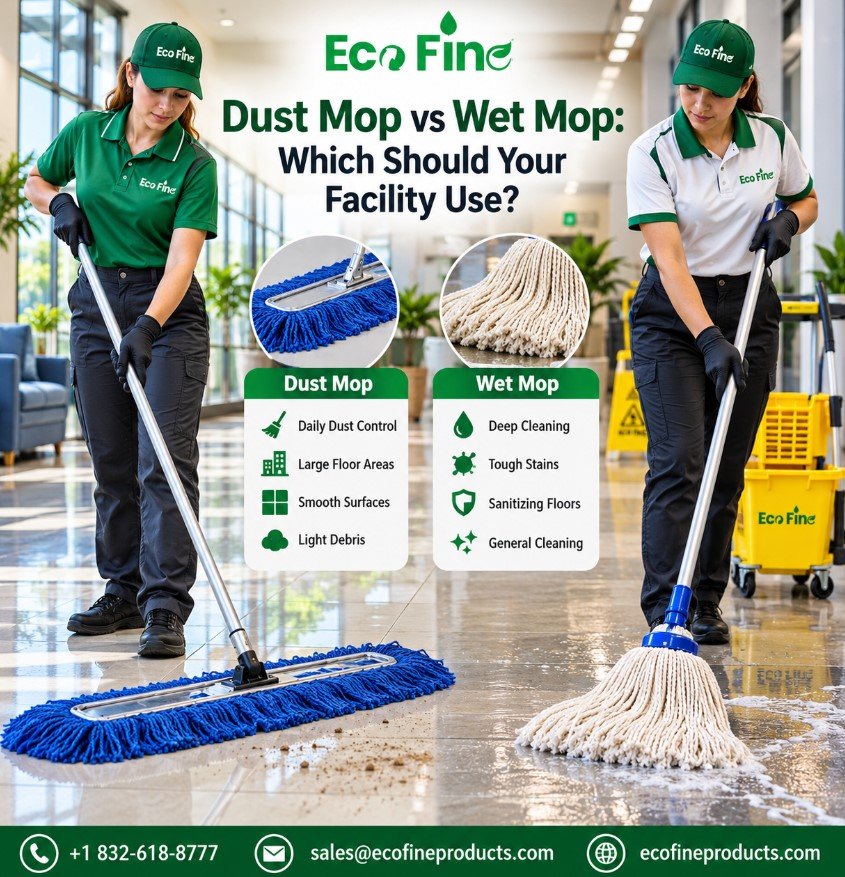
The main difference in a dust mop vs wet mop comparison is the cleaning task. A dust mop gathers loose dry debris from suitable hard floors. A wet mop supports appropriate floor washing or ordinary liquid pickup. Many commercial facilities need both because collecting dust and removing wet or adhered soil are different jobs. Choose according to the floor’s condition, then confirm material, size, equipment compatibility, and care requirements. Buying one mop for every task can leave employees with unsuitable equipment even when the product itself is well made.
Start With the Floor Condition
Before choosing equipment, ask what needs to be removed. Loose dust, hair, lint, and lightweight debris call for a different approach from a beverage spill or sticky residue. Ecofine’s commercial dust mops for loose dry-debris maintenance include acrylic and cotton options. Its commercial wet mops for floor washing and liquid pickup include several yarn materials and constructions. Consider an illustrative office corridor. Paper fibers on a dry floor may need dry debris collection. A spilled drink requires a suitable spill-cleanup procedure. The same corridor can therefore need different equipment at different times.
What a Dust Mop Does—and Where Its Role Ends
A commercial dust mop provides a broad cleaning surface for gathering ordinary loose dry debris. It belongs to the dry-maintenance stage of floor care. Ecofine describes its 24-inch acrylic dust mop for furnished commercial spaces for collecting dust, hair, lint, and lightweight debris. That is a useful application distinction, rather than a promise that it removes every type of floor soil. A dust mop does not replace wet cleaning for spills or adhered residue. Likewise, routine dust collection does not establish that a surface has been disinfected.
When a Wet Mop Becomes the Appropriate Choice
A wet mop belongs in a procedure that calls for moisture and, where required, a compatible cleaning solution. Floor washing and ordinary spill pickup are common applications to evaluate. Ecofine positions its cotton wet mop for routine washing and liquid pickup around cotton yarn’s absorption and retention characteristics. Confirm the selected head’s construction and equipment requirements before ordering. Wet mopping is not permission to saturate every floor. Follow the flooring manufacturer’s instructions for moisture and cleaning products, particularly on sensitive surfaces. Specialized tasks also need separate consideration.
Match Size and Hardware to the Route
Dust mop width and wet mop size are not directly interchangeable purchasing measurements. A wide dust head describes coverage, while a string mop specification may describe a selected yarn or product weight. Ecofine lists dust mop widths from 24 to 60 inches. Smaller formats deserve evaluation around furniture; wider formats may suit sufficiently open routes. Width alone does not establish square feet cleaned per hour. For wet equipment, assess handling after preparation and wringing. Confirm headband fit, handle connection, and wringer suitability. A microfiber flat mop pad uses another attachment system.
Plan Care and Replacement Before Buying in Bulk
Obtain written care instructions for each selected product. Do not assign one laundering process to acrylic heads, cotton string mops, and microfiber pads simply because all are reusable cleaning equipment. Inspect backing, seams, yarn, bands, and attachments. Replace equipment when damage or deterioration prevents dependable use after approved care. Maintain enough usable replacements to support the schedule while other items undergo cleaning and drying. The quantity depends on actual operating requirements. For bulk purchasing, record the task, material, dimensions, attachment, pack quantity, and care method.
Equipment Comparison Checklist
| Check | Options | Decision |
|---|---|---|
| Cleaning task | Loose dry debris | Use a suitable dry-maintenance head |
| Working width | 24, 36, 48 or 60 inches | Match clearances and turning space |
| Hardware | Head, frame and handle | Confirm dimensions and attachment |
| Maintenance | Product-specific care | Inspect backing, yarn and closures |
Frequently Asked Questions
What is the main difference between a dust mop and a wet mop?
A dust mop is intended for loose dry-debris collection on suitable floors. A wet mop supports appropriate washing or ordinary liquid pickup. Choose according to the floor condition and approved procedure rather than expecting one format to handle every task.
Does a commercial facility usually need both?
Facilities with both dry-debris maintenance and wet-cleaning requirements may need separate equipment. Assess the actual tasks before purchasing. Some routes may also require specialized tools, so owning a dust mop and wet mop does not automatically cover every cleaning situation.
Is a cotton dust mop the same as a cotton wet mop?
No. Cotton identifies the material, while the product format determines its intended application. A cotton dust head uses a dry-maintenance setup; a wet string mop uses different hardware. Specify the task, attachment, and dimensions when requesting replacements.
Should I dust mop before wet mopping?
Remove loose dry debris first where the facility’s approved procedure requires it. Treat preparation and washing as separate stages. Spills, unusual contamination, and other conditions may require a different response, so follow the applicable procedure rather than applying one sequence everywhere.
Can I use a dust mop to absorb a spill?
Use equipment intended for the liquid and floor involved. A dry dust mop should not be selected as a spill tool solely because its yarn appears absorbent. Follow the facility’s response procedure and use the specified cleanup equipment.
Which mop size is suitable around furniture?
Evaluate clearances, doorways, and turning areas. A compact dust head or suitable flat system may be worth testing, but nominal dimensions alone do not establish fit. Ask operators to assess a sample on the actual route before standardizing equipment.
Will replacement heads fit any commercial handle?
No universal compatibility should be assumed. Dust heads, string heads, and flat pads use different connections. Confirm frame dimensions, closure design, headband requirements, or backing layout as appropriate. Photographs and measurements can help the supplier identify a match.
Can all mop heads and pads be washed together?
Follow the instructions for each product. Material and construction can require different care conditions. Confirm permitted laundering, detergent, temperature, and drying methods before combining items, and keep clean replacements separate from used equipment according to the facility’s procedure.