
Microfiber Cloth 12-Pack: A Commercial Trial Guide
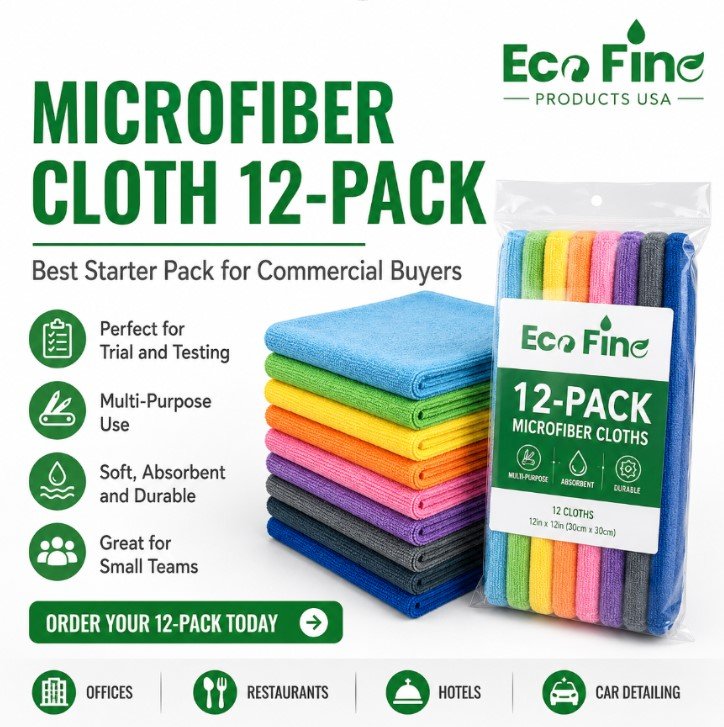
A microfiber cloth 12-pack can be a manageable trial quantity when the selected pack and intended tasks are clearly defined. The count does not establish cloth size, construction or enough stock for an entire business. EcoFine’s 3-in-1 cloth listing includes several pack options subject to confirmation. This guide focuses on planning a small commercial evaluation and recording the information needed before repeat supply, rather than declaring one pack the best starter for every buyer.
Confirm What the Selected Pack Contains
Ask which item or variation the proposed pack represents and how many cloths it contains. Record dimensions, construction, edges, available colors and care requirements for that configuration. Do not transfer a size or fabric weight from another product because both use a 12-pack description. A pack count identifies a quantity arrangement, not a complete working specification. Keep the exact reference with the trial so purchasing and operators can recognize what was assessed and repeat it if the evaluation is accepted.
Define the Trial Question
Identify the decision the team needs to make, such as task fit, manageable size or compatibility with the available care process. Keep the application narrow enough to observe on representative work. Describe the approved surface, preparation and method and record where another item remains necessary. A small pack should support a reviewable local assessment, not become an unsupported claim that the quantity covers every assignment or that a successful sample approves the entire product family.
Assign Trial Items Clearly
Keep trial cloths identifiable from established stock using the organization’s existing method. Record which task, operator or area each sample supports and preserve relevant care history. Do not divide a pack informally among unrelated uses and then combine the results into a single performance judgment. A cloth trial is easier to interpret when the team knows which configuration and preparation were used.
Assess Work and Handling Together
Have regular staff complete representative tasks with the approved preparation. Record holding or folding, visible results, repeated work and change conditions. Compare alternatives under similar circumstances if needed. Review surface, soil, solution, moisture and technique when results vary. A first impression of softness or density is not enough to establish suitability. Retain the observations for the actual configuration tested, without turning a small evaluation into a universal scratch-free, absorbency or service-life guarantee.
Include Permitted Care in the Trial
Obtain the selected product’s cleaning and drying instructions and confirm that the organization can perform them. Assess maintained samples as well as new items, inspecting fabric and edges before returning them to service. Keep items awaiting care separately counted from ready replacements. A reusable description does not establish an invented number of successful cycles. The trial should show whether the cloth can return to suitable condition through the real process, not only whether it looks useful when first removed from the pack.
Record Quantity in Individual Items
Keep the relationship between packs and cloths explicit. If the confirmed selected pack contains twelve items, one pack represents twelve individual cloths; other packing levels still need confirmation. State whether a request counts packs, cloths or cartons and retain the relevant conversion. Do not infer a price advantage or a standard carton content from the pack name. Clear units make a later comparison understandable to receiving and prevent an accepted sample quantity from becoming an ambiguous bulk-order requirement.
Decide What the Trial Actually Supports
Review the original question against application observations, care findings and any unresolved issue. An accepted result can be limited to a particular task or configuration. Keep rejected alternatives distinguishable from approved stock and record why the decision was made. A 12-pack trial does not establish the right long-term inventory by itself.
Prepare the Repeat-Order Record
Save the accepted item reference, dimensions, construction, color, care and pack units with sample findings. Ask EcoFine to confirm the selected configuration and repeat quantities before further supply. Review substitutions affecting the working cloth or maintenance requirements and tell operations about accepted changes. Another buyer should be able to identify what was tested without relying on the general 12-pack title or guessing that every pack format contains the same fabric and size.
Keep Expansion Separate From First Approval
When another area or location wants to use the cloth, compare its surface, method and care arrangement with those assessed in the trial. Record any exception requiring another review. A small pack can provide useful evidence for a defined decision while leaving later requirements open. Updating the application and stock record preserves that value, instead of treating a convenient sample quantity as permanent proof that one configuration or allocation fits every commercial team.
Planning and Approval Checklist
| Check | Requirement |
|---|---|
| Pack | Confirm the selected contents |
| Cloth | Identify dimensions, construction and care |
| Trial | Define task, conditions and acceptance |
| Repeat order | State cloth, pack and carton units |
Frequently Asked Questions
Does a 12-pack identify size or construction?
No. Confirm the selected item or variation, dimensions, fabric, edges and care as well as the actual pack contents.
Is a 12-pack sufficient for every business?
Do not assume that. Use a defined trial and observe actual task demand, change conditions and care turnaround before setting long-term stock.
How should trial cloths be assigned?
Keep item, task, operator and care history identifiable and preserve the organization’s task boundaries and clean-versus-used handling rules.
What should a small trial assess?
Record handling, visible results, repeated work and change conditions on representative work, then reassess after permitted care.
How should quantity units be recorded?
Keep individual cloths, packs and cartons distinct and confirm their contents for the order. Do not infer a price advantage from the name.
Does one accepted trial approve the product family?
No. Keep the decision tied to the actual configuration and application tested, including any acceptance limits.
What should support repeat purchasing?
Retain the approved item, dimensions, construction, color, care, pack units and sample findings with the current reference.
When should expansion need another review?
Compare new surfaces, methods or care arrangements with those assessed before extending approval to another assignment or location.