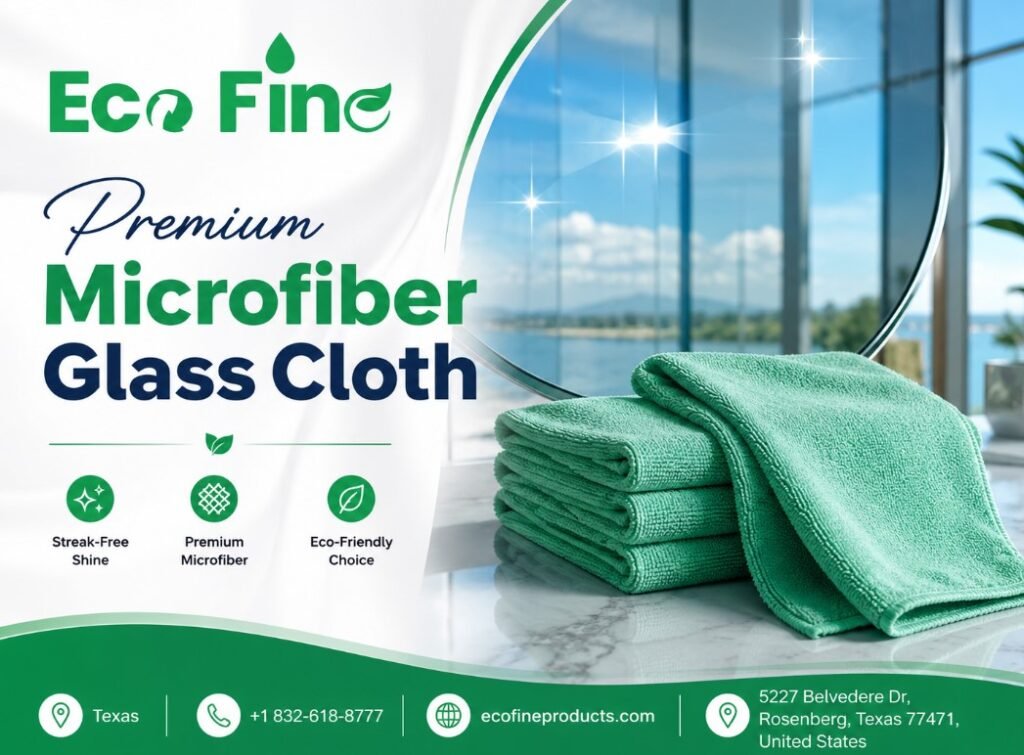
Buying microfiber glass cloths in bulk starts with deciding what an acceptable finished surface looks like in the actual cleaning program. A product name alone cannot establish the result on every mirror, coating or glass partition. Evaluate the microfiber glass cloth against a defined assignment and keep the specification linked to that assessment. This guide focuses on fair sample comparisons, care checks and an order record that another buyer can use.
Describe the Account Requirements
Ask the operating team to identify the surfaces, approved cleaning products and existing work method. Separate ordinary reachable glass care from specialist access or glazing procedures. Record any finish that needs a different approach. A quotation request should explain the work the cloth must support, not merely ask for the best glass towel. This gives the supplier a practical requirement and helps the organization distinguish a suitable replacement from an attractive description that has not been assessed on its own accounts.
Confirm the Product Rather Than the Category
Obtain the selected item’s available dimensions, weave or construction, edges, colors and care instructions. Include composition or fabric weight only where confirmed for that item. Do not transfer a size or material value from a similarly named shiny glass or fish-scale cloth. Keep the supplier reference with the written specification. Photographs can help identify a sample, but they should not be used to fill gaps in measurements, pack contents or performance information that the supplier has not provided.
Create a Comparable Trial
Choose a representative assignment and use the same approved preparation and inspection conditions for the alternatives assessed. Have the normal employee complete the work and record handling, visible residue, missed areas and repeated wiping. Include the preparation and cloth-change process rather than comparing only a short uninterrupted pass. Note surface and soil differences that might explain a result.
Write the Appearance Check in Plain Terms
Identify what supervisors will inspect under normal client viewing conditions and which result needs rework. A practical record might note the surface, preparation, completed appearance and any repeated attention. Avoid inventing a laboratory rating or comparing samples under different lighting without recording the change. If results vary, review solution, moisture, soil, technique and cloth condition together.
Approve Maintained Samples as Well as New Stock
Obtain product-specific cleaning and drying instructions and confirm that the intended locations can follow them. Assess the cloth again after permitted care, inspecting fabric, edges and material remaining from previous work. Count items awaiting care separately from ready stock when planning quantities. A reusable description does not establish a fixed number of successful cycles. Record the maintenance arrangement with the specification, because a fabric that performs acceptably when new still needs a workable process for returning it to service.
Define Purchase Units and Allocations
State whether quantities count cloths, packs or cartons and confirm the contents of each unit for the actual order. Record destination and color allocations using consistent units. Keep special labeling or packaging requests separate from working-product requirements, with availability and approval confirmed by the supplier. A previous carton arrangement should not be treated as permanent without confirmation. Clear descriptions let receiving reconcile the delivery and help operating teams understand how much usable stock each location is intended to receive.
Review Substitutions Before Release
Ask the supplier to identify changes in fabric, dimensions, edges, care or item reference. Compare alternatives with the approved application and trial notes. A similar glass-cloth name does not establish identical handling or finishing behavior. Tell operations when an accepted change affects preparation or maintenance. Keep the current specification available to receiving and distinguish it from superseded descriptions. Uncertain stock should remain identifiable while questions are resolved, rather than reaching several accounts before a mismatch becomes visible.
Maintain the Reorder Evidence
Track stock in use, items in care, clean reserve, losses and condition-based withdrawals separately. Review demand when routes or care turnaround change. Ask EcoFine to confirm the current cloth specification and quantities for further supply. Retain the sample findings and application limits with the item reference.
Investigate Differences Between Sites
Where one account reports repeated work, compare the actual surface, method, supplied item and care arrangement with those at a satisfactory location. Check whether a product or preparation change entered the routine. Record the resolution for the affected assignment and notify purchasing when the specification needs revision. A targeted review avoids assuming that every difference reflects a universal fabric issue, while giving the organization an understandable reason for any change accepted across the wider program.
Specification and Use Checklist
| Check | Requirement |
|---|---|
| Surface | Check the actual finish and instructions |
| Fabric | Confirm the selected item construction |
| Result | Use a consistent local appearance check |
| Supply | Confirm care and order units |
Frequently Asked Questions
Why define the glass task before buying in bulk?
The application determines what the sample approval means. A familiar cloth name does not establish suitability for every coating or glass-like surface.
Which product details should be verified?
Confirm available dimensions, construction, edges, colors and care for the exact item. Do not borrow unverified measurements from another glass cloth.
How should samples be compared?
Use comparable surfaces, the same approved preparation and normal operators. Record visible results, repeated work and handling after permitted care.
Does one successful demonstration establish a guarantee?
No. Keep the result tied to the assignment and conditions assessed. Define a practical appearance check rather than inventing a universal performance rating.
Why include care in the purchasing decision?
Receiving locations need a process that keeps the cloth suitable for the task. Assess maintained samples and confirm written maintenance requirements.
How should packaging be specified?
Confirm cloth, pack and carton quantities. Define any special labels or packaging separately and ask about availability and approval.
What should trigger substitution review?
Review changes to size, fabric, edges or care against the approved application. Tell operations when an accepted alternative changes the method.
How should inconsistent site results be investigated?
Compare actual surfaces, preparation, care and item references before changing the standard everywhere. Record the resolution for the affected locations.