
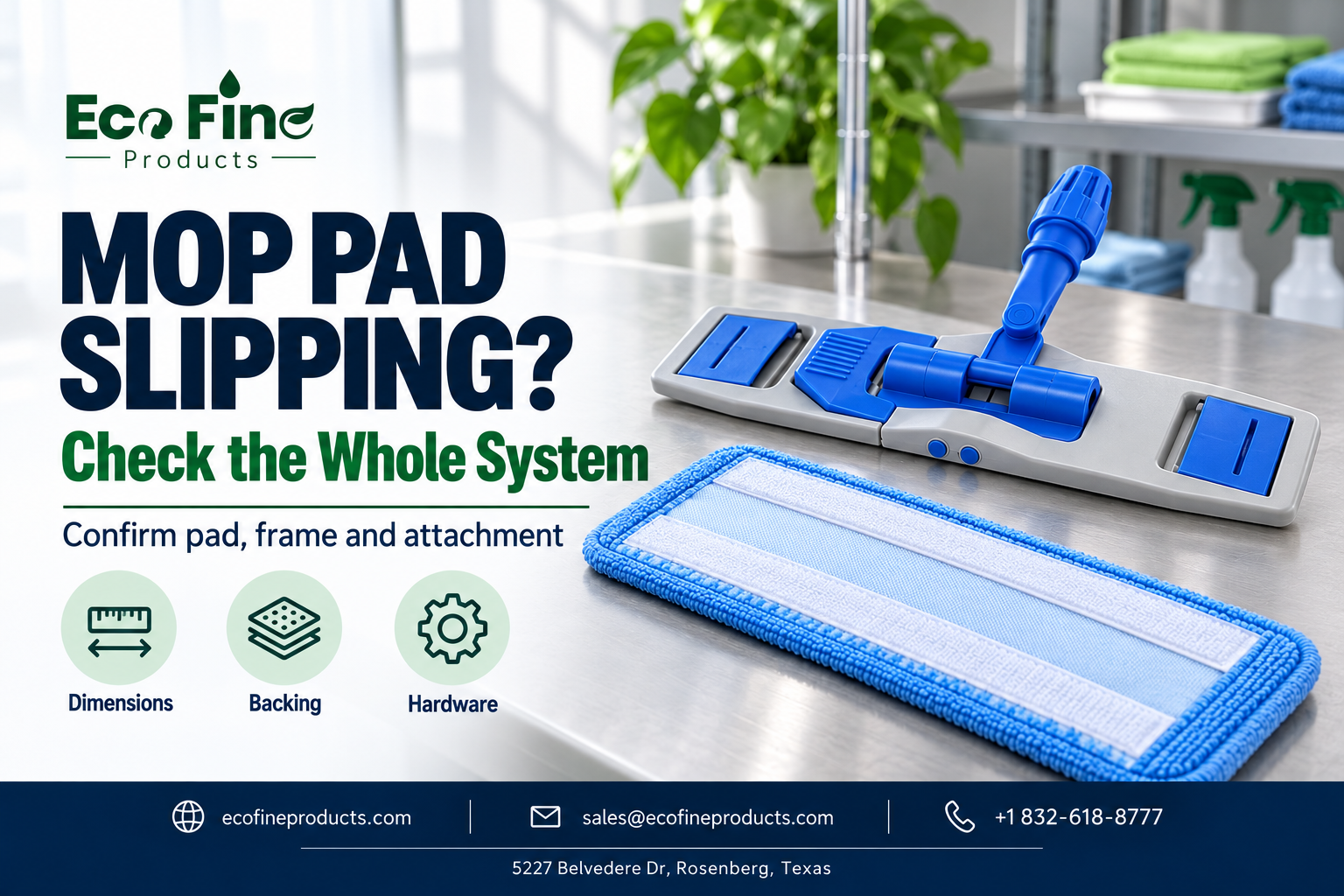
A microfiber mop pad that slips or bunches may have a fit problem, an attachment problem, or a mismatch with the cleaning task. Inspect the pad, frame, fastening surfaces, and applicable instructions before ordering replacements. Matching the advertised width alone does not establish compatibility. Stop using a configuration that is unstable or exposes hard hardware to the floor.
Commercial teams often inherit mixed equipment from previous purchases, different buildings, or emergency substitutions. A pad can look close to the correct size and still behave poorly. A structured comparison helps identify whether replacing the textile, servicing the frame, changing the approved process, or selecting a compatible system is the appropriate response.
Describe the failure before selecting a replacement
Record whether the pad slides sideways, folds at the leading edge, detaches during turns, or leaves part of the frame uncovered. Note the floor, soil, operating method, and when the problem appears. A pad that becomes difficult to move only on one surface presents a different investigation from a pad that will not attach while stationary.
Check whether the issue affects every pad on a frame or just one item. Then check whether the same pad works on another verified compatible frame. These comparisons can narrow the investigation, but they must stay within approved equipment combinations. Do not force an unsuitable fit simply to complete a test.
Identify how the pad is intended to attach
Flat mop systems can use different fastening arrangements, including hook-and-loop surfaces, pockets, or other dedicated fittings. Determine which system the frame requires and which backing the pad provides. A similar outline does not make different attachment systems interchangeable. Obtain the applicable dimensions and compatibility information from the supplier or equipment manufacturer.
Review commercial microfiber mop products by complete system requirements. If the supplied information lists only a nominal pad width, ask about backing dimensions, fastening arrangement, and compatible hardware. A purchasing description should help receiving staff recognize the correct item without relying on a product photograph alone.
Measure useful dimensions rather than the label alone
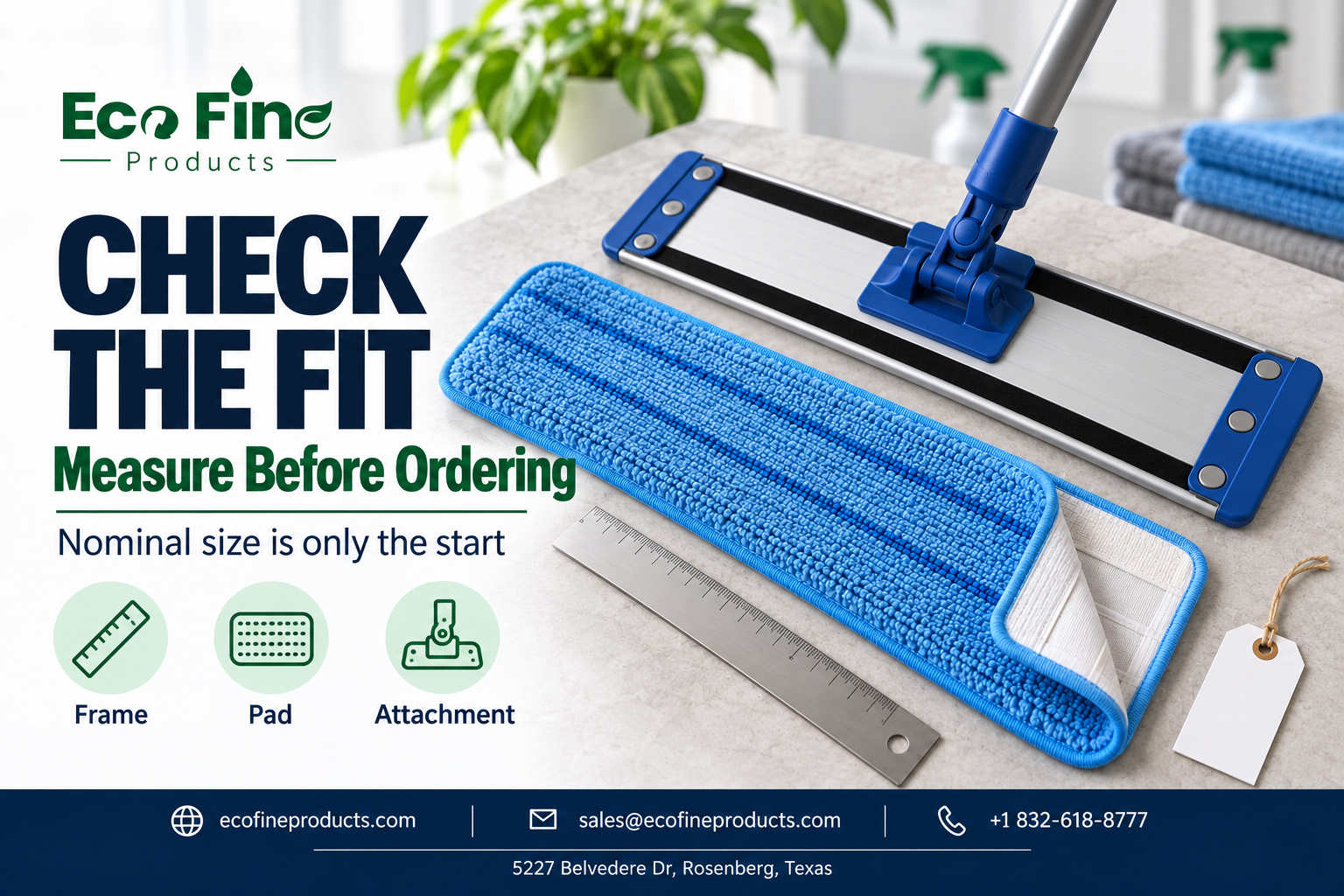
Record frame length and width, pad dimensions, and relevant pocket or fastening measurements. Use the same measuring convention when comparing candidates. Ask whether quoted dimensions describe the working textile or the attachment area. Those may differ, so a larger finished outline does not necessarily provide the required backing fit.
Check the item in its intended operating condition and follow any preparation instructions. Do not assume unused dimensions will remain unchanged after care, or that every dimensional change is acceptable. If the supplier provides tolerances, record them. Where no tolerances are available, document the observed fit and request clarification rather than inventing an allowance.
| Symptom | What to inspect | Decision to investigate |
|---|---|---|
| Pad slides sideways | Backing fit and attachment engagement | Incorrect configuration or fastening condition |
| Leading edge folds | Pad placement, dimensions, frame coverage | Loose fit or task mismatch |
| Pad releases in turns | Fasteners and compatible movement | Worn attachment or unsuitable combination |
| Frame edge becomes exposed | Coverage and secure placement | Stop use and verify system compatibility |
| Movement becomes unusually difficult | Floor, soil, moisture, pad type | Process or application mismatch |
| Fit changes after laundry | Product instructions and actual care | Processing issue or unacceptable dimensional change |
Use the table to organize checks, not to declare a diagnosis from one symptom. Several factors can occur together. Preserve the failed configuration’s identity so the supervisor can compare observations with the purchase record and instructions.
Inspect fastening surfaces and frame condition
Look for worn, damaged, obstructed, or missing fastening components. Follow the equipment manufacturer’s guidance for cleaning or servicing them. Textile debris on a fastening surface may affect engagement, but removing visible material does not guarantee that worn hardware has recovered. Inspect the result and confirm the frame remains serviceable.
Check hinges, joints, and handle connections where they affect control. An unstable joint can make a pad appear responsible for movement problems. Do not modify the frame with improvised fasteners or adhesives without manufacturer approval. A temporary workaround can introduce floor-contact, handling, or maintenance problems that are harder to control than replacing the appropriate component.
Separate fit problems from task resistance
A securely attached pad can still feel difficult to move because of the floor condition, soil, moisture, or selected product. Confirm the floor and cleaner instructions before changing the procedure. A pad chosen for scrubbing may behave differently from one intended for routine damp cleaning. That difference is not automatically a defect.
Compare the current pad with a known-compatible option using the approved process on an equivalent area. Keep solution delivery and operating technique consistent. If movement changes substantially, record the exact configuration. Do not convert a short comparison into a claim that one product cleans every floor faster or requires a fixed amount of less effort.
For a different task, such as collecting loose dry debris, review commercial dust mop systems separately. A dry tool and a wet pad system serve different roles. Changing the task may require a different approved tool rather than trying to make one pad perform every stage of floor maintenance.
Investigate changes after laundering
If fit problems begin after processing, compare the actual care procedure with the pad’s applicable instructions. Check whether different items entered the same process despite having different requirements. Record changes in dimensions, backing condition, and seams. A repeated pattern across a group deserves investigation before the next large order is processed.
Unger’s microfiber care guidance explains general concerns about unsuitable laundry chemistry for its products. It does not establish the correct temperature, chemical allowance, or service life for another manufacturer’s pad. Obtain the supplied pad’s instructions and resolve any incompatibility with your laundry operation.
Keep questionable pads separate from ready stock while the decision is pending. Do not allow a returned item to reappear on a trolley simply because it looks clean. The inspection needs to establish fit and suitability as well as completion of processing. Record whether the final action is reprocessing, replacement, supplier review, or retirement.
Standardize the accepted configuration
- Record the frame model and relevant dimensions.
- Identify the pad item, backing, and fastening arrangement.
- Keep the approved care and application instructions together.
- Test a representative candidate before expanding the order.
- Define receiving checks and a response to unauthorized substitutions.
For multiple sites, maintain a simple equipment register showing which system operates in each building. Standardization can make ordering easier, but only if the selected configuration suits the work. Preserve necessary differences rather than forcing a single product across incompatible surfaces or procedures. Train receiving and route staff on how to identify the accepted combination.
Frequently asked questions
Does an 18-inch pad fit every 18-inch frame? No. Nominal length does not establish backing width, attachment design, pocket fit, or dimensional tolerance. Compare the complete specifications and follow compatibility instructions. Ask for a trial sample when the required information is incomplete.
Should we buy a larger pad to stop slipping? A larger outline may not correct the fastening mismatch and can introduce loose material. Identify why the current pad moves first. Select the compatible size and construction rather than treating extra length as a universal solution.
Can worn fastening surfaces cause detachment? They can be relevant, along with obstruction, incorrect placement, or incompatible backing. Inspect and service components according to the equipment instructions. Confirm the result rather than assuming that a visibly cleaner fastener is fully functional.
Why does the pad bunch only on one floor? Surface condition, soil, moisture, and task suitability may affect movement. Check the applicable floor and cleaning instructions and compare a verified configuration. The pattern helps guide investigation but does not prove that the floor or pad is defective.
What if the frame edge touches the floor? Stop using the unstable or inadequately covered configuration and verify compatibility and placement. Hard hardware contact can be inappropriate for the surface. Do not continue testing on a valuable finish while guessing at the required fit.
Can laundering change pad fit? Changes can occur depending on the product and process, so compare actual observations with the supplier’s instructions and tolerances. Do not assume every change is normal. Preserve examples and care records if the pattern suggests a batch or processing issue.
Should we replace the whole system? Not automatically. A serviceable frame may need a compatible pad or approved maintenance. Conversely, damaged hardware may make textile replacement alone ineffective. Compare the verified problem, available components, and operating needs before deciding the scope of replacement.
What information should accompany a supplier inquiry? Provide the frame identity, measurements, attachment photographs where useful, pad identifier, failure description, and care history. Explain whether the problem affects one item or multiple configurations. This evidence supports a more useful answer than the nominal size alone.
Correct the configuration before expanding the order
A reliable mop system depends on the pad, hardware, task, and care process working together. Keep the accepted combination documented and check replacements against it. Contact EcoFine Products for mop compatibility information and review its commercial supply focus when preparing quantities for a sample or replacement request.