
Wholesale Microfiber Mop Pads: Compatibility Guide
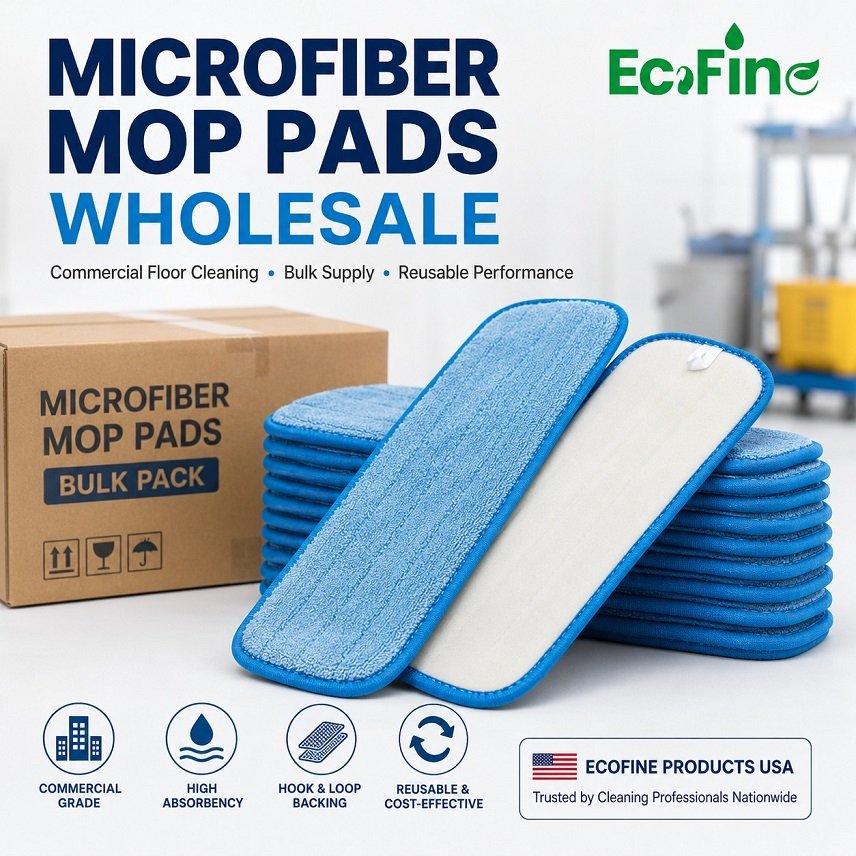
Wholesale microfiber mop pad purchasing should begin with the equipment and floor-care task already approved for the facility. A pad that looks similar to the current item may differ in attachment, dimensions, texture or permitted care. This guide focuses on controlling those differences across a facility program. Explore EcoFine’s microfiber mop options, then confirm the selected pad and frame combination before planning an order.
Inventory the Working Equipment
Record the frames and attachment systems actually in service. Include an item reference where available, the attachment style and the pad size used with each frame. Check several units if the site has accumulated equipment over time. A single sample frame may not represent the entire fleet. Keep uncertain combinations out of the approved list until they have been checked through the normal equipment-selection process.
Confirm Pad and Frame Compatibility
Nominal width alone does not prove that a pad will attach securely or work correctly with a frame. Check the selected pad’s dimensions and attachment details against the equipment guidance. Confirm whether the listing supplies a replacement pad or a complete assembly. Do not assume that a handle or frame is included. Record the accepted combination so purchasing does not order a visually similar but incompatible replacement.
Separate Floor-Care Tasks
Identify which pads are intended for approved dry work, damp cleaning or a specific scrubbing assignment. The surface, finish and cleaning method determine what is appropriate. A more textured pad should not be treated as suitable for every floor. Review EcoFine’s scrubbing mop pad only against the selected floor and task requirements.
Assess Movement and Edge Control
Trial the complete pad and frame setup on representative work. Observe attachment, turning, control around obstacles and how the pad behaves during the intended method. Do not increase pressure to compensate for an uncertain combination. Record practical issues so they can be discussed with the responsible equipment or supply contact. A successful fit check on an empty floor should still be considered alongside the actual working layout.
Define Pad Changes by Procedure
Use site-approved change points based on the task and operating conditions. A pad’s nominal size does not establish how much floor it can clean before changing. Keep ready pads separate from used stock and make return routes clear. Where a facility follows specialized hygiene procedures, those requirements take priority over a general purchasing guide.
Check the Care Process
Confirm the selected pad’s permitted washing and drying instructions before purchasing bulk quantities. Compare those instructions with the facility’s equipment and chemicals. Test representative samples through the intended permitted process, then inspect backing, attachment areas and general condition. Keep questionable pads out of ready stock. If a pad changes behavior after care, investigate the process and the item together before accepting the configuration for wider use.
Build Quantities From Stock States
Count pads that are ready, assigned, being cared for or held for review separately. Use actual work and care turnaround to identify the number needed in circulation. A package count should not become the operating target by default. Include the locations where pads will be stored and issued.
Keep Orders Unambiguous
State the pad reference, size, attachment, color option and confirmed package unit. Distinguish replacement pads from assemblies and related accessories. Ask about current availability and delivery arrangements for the selected configuration. If a substitute is proposed, require approval before it enters circulation. Matching a color or a nominal width is not sufficient evidence that the substitute preserves the working setup accepted by the facility.
Make Compatibility Records Accessible
Store the accepted frame and pad references together so staff can identify the combination during reordering. A clear photograph can assist recognition, but retain the written dimensions and attachment description as well. Label spare equipment where practical and review mixed storage before distributing replacements. If staff report repeated fitting problems, check the actual frame and pad involved rather than assuming every unit matches the recorded setup.
Review Supply Using Local Evidence
Inspect deliveries before distribution and retain notes about discrepancies. Keep the accepted pad-frame combination and care instructions available to the team. Review condition findings and stock gaps at practical intervals without assuming every issue is caused by the pad. Changes in flooring, chemicals or equipment may require another assessment. The aim is controlled compatibility and clear replenishment, supported by actual facility experience rather than unsupported claims about savings or cleaning superiority.
Selection and Supply Checklist
| Check | Requirement |
|---|---|
| Task | Identify the approved work and surface |
| Compatibility | Confirm pad dimensions, attachment and frame |
| Care | Check the permitted process before approval |
| Order | State the item reference and package unit |
Frequently Asked Questions
Does matching width prove that a pad fits a frame?
No. Confirm actual dimensions and attachment details against the selected equipment. Nominal width alone does not establish a secure, workable combination.
Is a frame included with every mop pad?
No. Confirm whether the listing supplies a replacement pad or a complete assembly, and identify any frame or handle that must be ordered separately.
Can a scrubbing pad be used on every floor?
No. Check flooring, finish and chemical guidance before approval. A more textured construction does not make a pad appropriate for every surface.
How much floor can one pad clean?
No universal area applies. Use site-approved change points that reflect the task and operating conditions rather than the pad’s size alone.
Does microfiber replace a required disinfection process?
No. Follow the facility’s applicable cleaning and hygiene procedures. A material description is not evidence that the required process has been completed.
What should a care trial check?
Use the intended permitted process, then inspect backing, attachment areas and condition. Investigate changed behavior before expanding the configuration across the facility.
How should bulk quantities be planned?
Count ready, assigned, washing and held stock separately. Use actual work and care turnaround to determine circulation needs before converting them into package units.
Can a similarly colored substitute enter service?
Not automatically. Review the complete pad-frame combination and care requirements, and approve the change before distributing it to operators.