
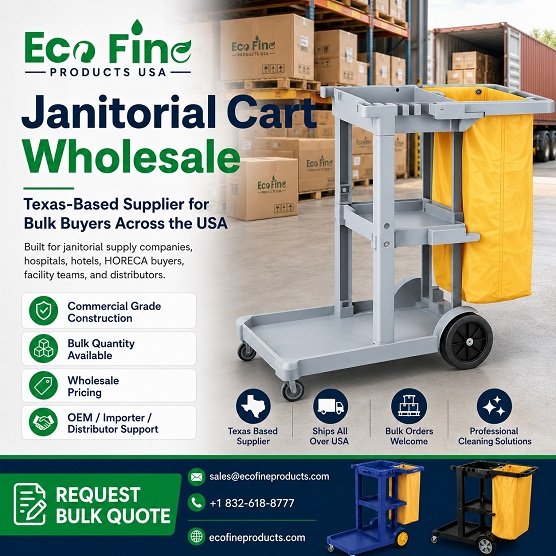
A well-organized Janitorial Cart helps commercial cleaning teams transport tools, chemicals, microfiber products, waste liners and floor-care equipment through a facility using one mobile workstation.
Instead of relying on separate containers or repeated trips to a supply room, staff can prepare the cart for an assigned route and keep commonly used products within reach. Commercial cart systems are generally designed to organize supplies, transport cleaning equipment and support waste collection during professional cleaning operations.
A Mobile Cleaning Station for B2B Facility Operations
A professional cleaner may require microfiber cloths, spray bottles, waste liners, caution signs, mop handles, replacement pads, brushes and other supplies during one shift.
Without a centralized cart, employees may need to return repeatedly to a janitorial closet. These interruptions can reduce cleaning productivity, especially in hotels, schools, hospitals, offices and large multi-floor buildings.
A Commercial Janitorial Cleaning Cart allows supervisors to prepare supplies according to:
- Building or floor
- Cleaning route
- Employee or shift
- Department
- Client location
- Cleaning task
- Approved chemical program
- Waste-collection requirements
For cleaning contractors managing several client sites, consistent cart layouts can make it easier to train staff and monitor inventory. A standardized cart-loading checklist can also help ensure that essential items are available before the cleaning route begins.
B2B Benefits of a Commercial Janitorial Cart
Improved Supply Organization
A Cart for Cleaning Supplies provides designated areas for tools, bottles, cloths, liners and replacement products. Organized storage can help reduce time spent searching for equipment during the shift.
Reduced Supply-Room Trips
Commercial cart manufacturers position high-capacity models around reducing time spent retrieving supplies and making it easier to transport equipment and collect waste.
A properly stocked cart can support longer cleaning routes before replenishment is required.
Mobile Waste Collection
When a collection bag is included, the cart may support approved waste or used-linen handling. EcoFine should confirm the exact bag capacity, material and intended use before publishing these specifications.
Better Cleaning-Route Planning
Supervisors can stock the Janitorial Trolley according to the assigned zone. This can help create repeatable processes for offices, guestrooms, classrooms, restrooms and public areas.
Professional Equipment Presentation
An organized Commercial Cleaning Cart can present a more controlled and professional appearance in customer-facing environments than loose tools, open containers or unsecured supplies.
Standardization Across Multiple Locations
Hotels, cleaning contractors, healthcare groups and property managers can use the same cart layout across multiple sites. This may make onboarding, supply checks and replacement ordering easier.
Support for Procurement Consolidation
A single supplier can potentially provide the cart along with mop buckets, handles, frames and reusable microfiber products. Consolidating related equipment may simplify purchasing and improve product compatibility.
Industries That Use Janitorial Carts
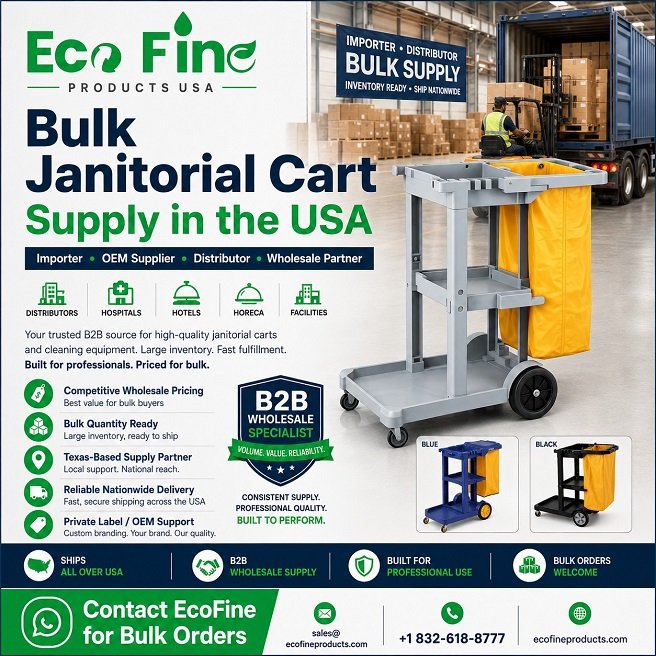
Commercial Cleaning Contractors
Contractors can prepare carts according to each customer’s scope of work. Standardized carts also make it easier to transfer staff between sites.
Hotels and Hospitality Businesses
A Commercial Housekeeping Cart can carry approved cleaning chemicals, microfiber products, liners and room-servicing supplies through guest and service areas.
The product should only be promoted as a linen or housekeeping cart when its dimensions and collection capacity support that use.
Hospitals and Healthcare Facilities
Healthcare procurement teams should compare the cart with their approved chemical-security, cleaning-zone and cross-contamination procedures.
Locking or high-security terminology should only be used if the EcoFine cart includes a verified locking cabinet or security cover.
Schools and Universities
Educational facilities can use carts for classrooms, corridors, administrative areas, restrooms, cafeterias and other assigned cleaning zones.
Offices and Corporate Facilities
A Mobile Cleaning Cart can support routine servicing of work areas, meeting rooms, kitchens, reception zones and shared facilities.
Restaurants and Food-Service Operations
Cleaning teams can organize surface-care products, floor-cleaning tools and waste liners. Chemicals and food-handling supplies must remain separated according to the facility’s procedures.
Warehouses and Industrial Facilities
Large buildings can require longer cleaning routes. A mobile cart helps staff carry supplies between distant zones without returning constantly to central storage.
Property-Management Companies
Property managers can use standardized carts across offices, apartment communities, retail properties and other managed buildings.
Commercial Procurement Factors
Before placing a B2B order, buyers should request a complete EcoFine specification sheet.
Cart Dimensions
Overall length, width and height affect doorway access, elevator use, storage and maneuverability. Buyers should compare the measurements with their narrowest operating area.
Shelf Configuration
Confirm the number of shelves, shelf dimensions and raised-edge design. These details determine the quantity and type of bottles, cloths and consumables the cart can hold.
Collection Bag
The product listing should identify whether a bag is included, its capacity, material and closure type. Replacement-bag availability is also important for long-term purchasing.
Wheel and Caster System
Commercial buyers should confirm the number of wheels, caster diameter, rear-wheel size and replacement availability.
Claims such as quiet movement, non-marking wheels or full-swivel mobility should only be added when supported by the final product specifications.
Mop-Bucket Platform
Some cleaning carts include a platform for carrying a mop bucket or waste container. The EcoFine page should state whether a platform is included and provide its size and recommended load.
Tool Holders
Confirm the number of hooks, broom holders, mop-handle slots and caution-sign holders. These features directly affect cart organization.
Construction and Load Capacity
The material and tested load rating should be published. Do not target 200-Lb Janitorial Cart, 300-Lb Cleaning Cart or Heavy-Duty Cleaning Trolley until the final capacity is verified.
Security Features
Locking cabinets or covers may be important in public-facing facilities. Only use Locking Janitorial Cart or High-Security Cleaning Cart when these components are included.
Assembly and Packaging
Distributors and multi-unit buyers should confirm assembly requirements, carton size, case quantity and replacement hardware before purchasing.
Build a Complete Commercial Janitorial System
The Janitorial Cart can act as the transport center for a complete EcoFine cleaning program.
Recommended internal product links include:
- A commercial wringer mop bucket for professional wet floor cleaning
- A commercial microfiber tube mop for janitorial floor maintenance
- Commercial aluminum mop handles for professional cleaning operations
- A heavy-duty commercial flat mop frame for microfiber mop pads
- A 20-inch microfiber wet mop pad for commercial flat-mop systems
- A 24-inch microfiber wet mop pad for wide commercial floor cleaning
- A reusable double-sided microfiber mop pad for commercial floors
Buyers managing reusable microfiber inventory can also read how to wash and reuse microfiber cleaning cloths and learn about the benefits of eco-friendly microfiber cleaning products.
U.S. Janitorial Cart Market Price Guide
Current U.S. listings show entry commercial carts at approximately $85–$110, branded high-capacity carts around $300, and secure or specialized carts at considerably higher prices. Lowe’s reports a typical category price of about $244, with many standard janitorial carts falling between approximately $140 and $430.
| Comparable Janitorial Cart | Current Market Reference | Market Segment |
|---|---|---|
| Entry three-shelf commercial cleaning cart | Approximately $84.98 | Entry commercial |
| Three-shelf cart with commercial collection bag | Approximately $106.90 | Entry/mid-level |
| Standard branded janitorial cart | Approximately $173.00 | Standard commercial |
| High-capacity branded cleaning cart | Approximately $301.61 | Premium commercial |
| Executive cart with locking storage | Approximately $315.00 | Professional/premium |
| High-security healthcare cleaning cart | Approximately $734+ | Specialized institutional |
Prices vary according to cart size, material, storage capacity, bag configuration, locking features, included tools, freight and order quantity.
The EcoFine page should use Request Wholesale Pricing rather than publish one fixed price until the final model, packaging and delivery costs are confirmed.
Wholesale Janitorial Carts for Distributors and Facility Buyers
EcoFine can target this product toward:
- Janitorial-supply distributors
- Commercial cleaning companies
- Facility-management businesses
- Hotel and hospitality groups
- Hospitals and healthcare networks
- Educational institutions
- Property-management companies
- Warehouses and manufacturers
- Retail and restaurant groups
- Government and institutional procurement teams
A distributor or multi-site business may require consistent models, replacement bags, spare wheels or recurring availability. These requirements should be discussed before the initial purchase.
For an accurate quotation, buyers should provide:
- Required quantity
- Delivery destination
- Preferred dimensions
- Required shelf count
- Collection-bag requirements
- Mop-bucket platform requirements
- Tool-holder requirements
- Security or cabinet requirements
- Expected purchasing frequency
- Related cleaning equipment required
Cart Organization and Maintenance
Frequently used items should be positioned within easy reach, while heavier products should be stored in lower approved areas. Chemical labels should remain visible and bottles must be secured according to workplace procedures.
Clean microfiber products should be separated from used cloths and waste. At the end of each shift, remove waste, return unused supplies, wipe cart surfaces and inspect the wheels, bag, shelves and tool holders.
A routine inspection program can identify damaged components before they interrupt cleaning operations.
Frequently Asked Questions:
1. What is a Janitorial Cart used for?
A Janitorial Cart transports cleaning supplies, tools, liners, microfiber products and approved waste through commercial facilities.
2. Is a Janitorial Cart the same as a Janitorial Trolley?
The terms describe similar equipment. Janitorial Cart is more commonly searched in the United States, while Janitorial Trolley is widely used in other markets.
3. Who should purchase Janitorial Carts in bulk?
Cleaning contractors, distributors, hotels, hospitals, schools, property managers and multi-location commercial businesses may benefit from bulk purchasing.
4. Does the cart include a collection bag?
The final EcoFine configuration should confirm whether a bag is included, along with its material, capacity and replacement options.
5. Can the cart transport a Mop Bucket?
It may support a mop bucket when a compatible platform is included. Buyers should confirm platform dimensions and load capacity.
6. How many shelves does the Janitorial Cart have?
The final shelf count and dimensions should be verified on the EcoFine specification sheet before publication.
7. Is the cart supplied fully assembled?
Assembly requirements have not been confirmed. B2B buyers should request carton dimensions, hardware details and estimated assembly time.
8. Are locking Janitorial Carts available?
Security features should be confirmed with EcoFine. Do not assume that locking doors or covers are included with the standard model.
9. Can distributors request wholesale Janitorial Cart pricing?
Yes. Distributors and commercial buyers can submit quantity, configuration and delivery requirements for a quotation.
10. What details are needed for a bulk quote?
Provide the quantity, required configuration, dimensions, shelf and bag requirements, delivery destination and anticipated reorder schedule.
Reviews
There are no reviews yet.