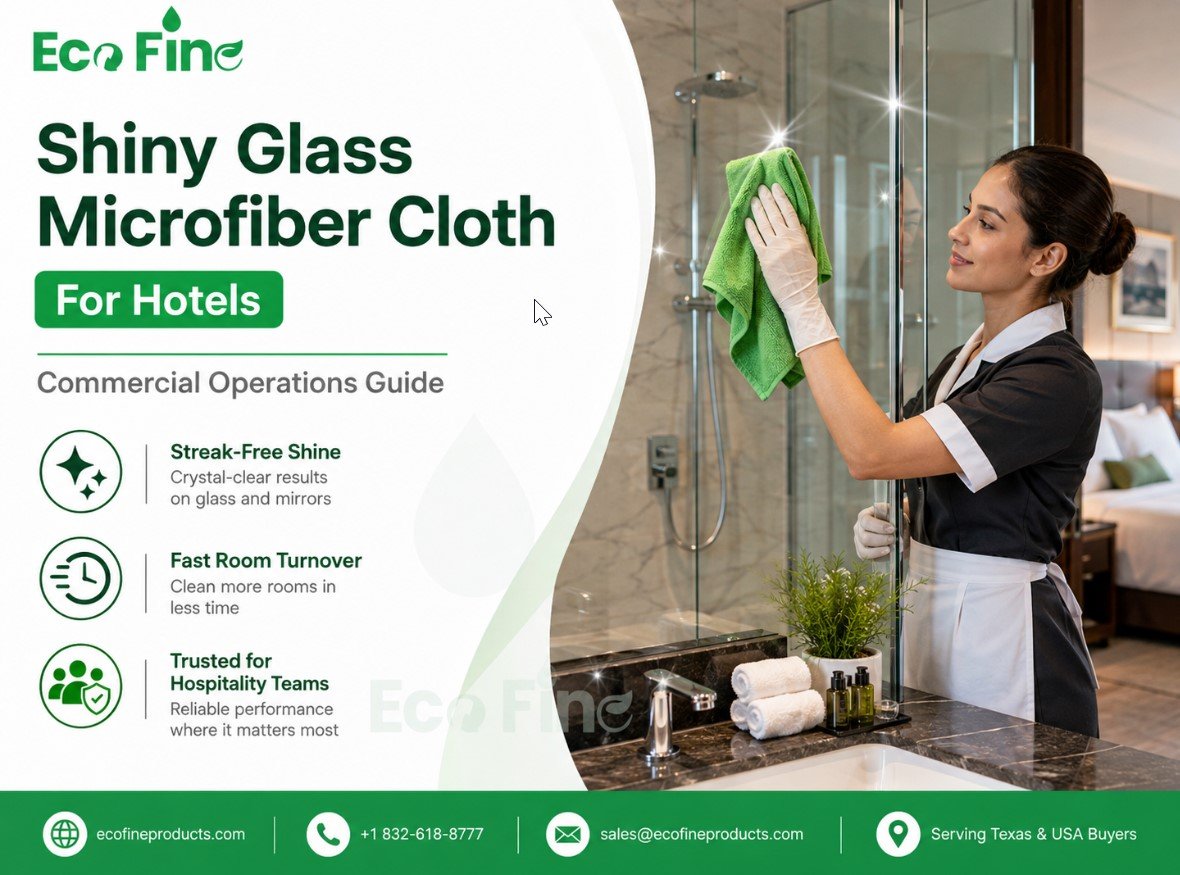
A wholesale shiny glass microfiber cloth order should be supported by an application-specific sample approval. Buyers need to know which fabric and preparation method produced an acceptable result, rather than relying on a broad promise of polished glass. Begin with the shiny glass cloth and confirm its current specification. This guide focuses on comparable trials, documented appearance checks and order details that receiving and operating teams can reproduce.
Describe the Glass Task Before the Fabric
Record the surfaces, finishes and method the order will support. Identify whether the cloth is intended for ordinary cleaning, a finishing stage or another approved use. Keep specialist glazing and access requirements under their existing procedures. A sample should be linked to a defined assignment, not approved for every glass-like material in a building.
Confirm the Exact Cloth Specification
Ask for available finished sizes, construction, edge finish, colors and documented care requirements. Confirm any composition or fabric-weight value for the selected item before including it as a purchasing requirement. Do not borrow measurements from another glass cloth. Record the supplier reference and any stated tolerances with the proposed pack. If an important detail is unavailable, resolve it before sample approval rather than allowing a photograph or a smooth-looking weave to stand in for verified information.
Use the Same Conditions for Comparisons
Evaluate candidates on comparable surfaces with the same approved product, preparation and inspection conditions. Ask the normal operator to carry out the work. Record visible residue, repeated wiping, handling and the cloth’s condition. Compare maintained samples after their permitted care process as well as new items. Differences in soil or technique can distort a purchasing comparison. Keep the trial notes clear enough that another person can understand what was assessed and repeat the relevant checks.
Agree on the Appearance Check
Define the practical result expected under the facility’s normal viewing and lighting conditions. Record which issues require rework or further review. Avoid inventing a numerical performance rating or treating one favorable demonstration as a guaranteed outcome. When results vary, assess surface condition, solution, moisture and technique alongside fabric. The approval should state the assignment and method that were acceptable, giving operating staff a reproducible reference rather than an unsupported claim about every possible glass-cleaning situation.
Include Care in Sample Approval
Obtain written instructions covering cleaning, detergent, drying and restricted treatments. Confirm that the intended locations can perform the required process. Inspect fabric, edges and any persistent residue after maintenance. Count unavailable items separately when assessing the stock needed for the route. A cloth that performs acceptably when new may still be unsuitable for the program if the available care process cannot keep it ready.
Clarify Quantities and Packaging
State whether the required quantity counts cloths, packs or cartons and confirm the contents of each unit. Identify destination and color allocations where relevant. Define any special labeling or packaging request separately from the working fabric, then ask about availability and approval. Do not assume a previous carton arrangement or custom option remains unchanged. Clear units help receiving reconcile the shipment and allow purchasing to distinguish a packaging discrepancy from a product-configuration change.
Review Alternatives Before Acceptance
Ask the supplier to identify proposed changes in size, fabric, edges, care or item reference. Compare the alternative with the approved application and trial record before distribution. A similar name does not establish identical finishing behavior. Keep accepted changes documented and tell operating staff when the method needs revision. Receiving should have access to the current specification, with earlier samples or superseded descriptions clearly distinguishable from the version used to approve the delivery.
Maintain Evidence for Repeat Supply
Track usable stock, items in care, losses and condition-based withdrawals using the confirmed item reference. Review demand when tasks or maintenance arrangements change. Ask EcoFine to confirm the current order specification and quantities for the next purchase. Retain sample findings and care requirements with that record. This lets a new buyer repeat the accepted configuration without relying on an old promotional claim or an appearance judgment that was never documented.
Resolve Inconsistent Results Across Locations
If one site reports repeated rework while another does not, compare the actual surface, preparation, care and inspection method before changing the standard everywhere. Check whether the sites received the same approved item and whether an alternative entered stock. Keep the investigation connected to the configuration used at each location. Record the resolution and notify purchasing when a confirmed product change is needed, preserving suitable stock elsewhere instead of treating every difference as evidence of a universal fabric problem.
Specification and Use Checklist
| Check | Requirement |
|---|---|
| Surface | Check the actual finish and instructions |
| Method | Use approved preparation consistently |
| Result | Inspect under normal viewing conditions |
| Care | Follow product-specific instructions |
Frequently Asked Questions
Why define the glass task before ordering?
The application determines what the sample approval means. A familiar cloth name does not establish suitability for every coating or glass-like surface.
Which product details should be verified?
Confirm available dimensions, construction, edges, colors and care for the exact item. Do not borrow unverified measurements from another glass cloth.
How should samples be compared?
Use comparable surfaces, the same approved preparation and normal operators. Record visible results, repeated work and handling after permitted care.
Does one successful demonstration establish a guarantee?
No. Keep the result tied to the assignment and conditions assessed. Define a practical appearance check rather than inventing a universal performance rating.
Why include care in the purchasing decision?
Receiving locations need a process that keeps the cloth suitable for the task. Assess maintained samples and confirm written maintenance requirements.
How should packaging be specified?
Confirm cloth, pack and carton quantities. Define any special labels or packaging separately and ask about availability and approval.
What should trigger substitution review?
Review changes to size, fabric, edges or care against the approved application. Tell operations when an accepted alternative changes the method.
How should inconsistent site results be investigated?
Compare actual surfaces, preparation, care and item references before changing the standard everywhere. Record the resolution for the affected locations.