
Waffle Weave Microfiber Towels: Application Assessment
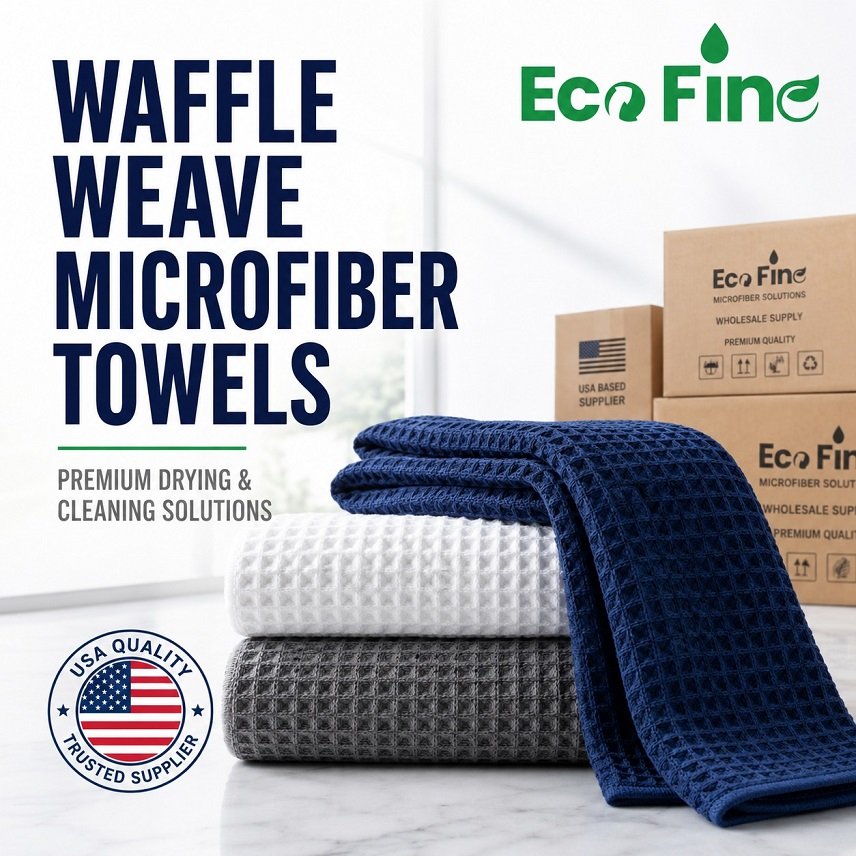
Waffle weave microfiber towels are identified by a textured grid pattern, but the pattern alone does not establish which cleaning task a particular towel can perform. Commercial buyers should evaluate the actual dimensions, construction, edges and care requirements alongside the intended work. This guide explains how to assess the format without assuming it is best for every application.
Sourcing Waffle Weave Towels for Your Team?
Share your cleaning application, preferred towel dimensions, estimated order quantity and delivery ZIP code. Ask EcoFine to confirm suitable product options, available colors, pack quantities and care instructions for the item quoted.
Recognize the Construction
The waffle description refers to the fabric’s patterned surface. It does not provide a complete specification for fiber blend, fabric mass, finished size or edge design. Products that share the description may feel and behave differently. Ask for the attributes of the exact item being considered. Avoid transferring claims from another waffle towel or assuming that a photograph proves absorbency, durability or compatibility with a particular finish.
Choose One Application to Assess
Start with a defined task such as wiping an approved surface or handling a permitted drying step. Record the ordinary soil, preparation and desired appearance. Separate automotive, hospitality and general facility assignments rather than using a single trial to approve them all. This helps staff identify why a towel was selected.
Evaluate Handling With the Actual Sample
Ask operators to fold, grip and move the sample as they would during normal work. Observe whether the texture and size support control around edges and corners. Note how easily the working face can be changed. A towel that feels comfortable while dry may handle differently when loaded with moisture. Include representative conditions in the assessment instead of choosing solely from an initial touch or a display photograph.
Assess Appearance Under Consistent Conditions
Check the result using the same lighting, surface and preparation for each comparable sample. Record visible residue, streaks or lint without immediately attributing them to the weave. Surface condition, cleaning product, water and towel care can affect the outcome. Repeat an uncertain observation after resolving obvious process differences. Approval should describe the conditions under which the sample worked and any limitations observed during the trial.
Treat Glass as Its Own Task
A waffle texture can be considered for an appropriate glass assignment, but no weave provides a universal streak-free guarantee. Confirm instructions for coated or treated surfaces before contact. Keep heavily soiled work separate from final appearance checks. The glass towel application guide can help organize the assessment. Use site-approved methods and check results before extending approval to additional glass types or locations.
Check Permitted Care Before Buying
Obtain the selected product’s care instructions and compare them with your actual wash and drying process. Do not impose a generic temperature or chemical rule when the item guidance differs. Evaluate the sample after the intended permitted care cycle. Inspect condition before returning it to service. If the process leaves residue or changes handling, investigate the care method and product together before making a repeat-order decision.
Keep Assignments and Stock Separate
Label the approved task and maintain separation between ready, used and held stock. A color or bin can communicate the assignment when staff understand the local rule. Neither the color nor the weave makes a towel appropriate for moving between unrelated tasks. Set clear return routes and change points based on the work.
Compare Alternatives Fairly
Compare waffle towels with another construction only when both candidates are suitable for the same trial. Hold preparation and assessment conditions consistent wherever practical. Record dimensions and construction differences so results remain interpretable. If one towel is larger, the comparison should acknowledge that difference rather than assigning the whole result to weave. Select the configuration that meets your own acceptance criteria without turning a local observation into a general performance claim.
Keep Trial Findings Specific
Write the outcome in terms another buyer or operator can understand. Identify the sample, task and conditions instead of describing the towel only as excellent or unsuitable. Include what changed after care and whether any uncertainty remains. Keep a limitation attached to the approved assignment so it is not lost when stock moves to another cupboard or department.
Document the Selected Configuration
State the item reference, dimensions, color and package unit in the order. Confirm current availability and delivery arrangements for that selection. On receipt, compare the goods with the approved sample and resolve discrepancies before distribution. Keep the accepted use and care information with the item record. Review it when surfaces, chemicals or work patterns change. Waffle weave then becomes a defined construction choice within a controlled cleaning program, rather than a substitute for task-specific approval.
Selection and Supply Checklist
| Check | Requirement |
|---|---|
| Task | Identify the approved work and surface |
| Configuration | Confirm the selected item and dimensions |
| Care | Check the permitted process before approval |
| Order | State the item reference and package unit |
Frequently Asked Questions
What does waffle weave describe?
It describes a textured grid pattern in the fabric. It does not independently confirm blend, GSM, dimensions, edge design or performance.
Are all waffle microfiber towels equivalent?
No. Confirm the exact item’s construction and care details. Similar descriptions or photographs do not prove that two products behave the same way.
Are waffle towels always best for glass?
No. Assess the selected towel with the approved surface and method. Water, residue and preparation can affect the result as well as the fabric.
Can one trial approve several unrelated tasks?
Not reliably. Define each assignment and its acceptance checks. Approval for one surface or cleaning stage should not automatically extend to unrelated work.
What should a handling trial observe?
Check grip, folding, movement and changes as the towel becomes loaded. Use representative conditions rather than selecting solely by dry feel.
How should the towel be washed?
Follow the selected product’s permitted care instructions. Confirm that your actual process is compatible before purchasing larger quantities.
Does weave determine a safe change interval?
No. Set change points through the task procedure and actual condition. Keep ready and used stock separate and make return routes clear.
What details belong on the order?
State the approved item reference, dimensions, color and confirmed package unit. Resolve any proposed substitute before it enters normal use.