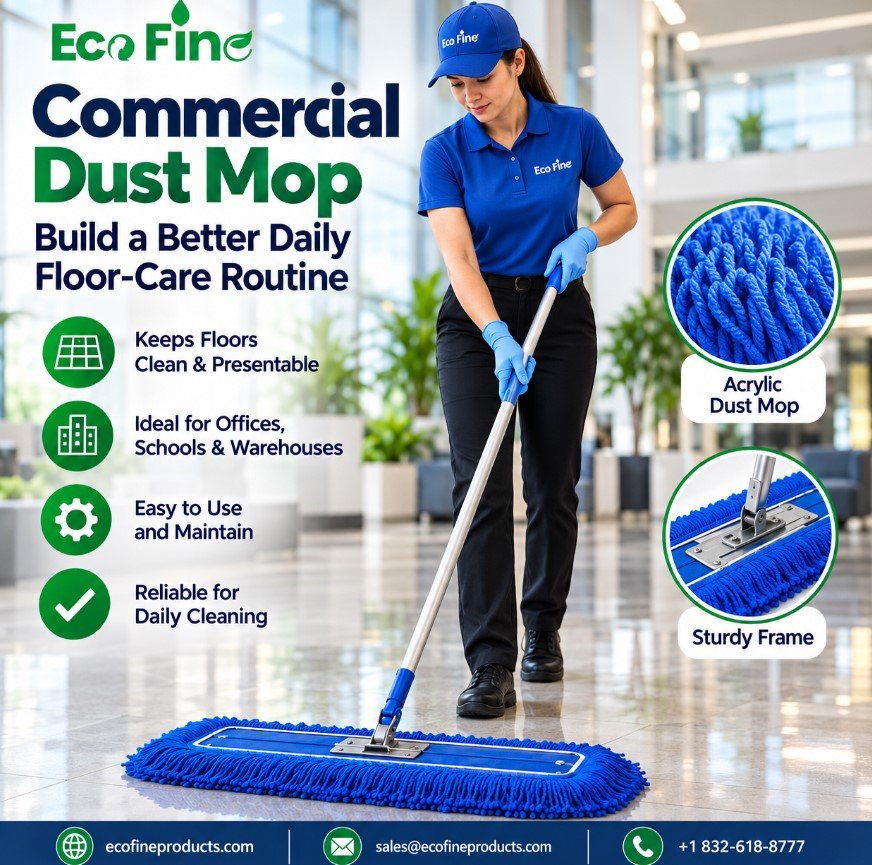
A commercial dust mop is useful for gathering loose dust, hair, lint, and lightweight debris from suitable hard floors. Choose one by matching the cleaning width to the route, confirming head-to-frame compatibility, and planning how used heads will be cleaned or replaced. For facility managers, the purchase is part of a daily maintenance system. A wide head that cannot turn around furniture or a replacement that does not fit existing hardware can interrupt that system. Start with the building’s layout and cleaning requirements before comparing materials and prices.
Where Dust Mopping Fits in Floor Maintenance
Dust mopping addresses loose dry soil. It is different from removing sticky residue, washing a floor, or applying a floor finish. Ecofine’s commercial dust mop range for routine dry floor maintenance includes acrylic and cotton heads in several widths. Both formats are described for collecting loose debris from suitable hard surfaces. An illustrative school route might involve dry debris removal from corridors before the scheduled wet-cleaning stage. A hotel team might use a suitable dust mop for an ordinary dry-floor touch-up while following a separate procedure for a spill. Do not use routine dust mopping as proof that a floor has been disinfected.
Map the Cleaning Route Before Selecting Width
Floor area alone does not establish the right mop size. Two buildings with similar square footage may have very different furniture density, aisle widths, and turning requirements. Walk the route with the cleaning supervisor. Identify doorways, fixed seating, racks, counters, and narrow passages. Consider where the operator needs to turn the head and where equipment can be stored. A 24-inch head is worth evaluating for furnished areas. A 36-inch head may suit mixed routes, while 48- or 60-inch options deserve consideration where the floor is sufficiently open.
Make Compatibility a Written Requirement
When ordering dust mop replacement heads, specify more than the nominal length. Include frame width, backing dimensions, attachment style, and the condition of the existing hardware. Ask the supplier to confirm the exact head-and-frame combination. Photographs can help identify equipment, but measurements may still be necessary. Ecofine’s commercial dust mop frame for a confirmed compatible cleaning setup is available as a hardware reference. Its description emphasizes compatible heads rather than establishing universal fit for every yarn mop. Check handles and frames before buying replacements. A bent frame, loose connection, or damaged support can prevent good floor contact even when the new head is correctly sized.
Organize the Route Around Actual Floor Conditions
Begin with the facility’s approved dry-cleaning procedure. Identify areas requiring ordinary dust collection and areas requiring another method. During use, assess whether the head stays properly spread and gathers the expected loose debris. If it bunches or slips, review the attachment rather than simply asking the operator to compensate. Arrange debris collection and head changes so workers can complete the route consistently. A loaded or poorly maintained head may require attention before the next area is cleaned. Do not shake accumulated dust into occupied indoor spaces.
Plan Spare Heads and Storage Before Ordering
Spare heads support continuity when used heads are being prepared, cleaned, dried, or replaced. The required quantity depends on cleaning frequency and the approved care process. For an illustrative office program, the purchasing team might identify active heads, clean replacements, and heads awaiting care. Those categories help reveal whether the available inventory can support the schedule. Ask whether a specific head is washable and obtain written instructions. Confirm any limits on detergent, temperature, drying, or treatment. Store clean heads and hardware according to the facility’s procedure.
Equipment Comparison Checklist
| Check | Options | Decision |
|---|---|---|
| Cleaning task | Loose dry debris | Use a suitable dry-maintenance head |
| Working width | 24, 36, 48 or 60 inches | Match clearances and turning space |
| Hardware | Head, frame and handle | Confirm dimensions and attachment |
| Maintenance | Product-specific care | Inspect backing, yarn and closures |
Frequently Asked Questions
What does a commercial dust mop remove?
It is intended for loose dry debris such as dust, hair, lint, and lightweight particles on suitable hard floors. It does not replace a process for removing sticky soil, grease, liquid spills, or contamination requiring a specialized cleaning procedure.
Is a dry mop the same as a dust mop?
The names often overlap in commercial purchasing. Check the intended task, head format, material, and attachment rather than relying on the name. Ecofine’s dust mop versus dry mop terminology article explains that distinction.
Which size should a school purchase?
Assess corridors, classrooms, furniture, doors, and storage before deciding. A school may benefit from different widths for different routes. Evaluate a sample with cleaning staff rather than selecting one size solely from the building’s total floor area.
Is a 60-inch dust mop suitable for every warehouse?
No. Wide open areas may accommodate a large head, but narrow aisles, stock, equipment, and turning spaces can limit its usefulness. Measure the working route and consider a smaller head for offices or constrained sections within the warehouse.
Should I buy acrylic or cotton dust mop heads?
Compare the specific products’ construction, compatibility, handling, price basis, and care requirements. Both are available for routine dry maintenance. A sample comparison under the same conditions provides more useful purchasing evidence than assuming one material always performs better.
Can I use a dust mop on wet flooring?
Use equipment and procedures intended for the floor condition. A dry dust mop should not be treated as a spill-cleanup tool. Address liquids through the facility’s approved process, then resume dry maintenance when the floor and procedure permit it.
How should dust mop heads be cleaned?
Follow the exact product’s instructions and the facility’s handling procedure. Confirm whether laundering is permitted and how collected debris should be removed. Avoid applying one care routine to all heads when backing, yarn, and closures may differ.
Will a replacement head fit my current frame?
Confirm length, width, backing dimensions, and closure design. A matching nominal length is not enough. Ask the supplier to identify a compatible replacement using equipment photographs and measurements, then check a sample before placing a large order.