
Commercial Wet Mops: What to Confirm Before Ordering in Bulk
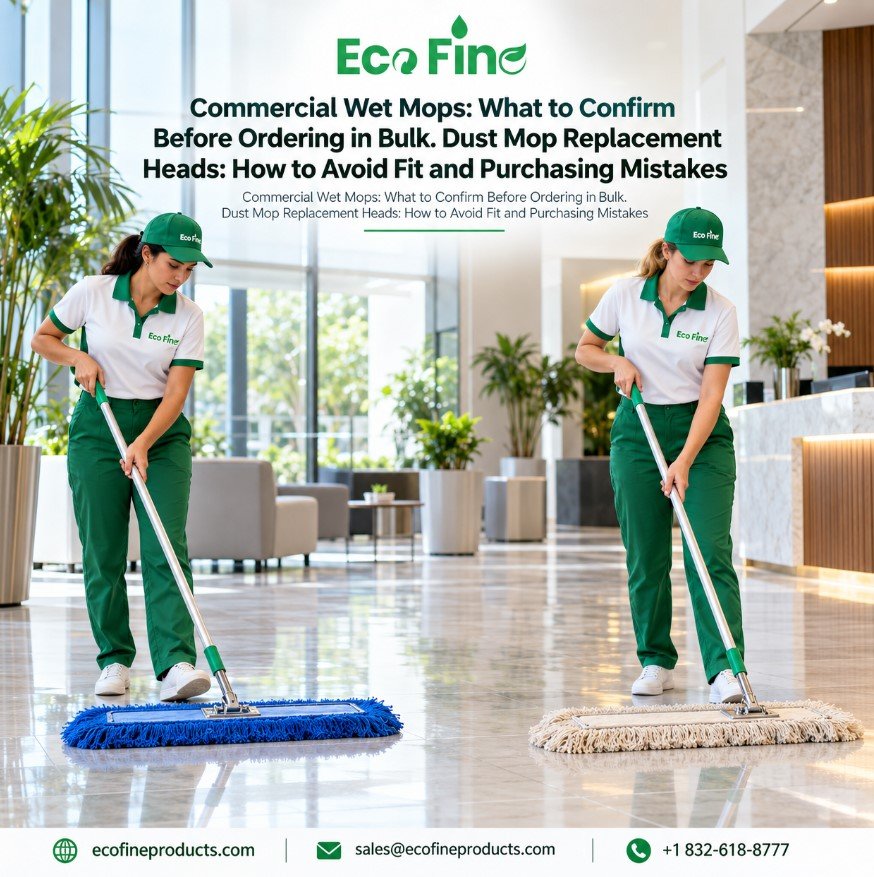
Buying commercial wet mops in bulk starts with a clear specification: cleaning application, yarn material, end construction, headband fit, manageable size, and approved care method. Confirm those details before comparing prices. A low-priced head offers little value if it does not fit the handles or wringers already in service. For cleaning contractors and facility managers, the goal is consistent equipment across the intended cleaning routes. A small sample order, written product details, and a clear replacement specification can help prevent a large purchase from becoming an operational problem.
Start With the Cleaning Task, Not the Product Name
“Wet mop” describes a broad equipment category. Routine floor washing, ordinary liquid pickup, and floor finish application may require different specifications. Ecofine’s commercial wet mop options for facility cleaning programs include cotton, blended, rayon, looped-end, and floor finish listings. Buyers should evaluate those options against the work rather than treating every head as interchangeable. Before requesting a quote, identify the floor types and cleaning products used by the team. Explain whether the head will support regular maintenance, occasional spill pickup, or a dedicated application procedure.
Separate Material From Construction
Material and construction describe different features. Cotton, rayon, and blended yarn identify the fibers. Cut-end and looped-end describe how the yarn ends are arranged. A cotton head can therefore have a different construction from another cotton head. Likewise, a looped-end mop can use different yarn materials. Ecofine’s cotton wet mop for general floor washing and liquid pickup is positioned around liquid absorption and retention. Its blended looped-end wet mop for routine commercial maintenance combines mixed yarn with connected ends. Ask for the fiber composition of a blended product. The word “blend” does not establish percentages, chemical compatibility, or laundering instructions. Use this table to organize purchasing questions.
Check Existing Handles and Wringers Before Choosing Quantity
A replacement head must work with the equipment employees already use. Confirm the handle’s clamp or connection and the headband dimensions. Photographs are helpful, but measurements may also be necessary. Ask the supplier to identify the exact compatible item in writing. Next, evaluate wringer fit. Workers should not need to force an oversized head through equipment that was selected for a different configuration. Test the head after preparation and wringing under the intended procedure. Its wet working weight may be more important to the operator than its appearance in a product photograph. For a contractor serving several buildings, document the hardware at each site.
Treat Floor Finishing as a Separate Purchase
A head selected for washing dirty floors should not automatically be reassigned to applying finish. Application equipment should follow the finish manufacturer’s instructions. Ecofine’s floor finish wet mop for a dedicated application procedure provides a relevant product destination for buyers evaluating that task. Confirm preparation requirements, permitted materials, and the application method before ordering. Clearly identify finish equipment in storage so employees can distinguish it from routine cleaning heads. The purchasing description should also state the intended application.
Plan Care and Spare Inventory Before Approving the Order
Ask for written instructions covering initial preparation, cleaning, drying, chemical restrictions, and laundering where permitted. Confirm that the facility can perform the required care. A washable product may still be an awkward choice if the available process does not match its instructions. Estimate spare inventory from cleaning frequency and care turnaround. Separate active heads, clean replacements, and equipment awaiting care when assessing requirements. Also identify the dry-preparation stage where appropriate. Ecofine’s dust mop and dry mop terminology article can help buyers distinguish that equipment from wet-cleaning heads.
Equipment Comparison Checklist
| Check | Options | Decision |
|---|---|---|
| Material | Cotton, rayon or blended yarn | Confirm the specific fiber and application |
| Construction | Cut-end or looped-end | Check band, stitching and permitted care |
| Hardware | Handle and wringer | Test secure attachment and working fit |
| Application | Cleaning or floor finishing | Keep dedicated finishing equipment separate |
Frequently Asked Questions
Which wet mop should I order for general cleaning?
Start with the floor, cleaning task, chemical instructions, and existing equipment. Cotton and blended heads are options to evaluate, but the exact construction matters. Confirm fit and care requirements, then test a sample before standardizing a large order.
Are looped-end wet mops always better?
No universal ranking applies. Connected ends can help organize yarn, but the complete head, application, handling, and care process determine suitability. Compare the proposed product with your existing equipment rather than assuming construction alone guarantees better results.
What does an ounce rating mean on a mop?
Ask the supplier what the stated rating measures for that product. Do not interpret it as liquid capacity or the final wet working weight. Use the confirmed specification to compare equivalent products, then assess handling during a practical sample evaluation.
Does the listing price include a handle?
Confirm the included components before ordering. A listing may cover a head, hardware, or a bundle. Request separate descriptions for heads, handles, and other equipment so the quote and receiving checks reflect the same order.
Can cotton and blended heads use the same handle?
They may, but compatibility depends on the connection and headband rather than material alone. Confirm dimensions and clamp requirements for both products. A supplier’s written compatibility statement is more useful than assuming similar-looking heads will fit.
Can every reusable wet mop be machine washed?
No. Obtain the approved care instructions for the exact item. Reusable does not automatically mean machine washable, and looped construction does not establish laundering limits. Confirm detergent, temperature, and drying requirements before assigning the head to a laundry program.
Should floor finish mops be ordered separately?
Yes, identify them as a dedicated application requirement and follow the finish manufacturer’s instructions. Clear purchasing and storage descriptions help prevent employees from using ordinary soil-removal equipment for a task that requires a different preparation or specification.
How many spare wet mop heads do I need?
Base the quantity on active cleaning routes, head-change requirements, and the time needed for approved care. Include usable replacements so work can continue during that process. There is no single spare-head ratio suitable for every commercial facility.