The right commercial wet mop depends on whether the task is routine floor washing, ordinary spill pickup, controlled solution application, or floor finishing. Compare material and construction separately, then confirm the handle, wringer, care process, and floor requirements. A general-purpose head should not automatically become the tool for every specialized task. For commercial buyers, a clear application-based selection can prevent incompatible replacements and confusing inventory. Begin with the work your team performs, then choose the equipment configuration that supports it.
Define the Task Before Comparing Mop Heads
Wet-cleaning tasks can require different handling and liquid-control characteristics. A head used to pick up an ordinary spill may not be the same specification selected for applying a floor finish. List the required applications before requesting quotes. Identify the floor types, cleaning products, existing handles, and any specialist procedure already approved by the facility. Ecofine’s commercial wet mop selection for professional floor maintenance includes cotton, blended, rayon, looped-end, and floor-finish listings. These are choices to evaluate, not interchangeable descriptions of one product.
Separate Yarn Material From End Construction
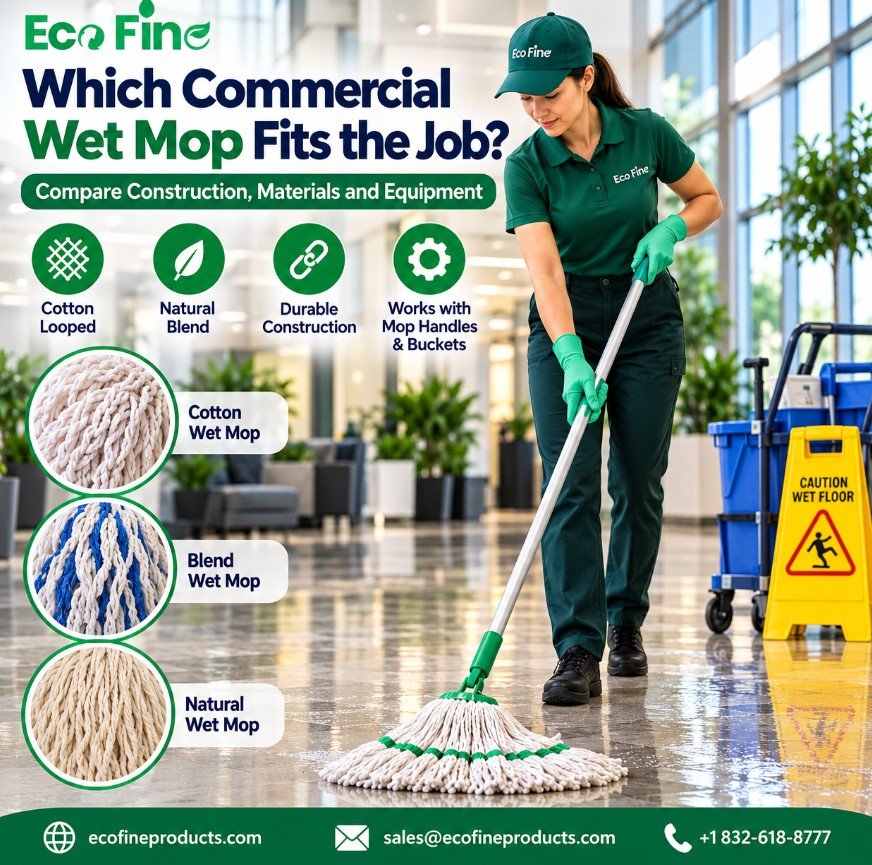
Material and construction answer different questions. Cotton, blended yarn, and rayon describe the cleaning fibers. Cut-end and looped-end describe how the yarn ends are arranged. Ecofine provides separate cut-end wet mop options for commercial cleaning programs and looped-end wet mop options for repeated maintenance routes. Compare the selected head’s stitching, band, yarn distribution, and any tailband. These details can influence how the working surface remains organized, but they do not establish a guaranteed lifespan. Do not assume every looped-end mop is launderable or every cut-end mop requires disposal after one use.
Keep Floor Finish Equipment Dedicated to Its Purpose
Floor finishing is a separate task from washing dirty flooring. A head carrying ordinary cleaning soil should not be assumed suitable for applying finish. Review the floor finish wet mop options for a dedicated application setup, then confirm the selected product with the finish manufacturer’s instructions. Ask how the head should be prepared, what application method is permitted, and whether the required finish has any material restrictions. Identify finish equipment clearly in storage. Staff should be able to distinguish it from general cleaning heads before the work begins. A dedicated specification also improves purchasing accuracy.
Match the Head to the Handle and Wringer
A wet mop head is one component of a working setup. Confirm the headband format, handle connection, and wringer fit before selecting the order quantity. An oversized or poorly matched head may be difficult to wring or control. An insecure clamp can interrupt cleaning even when the yarn material is appropriate. Evaluate the prepared head under normal operating conditions. Check that the worker can move it around fixtures and use the equipment without forcing the attachment or wringer. For buyers assessing a flat-pad alternative, Ecofine’s 18-inch microfiber wet mop pad pack for compatible flat holders is listed as a two-pad replacement pack. It requires matching hardware rather than a wet string-mop clamp.
Plan the Care Process Before Standardizing a Product
Ask whether the selected wet mop is intended for laundering and obtain its written care limits. Confirm detergents, temperatures, drying, initial preparation, and replacement criteria. Separate clean inventory from used equipment according to the facility’s procedure. Provide enough replacements to support the schedule while other heads undergo care. Compare the actual work involved in maintaining each proposed format. A product that does not fit the available care process can create difficulties even when its application appears suitable.
Equipment Comparison Checklist
| Check | Options | Decision |
|---|---|---|
| Material | Cotton, rayon or blended yarn | Confirm the specific fiber and application |
| Construction | Cut-end or looped-end | Check band, stitching and permitted care |
| Hardware | Handle and wringer | Test secure attachment and working fit |
| Application | Cleaning or floor finishing | Keep dedicated finishing equipment separate |
Frequently Asked Questions
How do I choose a commercial wet mop?
Start with the task and floor requirements. Then compare material, end construction, manageable working size, handle connection, wringer fit, and care instructions. Confirm the exact specification before using displayed prices to compare potential purchases.
What is the difference between cut-end and looped-end?
Cut-end yarn has open ends; looped-end yarn keeps the ends connected. The construction can affect yarn organization during use. Compare the entire head, including its band and stitching, and confirm the approved care process rather than assuming guaranteed durability.
What does “blended wet mop” mean?
It describes a head made with more than one fiber type. Ask for the exact composition and construction. The word “blend” does not establish percentages, washability, chemical compatibility, or performance, so those details belong in the confirmed product specification.
When should I consider a rayon wet mop?
Evaluate rayon when the task requires liquid handling characteristics that match the selected product’s instructions. Ecofine positions its rayon listing around liquid distribution and floor-care applications. Confirm suitability for the intended chemical, finish, and floor before purchasing.
Can one mop be used for cleaning and floor finishing?
Keep finish application within a dedicated, approved equipment procedure. A head used for ordinary soil removal should not automatically be reassigned to finish work. Confirm the application requirements and identify the equipment clearly so employees use the intended product.
Are microfiber flat pads a replacement for string mops?
They are an alternative format for suitable tasks, but they require compatible flat holders and a workable pad-care routine. Assess the actual application and existing equipment. A flat pad cannot simply be attached to the clamp used for a wet string mop.
Does a larger wet mop always improve productivity?
No. The wet working weight, wringer fit, obstacles, and operator control can limit usefulness. Evaluate the head during normal work. A manageable size that fits the route may be more practical than a larger head selected only for nominal capacity.
Can I use any cleaning chemical with a wet mop?
Follow the chemical, mop, and floor instructions. Material names do not prove universal compatibility. Confirm any restrictions before use, especially for specialist applications. If instructions conflict or are incomplete, obtain clarification before assigning the equipment to that task.