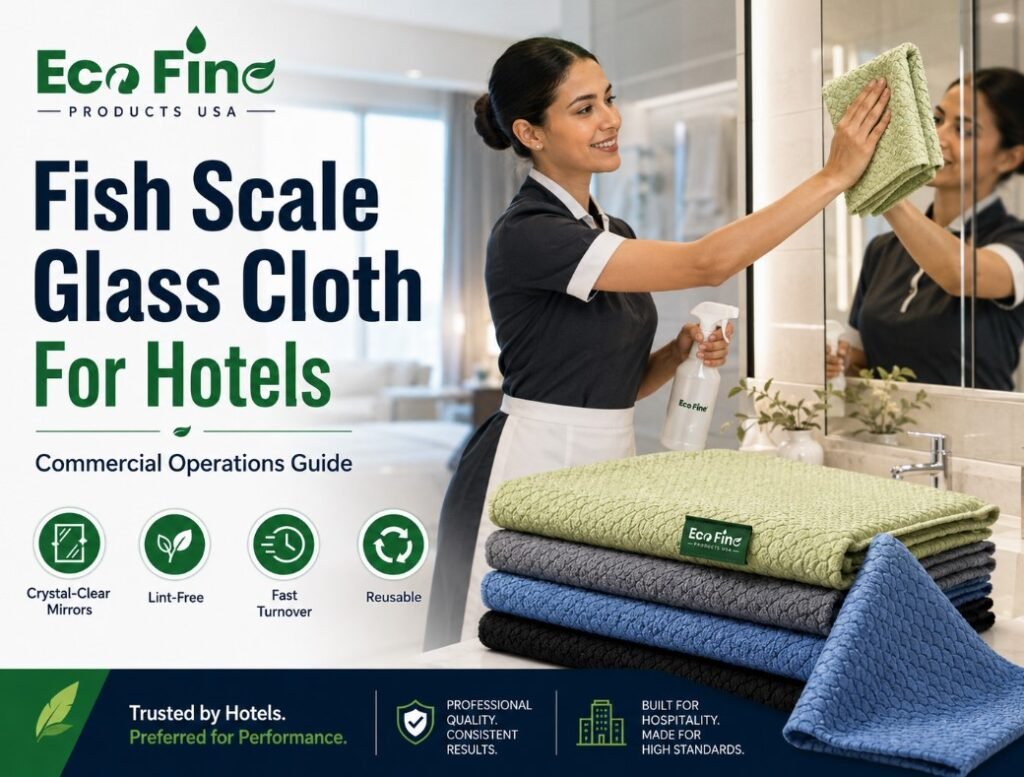
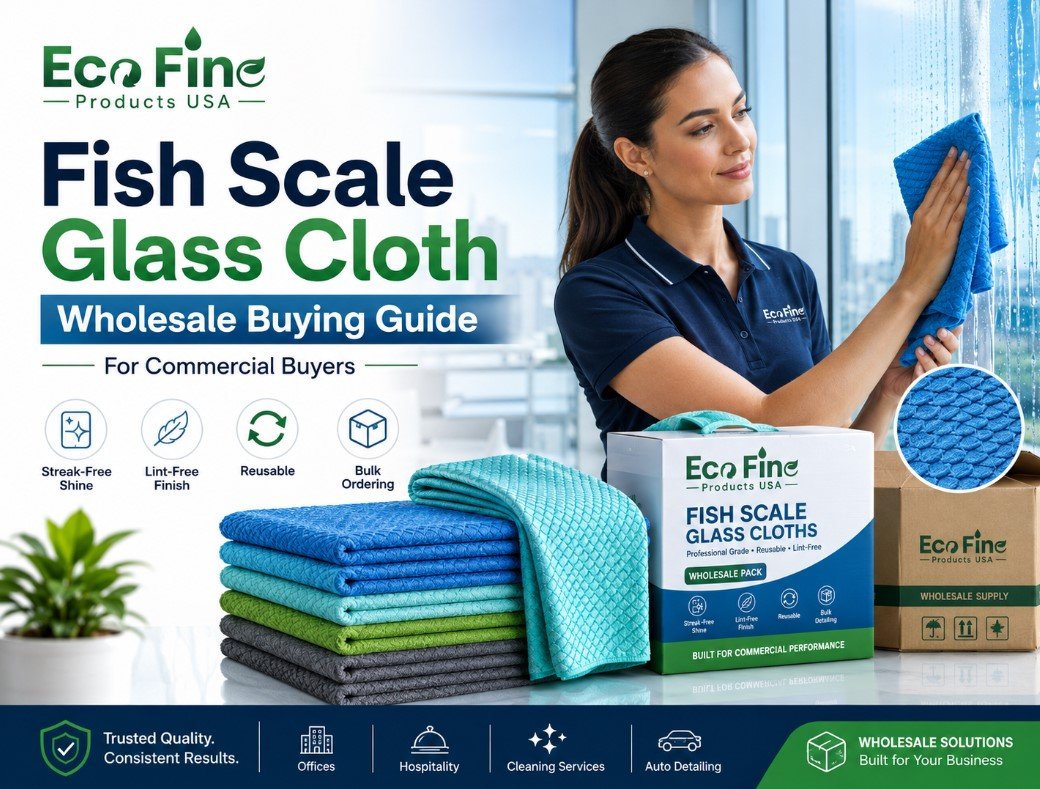
Wholesale buying for fish-scale glass cloths should connect the weave description with an exact item and an application-specific sample assessment. The pattern identifies a construction, not a guarantee of finishing performance. Start with the fish-scale glass cloth and confirm its current order details. This guide focuses on identifying the selected fabric, comparing samples fairly and maintaining a consistent specification when replacement stock is supplied across locations.
Confirm What the Weave Name Means
Describe the product as a microfiber cloth with a scale-like surface pattern rather than inferring a special fiber composition from its name. Ask for the exact item reference and supporting construction information. Keep other glass cloths distinguishable in the purchasing record. A similar intended task does not establish identical fabric, edges or care requirements. Accurate identification gives operating and receiving teams a practical standard instead of relying on an appearance that may be shared by several products.
Write the Application Requirement
Identify the reachable glass, mirrors or compatible polished surfaces the cloth will support. Check relevant surface and product instructions and keep specialist work under its existing procedure. Record whether the item serves cleaning, final wiping or another approved stage. A sample assessed on one assignment should not automatically approve every coating at another location. Attach these limits to the specification, so a later purchasing decision stays connected to the work rather than a general glass-care description.
Obtain Verified Product Details
Confirm available finished dimensions, fabric construction, edges, colors and care instructions for the selected item. Include GSM or fiber composition only where verified and relevant to the requirement. Do not copy values from a shiny glass or ordinary microfiber cloth. Ask the supplier to resolve missing measurements before the sample becomes a repeat-order standard. A photograph can assist identification, but it should not be used to infer a tolerance, pack quantity or performance value that has not been supplied.
Compare Samples on Equivalent Work
Use comparable surfaces, the same approved preparation and normal operators. Record folded handling, visible result, residue and repeated work under the usual inspection conditions. Compare maintained samples after permitted care as well as new cloths. Review soil, solution, moisture and technique when results differ. The decision should describe what was acceptable for the tested application, without converting a textured pattern or low-lint positioning into a universal streak-free, scratch-free or service-life guarantee.
Confirm a Workable Care Process
Obtain written cleaning and drying instructions and check whether each receiving location can follow them. Inspect edges, fabric and any remaining residue after maintenance. Count stock in care separately from ready reserve when considering quantities. A reusable format still needs a reliable route back to suitable condition. Keep those requirements with the approved specification, so a proposed substitute can be assessed against the actual maintenance arrangements rather than only its appearance when it arrives new.
Keep Units and Packaging Clear
Specify whether quantities count cloths, packs or cartons and confirm their contents for the actual order. Identify destination and color allocations using consistent units. Define any special labels or custom packaging separately, with availability and approval confirmed by the supplier. Do not assume that an earlier arrangement remains unchanged. Clear descriptions help receiving reconcile the shipment and let purchasing distinguish a packaging difference from a change to the working cloth that needs another application review.
Review Changes Before Stock Is Released
Ask the supplier to identify substitutions affecting weave, dimensions, edges, care or item reference. Compare the alternative with the approved trial record and notify operations when an accepted change affects handling or preparation. A familiar fish-scale name does not establish an equivalent configuration.
Keep Evidence With Repeat Orders
Track stock in use, care, ready reserve, losses and condition-based withdrawals separately. Review demand when routes, staffing or care turnaround changes. Ask EcoFine to confirm the selected specification and required quantities when planning further supply. Retain application notes and sample findings with the item reference. Another buyer should be able to repeat the approved order without inferring construction from the name or treating an old promotional description as the organization’s full purchasing requirement.
Resolve Differences Without Losing Item Identity
If one location reports a different result, check the actual product reference, surface, preparation and care process before changing the standard across the program. Identify any accepted alternative or unreviewed method change. Record the resolution for the affected work and update the specification only where the review supports it. This keeps the buying decision connected to the cloth and conditions assessed, while preserving a clear identity for stock that continues to suit established assignments.
Specification and Use Checklist
| Check | Requirement |
|---|---|
| Surface | Check the actual finish and instructions |
| Fabric | Confirm the selected item construction |
| Result | Use a consistent local appearance check |
| Supply | Confirm care and order units |
Frequently Asked Questions
Why identify the weave precisely?
The fish-scale pattern identifies a construction. Keep the exact item and specifications distinguishable from other glass cloths serving similar tasks.
Which product details should be confirmed?
Confirm dimensions, construction, edges, colors and care for the selected fish-scale item. Include composition or GSM only where verified.
How should samples be compared?
Use comparable surfaces, the same approved preparation and normal operators. Record visible results, repeated work and handling after permitted care.
Does one successful demonstration establish a guarantee?
No. Keep the result tied to the assignment and conditions assessed. Define a practical appearance check rather than inventing a universal performance rating.
Why include care in the purchasing decision?
Receiving locations need a process that keeps the cloth suitable for the task. Assess maintained samples and confirm written maintenance requirements.
How should packaging be specified?
Confirm cloth, pack and carton quantities. Define any special labels or packaging separately and ask about availability and approval.
What should trigger substitution review?
Review changes to size, fabric, edges or care against the approved application. Tell operations when an accepted alternative changes the method.
How should inconsistent site results be investigated?
Compare actual surfaces, preparation, care and item references before changing the standard everywhere. Record the resolution for the affected locations.