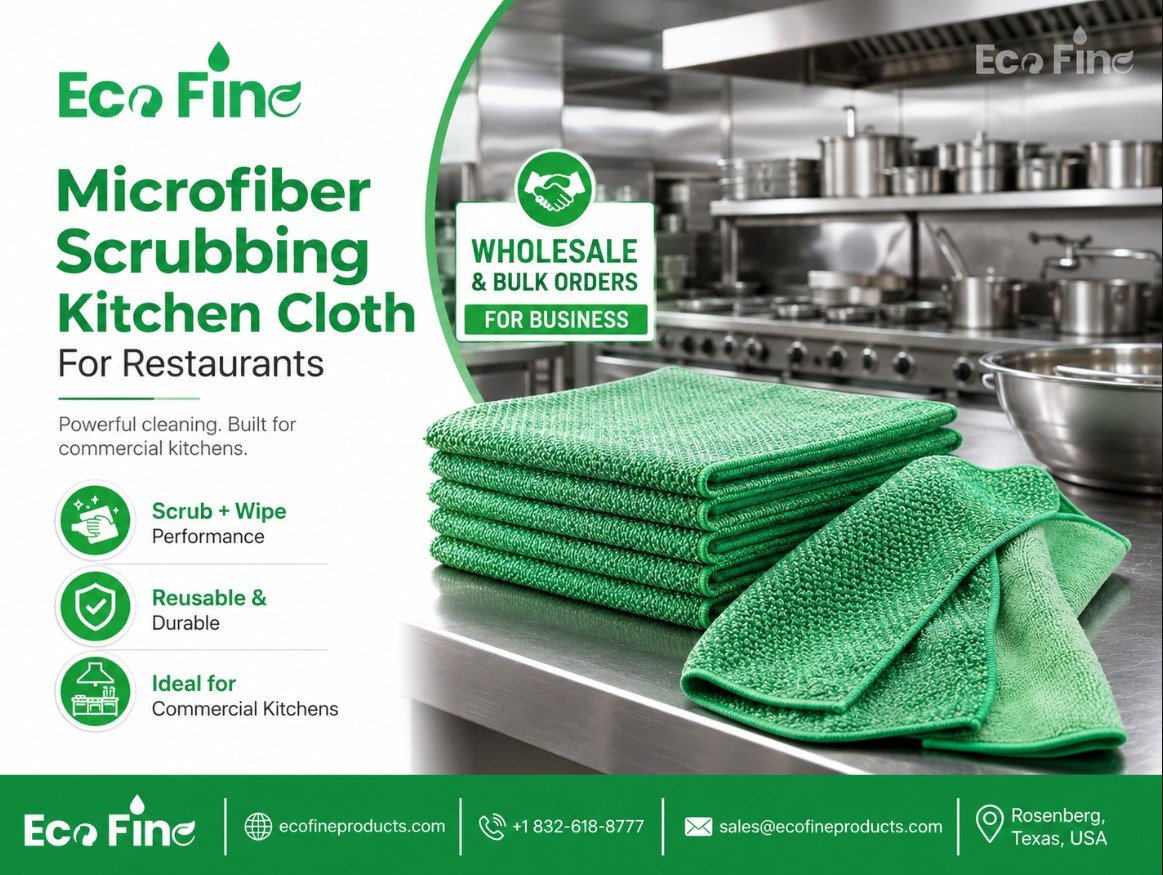
A microfiber scrubbing kitchen cloth routine for restaurants should begin with the approved cleaning task and the surface involved. The scrubbing description does not authorize use on every finish or replace a required sanitation procedure. Assess the microfiber scrubbing kitchen cloth within the restaurant’s existing method. This operations guide focuses on task assignment, controlled handling, condition checks and a clear return process between busy kitchen shifts.
Identify the Work the Cloth Will Do
Describe the soil, surface and intended result before assigning the cloth. Separate ordinary cleaning from finish removal, unknown contamination or another specialist task. Review the surface and cleaning-product instructions for the application involved. Keep any required sanitation stage distinct from wiping or scrubbing. A general kitchen label is insufficient for deciding where the item belongs. Staff need a practical description of the approved work and the person responsible for reviewing an unfamiliar surface or persistent mark.
Check the Surface Before Extending Use
Confirm the selected product’s stated application and restrictions alongside the equipment or finish instructions. Where the applicable method permits assessment, evaluate a limited representative area before broader use. Review the completed surface as well as the soil removed. Do not treat success on one counter, sink or appliance exterior as approval for a different material. Record the approved boundary so covering staff know which assignments were assessed and which require another cloth, tool or procedure.
Demonstrate a Controlled Method
Use the actual surface, permitted solution and preparation during training. Show how staff should hold or fold the cloth, expose the working area and decide when to change it. Follow the applicable instructions for technique rather than inventing a pressure or dwell-time rule. Explain the stop conditions for unexpected surface changes or equipment concerns. Observe the initial work so supervisors can correct inconsistent handling before an improvised method becomes the normal practice across several shifts.
Keep Cleaning Stages Distinguishable
Explain which part of the approved process the scrubbing cloth completes and what follows where required. Do not allow an effective-looking removal of soil to become proof that another necessary stage has been completed. Identify the appropriate tools for each stage and keep task assignments clear at the point of use. Review any proposed change in chemistry or method through the restaurant’s normal process. A recognizable sequence helps staff repeat the approved work without relying on product-name assumptions.
Plan Change and Return Conditions
Define when loading, damage or a change in assignment requires a fresh item. Follow the restaurant’s own handling and zone procedures. Keep clean cloths separate from used stock during preparation, work and collection. Confirm any color assignment against the product actually supplied; a color label helps identification but does not establish cleanliness. Make replacements accessible so staff can follow the change rule without searching through returned items or extending use merely because the service period is busy.
Inspect After Approved Care
Obtain written instructions for cleaning, drying and any restricted treatments. Confirm that the restaurant’s available care process matches the selected item. Inspect the working fabric, edges and persistent residue after maintenance. Remove items that no longer support dependable use for the approved task. Count stock awaiting care separately from ready replacements, and record losses independently from condition-based withdrawals. These distinctions help supervisors understand whether recurring shortages arise from consumption, collection timing, care or damage.
Review Rework With the Whole Procedure
Record the surface, soil, preparation and cloth condition when an assignment repeatedly needs attention. Compare operator technique and the approved solution before assuming that a different scrubbing fabric will resolve the issue. Review the result after permitted care as well as with new stock. Keep findings local to the assignment assessed. Avoid turning a short test into a universal claim about cleaning strength, surface protection or the number of times a cloth can be used.
Keep Shift Instructions and Supply Aligned
Maintain the approved item reference, confirmed construction, available dimensions, color and pack quantity with the task instructions. Review substitutions before issuing stock to the kitchen team. At handover, record usable replacements, pending returns and unresolved application questions. For supply confirmation, send EcoFine the intended task and required cloth details.
Review Changes to Equipment and Finishes
A replacement appliance, refinished counter or changed cleaning product can alter the conditions behind the original cloth approval. Ask supervisors to identify those changes before the familiar routine is extended. Consult the applicable instructions and assess the revised assignment through the restaurant’s normal process. Keep any exception visible at the point of use and explain it during handover. A recorded approval is useful only while the surface, product and method it describes continue to match the work.
Specification and Use Checklist
| Check | Requirement |
|---|---|
| Assignment | Identify soil and approved surface |
| Construction | Confirm the exact working fabric |
| Method | Keep required process stages distinct |
| Care | Inspect after permitted maintenance |
Frequently Asked Questions
Does scrubbing replace another required cleaning stage?
No. Identify the part of the approved process the cloth completes and keep required follow-up or sanitation stages distinct.
Can the cloth be used on every kitchen finish?
Do not assume that. Check applicable surface, product and cloth instructions and assess only the application permitted.
What should the task description include?
Identify the ordinary soil, surface, intended result and approved method. Keep specialist assignments separate and provide a route for unresolved questions.
Should staff invent pressure or dwell-time rules?
No. Follow the applicable instructions and approved technique. Demonstrate stop conditions for unexpected surface changes or equipment concerns.
When should the cloth be changed?
Follow the restaurant’s loading, damage, task-change and handling rules. Keep suitable replacements accessible during busy shifts.
How should used items be handled?
Separate them from clean stock through work, collection and care. Use the restaurant’s handling policy and product-specific maintenance instructions.
What should recurring rework prompt?
Review surface, soil, solution, preparation, technique and cloth condition together. Keep findings specific to the assignment tested.
When should the routine be reassessed?
Review new equipment, finishes, cleaning products or accepted substitutions before extending the earlier approval. Update training and handover instructions.