
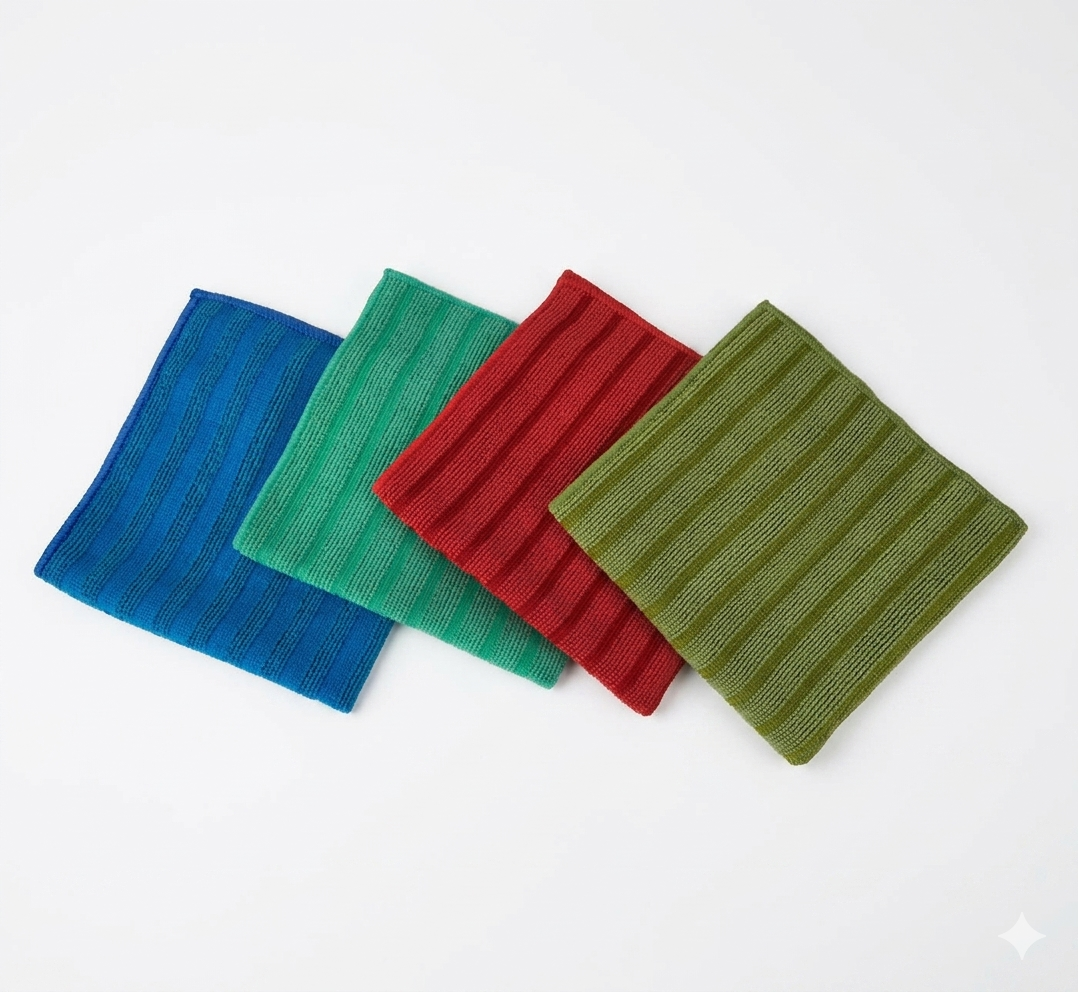
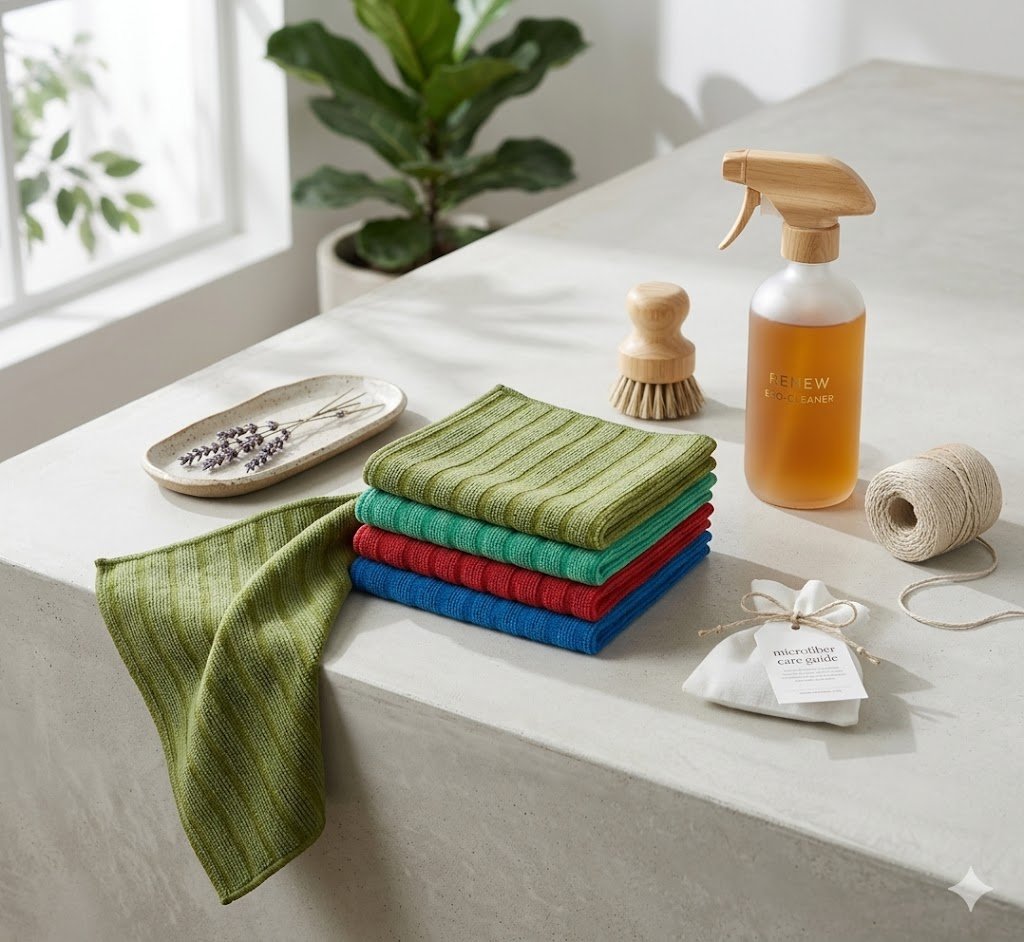
Premium Microfiber Scrubbing Kitchen Cloth for Daily Cleanup
EcoFine’s Premium Microfiber Scrubbing Kitchen Cloth supports controlled scrubbing, wiping, light grease pickup, and drying on compatible kitchen surfaces in restaurants, hospitality facilities, offices.
Check surface compatibility and use separately assigned cloths for different kitchen tasks. Confirm the material blend, construction, size, GSM, edge finish, colors, and pack quantity before ordering.
Microfiber Scrubbing Kitchen Cloth for Daily Cleanup
EcoFine’s Premium Microfiber Scrubbing Kitchen Cloth is a reusable option for controlled scrubbing, wiping, grease pickup, drying, and light finishing on compatible kitchen surfaces. It is offered for restaurants, cafés, catering operations, hotels, office kitchens, and homes.
Use it for everyday splashes and residue with a cleaning method suited to the surface. The cloth does not replace an aggressive scouring tool or establish compatibility with every cookware coating. Confirm its selected construction and specification before a commercial order.
Product Details Before Ordering
| Detail | Product information |
|---|---|
| Product | Premium Microfiber Scrubbing Kitchen Cloth |
| Main functions | Controlled scrubbing, wiping, grease pickup, drying, and light polishing |
| Material | Confirm the final polyester/polyamide microfiber blend and percentages |
| Surface construction | Confirm textured scrubbing and soft wiping details against the selected sample |
| Size, GSM, and edge finish | Confirm before ordering |
| Colors | Confirm current availability |
| Pack quantity | Confirm retail, bulk, or commercial case configuration |
| Wholesale supply | Available through EcoFine’s commercial program |
| OEM and private label | Available subject to quantity and specification |
The selected price does not by itself identify the cloth count. Confirm the quantity represented by the listing or quotation before calculating a per-cloth cost.
A Kitchen Cleaning Sequence with Controlled Pressure
- Identify the surface and soil. Check for a coating, sensitive finish, loose grit, or hardened particles before selecting the method.
- Remove loose debris. Collect crumbs and particles without dragging abrasive material across the finish.
- Prepare the residue. Use a surface-approved cleaner where needed and follow its directions, including any specified contact time.
- Scrub locally. Apply light, controlled pressure on a suitable area. Do not increase force simply because a deposit remains.
- Collect loosened soil. Wipe with a clean face and replace heavily soiled cloths rather than redistributing residue.
- Complete the required process. Follow the surface instructions and workplace procedures for any rinsing, sanitizing, or final drying.
Matching Tasks to Kitchen Surfaces
- Sealed counters and tables: use a compatible cleaner and an assigned cloth for routine marks and small spills.
- Appliance exteriors: check the finish and use controlled moisture around handles, joints, and electrical controls.
- Stainless-steel exteriors: follow the grain and the manufacturer’s care instructions.
- Sink surrounds and cabinet fronts: remove light residue while avoiding excessive water at vulnerable edges.
Non-stick cookware, glass cooktops, polished stone, painted cabinets, and coated appliances may require a different cleaning material. Follow the manufacturer’s directions and test discreetly where appropriate. “Non-scratch” wording should not be treated as permission to scrub every finish.
Separate Cloths by Station and Hygiene Zone
Assign kitchen cloths to defined tasks, such as dining-area wiping, appliance exteriors, and sink-area cleaning. Keep these supplies distinct from towels used on floors, waste areas, restrooms, or maintenance work. Follow the workplace procedure for raw-food and food-contact areas.
Use labels, separate storage, or confirmed color options to make assignments clear. Provide a collection point for used cloths and replenish from clean stock. Removing visible soil does not replace any required sanitizing or disinfection step.
For ready access to separate wiping sheets, compare the 12×12 microfiber cleaning cloth roll and confirm the cloth count. For soft routine wiping without a scrubbing texture, consider the 12×12 Terry Cloth.
Keep Final Polishing Separate from Greasy Cleanup
A cloth that has collected grease can transfer a film onto glass or polished surfaces. Use a clean dedicated finishing towel after the dirty work instead of treating every kitchen task as a single-cloth process.
The Microfiber Glass Cloth is a separate option for compatible windows, mirrors, and appliance glass. For another scrub-and-wipe format, compare the Microfiber Scrubbing Cloth with Soft Wiping Side against the confirmed sample and specification; the product names alone do not establish a performance ranking.
Care Between Uses
Follow the supplied care label for detergent, wash temperature, drying, and any initial washing. Keep heavily greasy loads separate from towels used for glass or light polishing, and separate microfiber from lint-producing fabrics where practical.
Avoid fabric softener and dryer sheets unless the care instructions permit them. Dry cloths completely before storage. Inspect for embedded particles, damaged edges, or persistent residue and remove unsuitable cloths from sensitive-surface service.
Wholesale and Private-Label Purchasing
Provide the intended surfaces, dimensions, GSM, fiber blend, construction, edge finish, colors, pack count, and total quantity. Include branding, packaging, delivery destination, and required date for a commercial quote.
Evaluate an approved sample with the cleaners and laundering process your team uses.
Frequently Asked Questions
Can it remove every baked-on deposit?
No universal deposit-removal claim is made. Identify the soil and surface, then use an approved treatment rather than repeatedly increasing pressure.
Is it safe for non-stick cookware?
Follow the cookware manufacturer’s care instructions. Do not assume the textured surface is suitable for every coating.
Does scrubbing replace sanitizing?
No. Scrubbing removes physical soil. Complete any required cleaning and sanitizing process under your workplace procedures.
Which pack quantity is included?
Confirm the selected variation, cloth count, and carton quantity with EcoFine before ordering.
Can I request branded packaging?
OEM and private-label inquiries are supported subject to the specification and quantity. Share your artwork and pack requirements for confirmation.
Can the same cloth move from greasy cleanup to final drying?
Use a clean working face or a fresh assigned towel when the first cloth carries grease or heavy soil. Do not transfer that residue into the finishing stage. Separate collection and storage arrangements help staff keep cleanup cloths distinct from material reserved for drying.
What should staff check before using a sample?
Match the confirmed construction to the intended surface and cleaning product. Follow any initial care instructions and inspect the fabric for debris. A controlled trial on an appropriate area helps assess handling and residue removal without assuming that every kitchen finish has the same requirements.
How should reusable kitchen cloths be stored?
Clean and dry them under the supplied care guidance and workplace hygiene procedure. Keep processed towels separate from used material awaiting washing. Identify assigned stations or zones so a cloth is not selected for another task merely because it looks dry or lightly used.
Get a Customized Quote
Request a wholesale quote for microfiber cleaning products, commercial mops and janitorial supplies.
Share the products, quantities, delivery location and any branding requirements below so our team can review your enquiry.
Reviews
There are no reviews yet.