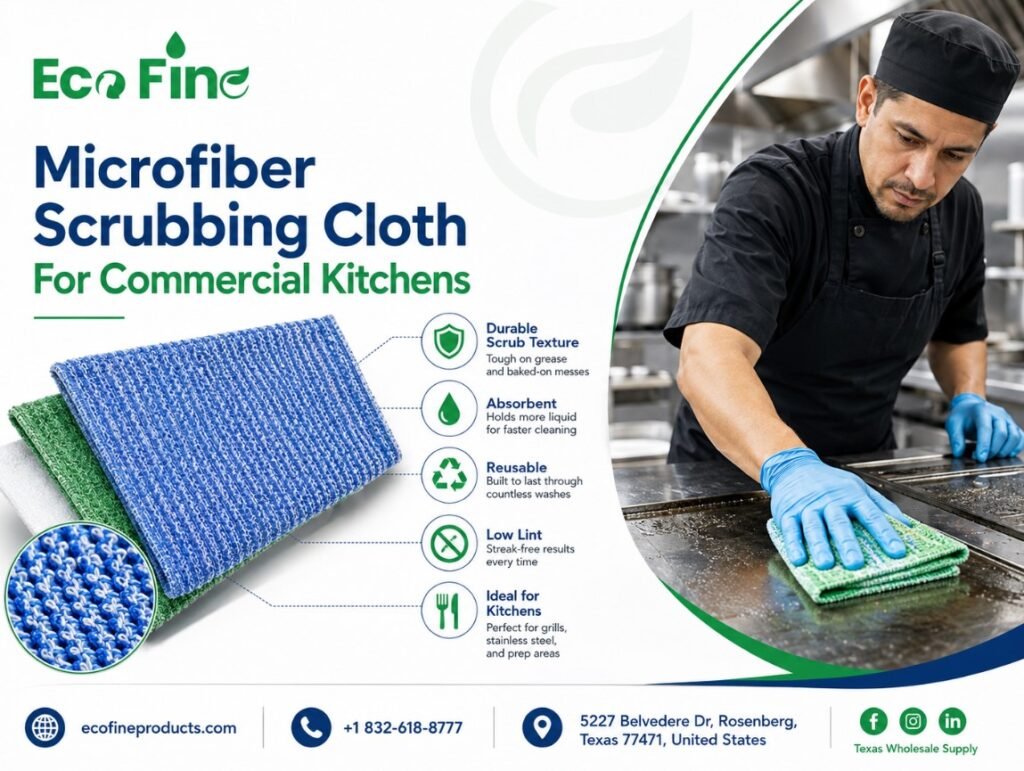
Wholesale buying for microfiber scrubbing kitchen cloths should begin with a confirmed application and a measurable product specification. The word scrubbing is useful for identifying a candidate, but it does not establish universal surface compatibility or a guaranteed cleaning result. Review the microfiber scrubbing kitchen cloth through a representative trial. This guide focuses on selecting the correct construction, approving care and preventing an unintended change when replacement stock arrives.
Define the Required Application
Identify the surfaces, ordinary soil and approved process the cloth will support. State whether the request replaces an established item or evaluates another fabric. Keep specialist cleaning and any required sanitation stages under their existing procedures. Explain the boundaries in the specification so a supplier can understand the application without treating the phrase kitchen cloth as permission for unrestricted use. Attach the operating requirement to the purchasing record rather than allowing the product name to become the entire description.
Confirm the Cloth’s Working Construction
Ask for the selected item’s construction, available dimensions, edge finish, colors and documented restrictions. Where material composition or fabric weight is required, confirm it for that exact product before including a value. Do not assign specifications from a different scrubbing cloth or pad. Keep the supplier reference and supporting information with the proposed pack details. A similar texture or photograph can help identify a candidate, but it cannot fill gaps in dimensions, performance or care instructions.
Approve the Sample on the Intended Surface
Follow the applicable surface and product instructions when arranging a representative evaluation. Use the approved solution and normal handling method, and have the regular operator complete the task. Record soil removal, visible residue, repeated work and the completed surface condition. Assess alternatives under comparable conditions. Resolve unexpected results before expanding the trial. A local application approval should not be rewritten as a universal scratch-free, non-abrasive or cleaning-strength promise for every material a customer may encounter.
Include Maintenance in the Decision
Obtain written cleaning and drying requirements, including any limits on treatment. Confirm whether the receiving locations can perform the required process. Inspect the fabric and edges after permitted care, then reassess the assignment. Keep clean stock separate from used items according to the organization’s handling method. A reusable description alone does not establish a fixed lifespan. Record the care arrangement with the accepted product so a later substitution can be reviewed against the same operating requirements.
State Quantity Units Clearly
Identify whether the requested number means cloths, packs or cartons and confirm the contents of each unit. Include destination and color allocations where needed. Keep pack counts distinct from product dimensions and ask about any change from an earlier arrangement. If special packaging or labels are required, define them separately and confirm availability and approval. Clear units support receiving checks and reduce the chance that a bulk request is distributed using inconsistent assumptions between purchasing and the kitchen team.
Control Substitutions Affecting Use
Request review of changes to fabric, dimensions, edges, care or item reference before stock is released. Compare alternatives with the approved task and sample findings. Tell the operating supervisor when an accepted change affects preparation or handling. Do not infer equivalence from a familiar scrubbing label.
Inspect Deliveries Before Allocation
Compare identification, quantities and representative working-product details with the approved record. Follow the organization’s receiving procedure for checking construction, dimensions and colors. Keep discrepancies identifiable and resolve them with the supplier before distributing uncertain stock across locations. Record any accepted alternative and its application limits. Receiving staff should not need to judge cleaning performance from appearance alone; their role is to confirm that the delivered item matches the configuration already assessed by the operating team.
Reorder From Operating Evidence
Track use, losses and condition-based withdrawals separately. Count active items, stock awaiting care, drying items and clean reserve when reviewing demand. Investigate shortages alongside collection and care turnaround rather than assuming the order quantity is the only cause. Ask EcoFine to confirm the current specification and quantities for further supply. Retain sample findings and maintenance requirements with the record so another buyer can repeat the approved order without relying on a promotional description.
Review Requirements When the Task Changes
A new surface, coating or cleaning product may require another assessment even when the cloth reference stays the same. Ask the operating team to identify the change and update the application record through the organization’s normal approval process. Keep the purchasing description connected to that current requirement. This avoids treating an established supply relationship as proof that the selected fabric suits every later assignment, while preserving a clear standard for work where the original conditions remain unchanged.
Specification and Use Checklist
| Check | Requirement |
|---|---|
| Assignment | Identify soil and approved surface |
| Construction | Confirm the exact working fabric |
| Method | Keep required process stages distinct |
| Care | Inspect after permitted maintenance |
Frequently Asked Questions
What belongs in the application requirement?
Record surfaces, ordinary soil and the approved process. Explain any limits or separate required stages before evaluating the cloth.
Which construction details should be confirmed?
Confirm the exact fabric, dimensions, edges, colors and care. Include composition or weight only where verified for the selected item.
What should a sample evaluation assess?
Review soil removal, residue, repeated work, handling and completed surface condition using the intended method and representative task.
Does local approval establish universal surface protection?
No. Keep approval tied to the tested application and applicable instructions. Do not convert a limited trial into a scratch-free guarantee.
How should care affect the order?
Confirm that receiving locations can perform the written maintenance process. Inspect and reassess the cloth after permitted care before approving quantity.
Which order units need confirmation?
State cloths, packs or cartons and confirm their contents. Keep packaging and destination allocations explicit for receiving.
When should alternatives be reviewed?
Review fabric, dimensions, edges and care changes before release. Connect accepted alternatives with the approved method and notify operating staff.
What should support repeat purchasing?
Maintain item, application, specification, quantity and care records. Use observed demand, losses and turnaround when planning further supply.