
Why Choose a Microfiber Scrubbing Kitchen Cloth?
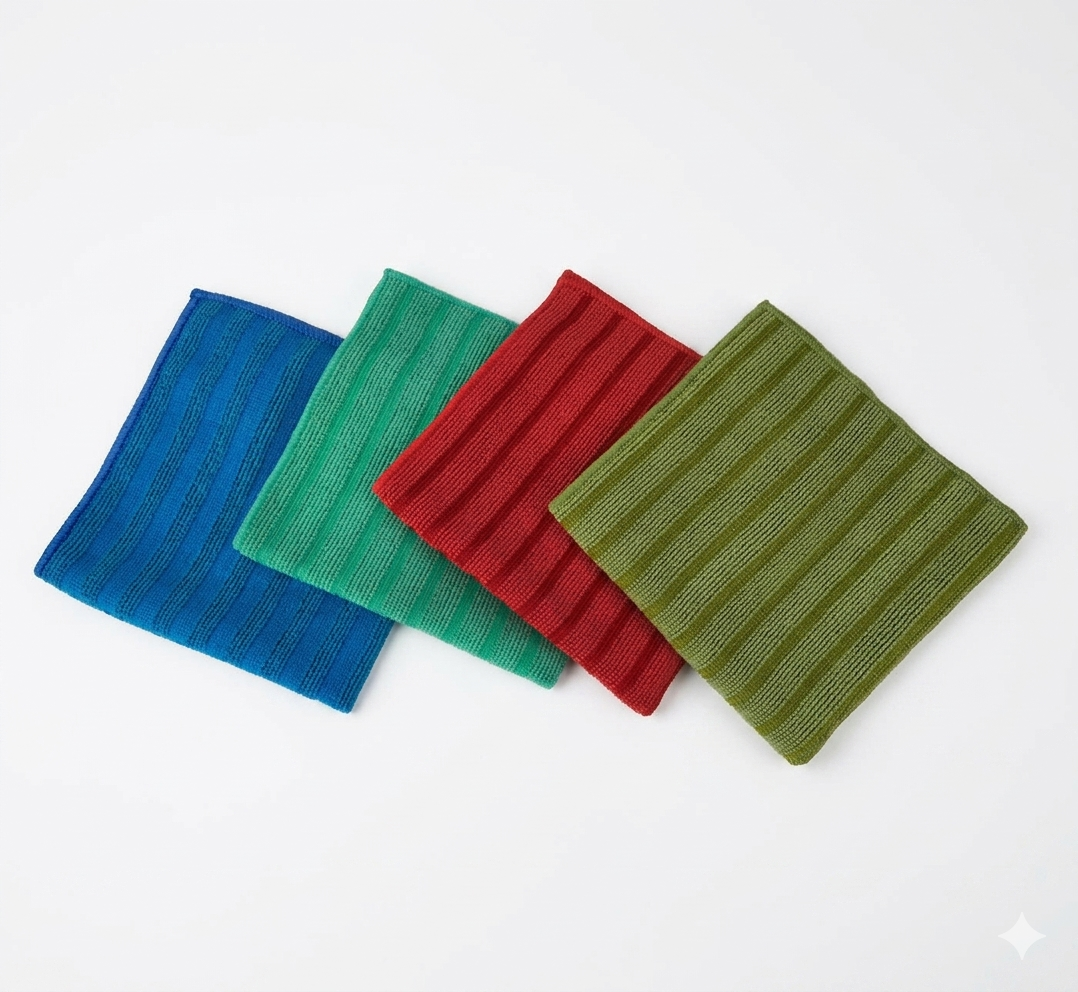
A standard towel may absorb liquid but struggle with attached residue. A microfiber kitchen scrubbing cloth is designed to provide both surface contact and soil pickup. Its textured cleaning action helps release grime, while the microfiber fabric collects loosened particles and moisture instead of requiring the user to switch repeatedly between a scrubber and wiping towel.
Microfiber commonly uses fine polyester, polyamide, or blended synthetic fibers selected for properties such as softness, durability, and absorption. These characteristics make microfiber suitable for many compatible wet and dry cleaning applications. (Wikipedia)
This construction creates a practical kitchen cleaning cloth rather than an aggressive metal scourer. Remove loose grit before cleaning, apply controlled pressure, and test delicate finishes in a discreet location.
Heavy-Duty Kitchen Scrub Cloth for Grease and Dried Residue
A heavy-duty kitchen scrub cloth is particularly useful when ordinary wiping leaves a visible film. It can support the removal of light grease around cooktops, dried drink splashes on counters, fingerprints on appliance exteriors, residue around sink areas, and food marks on compatible tables or cabinet fronts.
For stubborn deposits, apply an approved surface cleaner and allow its recommended dwell time instead of immediately increasing pressure. This helps soften residue while reducing unnecessary wear on the cloth and cleaned surface.
Commercial teams can pair this product with EcoFine’s multipurpose 3-in-1 microfiber cloth for scrubbing, wiping, and polishing kitchen surfaces when they need a lighter all-purpose towel for several departments. EcoFine positions that related cloth for counters, sinks, appliances, glass, mirrors, and routine commercial cleaning.
Non-Scratch Kitchen Cloth for Cookware and Appliances
The phrase non-scratch kitchen cloth describes its intended gentle-cleaning role, but trapped sand, metal fragments, hardened food particles, or abrasive debris can still mark sensitive finishes. Always inspect the cloth and remove loose particles before scrubbing.
On stainless-steel appliance exteriors, wipe with the grain and use a compatible cleaning product. Test the cloth before using it on non-stick cookware, polished stone, glass cooktops, painted cabinets, screens, coated appliances, or specialty finishes. The non-scratch description should not be treated as a universal guarantee for every material.
For final glass and polished-surface finishing, direct users to EcoFine’s streak-free microfiber glass cloth for kitchen windows, mirrors, and appliance glass, which is more specialized for controlled, low-lint polishing.
Reusable Kitchen Scrub Cloth for Wet and Dry Cleaning
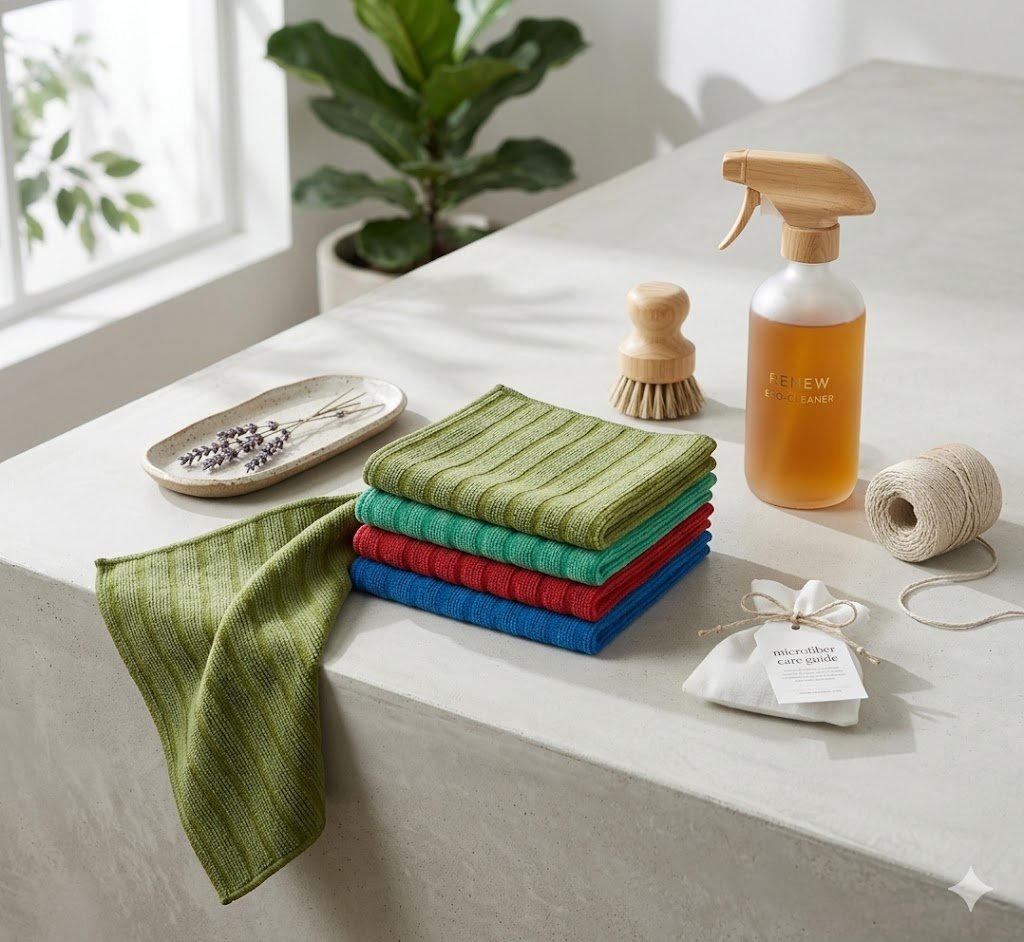
A reusable kitchen scrub cloth can be used dry for loose crumbs, dust, and light particle pickup. Lightly damp use is better for fingerprints, water spots, spills, and attached residue. When combined with a compatible cleaner, it can also support the removal of everyday grease and food-related marks.
Fold the cloth into quarters and rotate to a clean working face as each section becomes soiled. This technique provides several usable surfaces and reduces the risk of transferring collected residue from one area to another.
For cleaning stations that require a ready supply of separate towels, EcoFine’s 12×12 reusable microfiber cleaning cloth roll for restaurant and kitchen wiping provides a convenient roll-based format.
Kitchen Cleaning Cloth for Restaurants and Food-Service Operations
Restaurants, cafés, hotels, and institutional kitchens can assign a dedicated kitchen cleaning cloth to counters, dining tables, sink surrounds, appliance exteriors, shelving, or front-of-house surfaces. Cloths used near floors, waste areas, restrooms, or raw-food zones should remain separate.
Color coding, labeled storage, scheduled laundering, and defined replacement procedures help prevent accidental cross-use. The cloth removes visible soil, but it does not replace any required sanitizing or disinfecting step. Food-contact surfaces should still be treated according to the approved cleaning-product label and applicable workplace procedures.
Multipurpose Kitchen Scrubbing Cloth for Home Cleaning
At home, a multipurpose kitchen scrubbing cloth can handle counters, dish areas, cabinet fronts, dining tables, appliance exteriors, and small spills. Separate cloths should be reserved for general surfaces, dishes, floors, bathrooms, and other hygiene zones.
The reusable design may reduce paper-towel use for suitable everyday tasks, provided the cloth is washed correctly and replaced when embedded debris, damaged edges, odors, or persistent oily buildup affect its performance.
Product Features and Specification Guide
| Product Detail | Available or Recommended Information |
| Product Name | Premium Microfiber Scrubbing Kitchen Cloth |
| Primary Function | Scrubbing, wiping, grease pickup, drying, and light polishing |
| Material | Confirm the final polyester/polyamide microfiber blend |
| Surface Design | Confirm the textured scrubbing and soft wiping construction |
| Best Uses | Kitchens, restaurants, cafés, hospitality, janitorial work, and home cleaning |
| Size and GSM | Confirm before publishing or ordering |
| Color Options | Confirm the currently available colors |
| Pack Quantity | Confirm retail, bulk, and commercial case quantities |
| Wholesale Availability | Available through EcoFine’s commercial supply program |
| OEM and Private Label | Available subject to order quantity and specification |
The kitchen-specific product appears separately within EcoFine’s microfiber cloth category. However, the supplied URL did not expose its full technical information during verification, so exact dimensions, GSM, edge finish, material percentages, colors, and pack quantities should be taken from the approved supplier sheet, sample, WooCommerce variation, or quotation.
Real U.S. Market Price, Cost, and Rate Comparison
The following market prices were checked on July 28, 2026. These products differ in construction, dimensions, brand, and pack quantity, so the figures should be used as positioning benchmarks rather than exact specification matches.
| Current Market Listing | Pack Size | Listed Price | Approximate Unit Cost |
| EcoFine Microfiber Scrubbing Kitchen Cloth | Quantity and public price require confirmation | Request quote | Depends on specification and volume |
| Scotch-Brite Dobie Scrub and Wipe Cloths | 2 cloths | $3.19 | $1.60 each |
| Scotch-Brite Stay Clean Scrubbing Pads | 2 pads | $4.59 | $2.30 each (Target) |
| E-Cloth Non-Scratch Scrubbing Pads | 2 pads | $7.99 | About $4.00 each |
| Norwex Ultra Scrub Cloth | 2 cloths | $24.99 | About $12.50 each |
| AccoHolly Reusable Microfiber Scrub Cloths | 16 cloths | $16.98 | About $1.06 each |
| Tuff-Scrub Microfiber Kitchen Towels | 6 towels | $17.84 | About $2.97 each |
The market ranges from economical multipacks to premium branded scrub cloths. EcoFine’s final rate will depend on confirmed size, GSM, material blend, quantity, packaging, branding, freight, and customization. Commercial buyers should therefore compare cost per usable wash cycle instead of considering only the initial unit price.
How to Use a Heavy-Duty Kitchen Scrub Cloth
Remove crumbs, grit, and abrasive debris before cleaning. Fold the heavy-duty kitchen scrub cloth into quarters, dampen it as required, and apply a small amount of surface-compatible cleaner. Use controlled pressure on the affected area, then rotate to a clean face to collect loosened residue.
Do not oversaturate electrical appliances, switches, seams, unsealed wood, or vulnerable edges. Follow the surface manufacturer’s care instructions and complete the job with a clean, dry microfiber section when a polished finish is required.
How to Wash and Maintain a Reusable Kitchen Scrub Cloth
Rinse food particles and heavy grease before laundering the reusable kitchen scrub cloth. Follow the confirmed care label and separate heavily soiled kitchen cloths from personal towels and specialist glass-polishing cloths.
Avoid fabric softener and dryer sheets unless EcoFine’s final care instructions specifically permit them. Microfiber-care guidance from E-Cloth and 3M warns that softener can coat microfiber and interfere with its cleaning or absorption performance. Dry the cloth fully before storage and remove it from delicate-surface use if embedded grit, frayed edges, persistent odors, or oily residue remain.
Wholesale and Private-Label Kitchen Scrubbing Cloths
EcoFine supports restaurants, cleaning companies, hotels, janitorial suppliers, distributors, retailers, facility managers, and private-label cleaning brands. Buyers can explore wholesale microfiber cloths for restaurant, hospitality, and commercial kitchen cleaning to create a coordinated surface-care range. (EcoFine Products)
For branded programs, review custom private-label microfiber kitchen cloth manufacturing and retail packaging services. An accurate commercial quotation should include dimensions, GSM, fiber composition, color, edge finish, pack quantity, packaging, branding requirements, destination, and estimated annual volume.
Frequently Asked Questions:
1. What Is a Microfiber Kitchen Scrubbing Cloth Used For?
A microfiber kitchen scrubbing cloth helps loosen light grease, dried splashes, fingerprints, crumbs, soap film, and everyday soil from compatible kitchen surfaces.
2. Is This Kitchen Cleaning Cloth Reusable?
Yes. The kitchen cleaning cloth is intended for repeated use when it is washed, dried, stored, and replaced according to the confirmed care instructions.
3. What Makes It a Heavy-Duty Kitchen Scrub Cloth?
A heavy-duty kitchen scrub cloth combines textured cleaning action with microfiber pickup, helping users loosen attached residue and wipe away collected moisture.
4. Is the Non-Scratch Kitchen Cloth Safe for Non-Stick Cookware?
The non-scratch kitchen cloth may suit compatible cookware, but users should remove abrasive debris, test it first, and follow the cookware manufacturer’s care instructions.
5. Can a Reusable Kitchen Scrub Cloth Be Used Dry?
Yes. A dry reusable kitchen scrub cloth can collect crumbs and dust, while damp use is more effective for fingerprints, spills, and attached residue.
6. Can the Kitchen Scrub Cloth Be Used on Stainless Steel?
Yes, on compatible appliance exteriors. Wipe with the grain, use an approved cleaning product, avoid trapped debris, and test a discreet area first.
7. Is This Kitchen Cleaning Cloth Antibacterial?
No antibacterial claim should be published without verified testing or certification. The cloth removes visible soil but does not replace an approved sanitizer or disinfectant.
8. How Should I Launder a Kitchen Scrubbing Cloth?
Rinse loose soil, follow the confirmed care label, avoid fabric softener when instructed, use controlled heat, and dry the cloth completely before storage.
9. Can Businesses Order Kitchen Scrubbing Cloths in Bulk?
Yes. EcoFine supports wholesale, distributor, case-quantity, OEM, and private-label inquiries for commercial microfiber cleaning products.
10. What Details Are Needed for an Accurate Wholesale Price?
Provide the required size, GSM, fiber blend, color, edge style, pack count, quantity, packaging, branding, shipping destination, and required delivery date.
Reviews
There are no reviews yet.