
Microfiber Cloth Inventory Planning Around Laundry Turnaround
Plan commercial microfiber cloth inventory around daily demand, laundry turnaround, and reserve stock. Use a worked example to avoid shortages and overbuying.

Your blog category
Plan commercial microfiber cloth inventory around daily demand, laundry turnaround, and reserve stock. Use a worked example to avoid shortages and overbuying.

Trace microfiber streaks to the cloth, cleaner, surface, or laundry process. Use controlled checks to reduce rework on commercial glass and polished finishes.

Compare microfiber samples with a repeatable commercial cleaning trial. Check fit, residue, handling, care requirements, and batch acceptance before ordering.

Organize color-coded microfiber cloths from storage to laundry. Define local assignments, train staff, manage shortages, and check the workflow across shifts.

Diagnose microfiber mop pads that slip, bunch, drag, or leave edges uncovered. Compare attachment, frame condition, dimensions, and care before replacing stock.

Build a private-label microfiber towel specification covering use, dimensions, branding, packaging, samples, and receiving checks before comparing quotes.

The main difference in a cut-end vs looped-end wet mop comparison is yarn construction: cut-end heads have open yarn ends,

Choosing commercial dust mop sizes starts with the available working space. A smaller head may be easier to position around

The main difference in a dust mop vs wet mop comparison is the cleaning task. A dust mop gathers loose
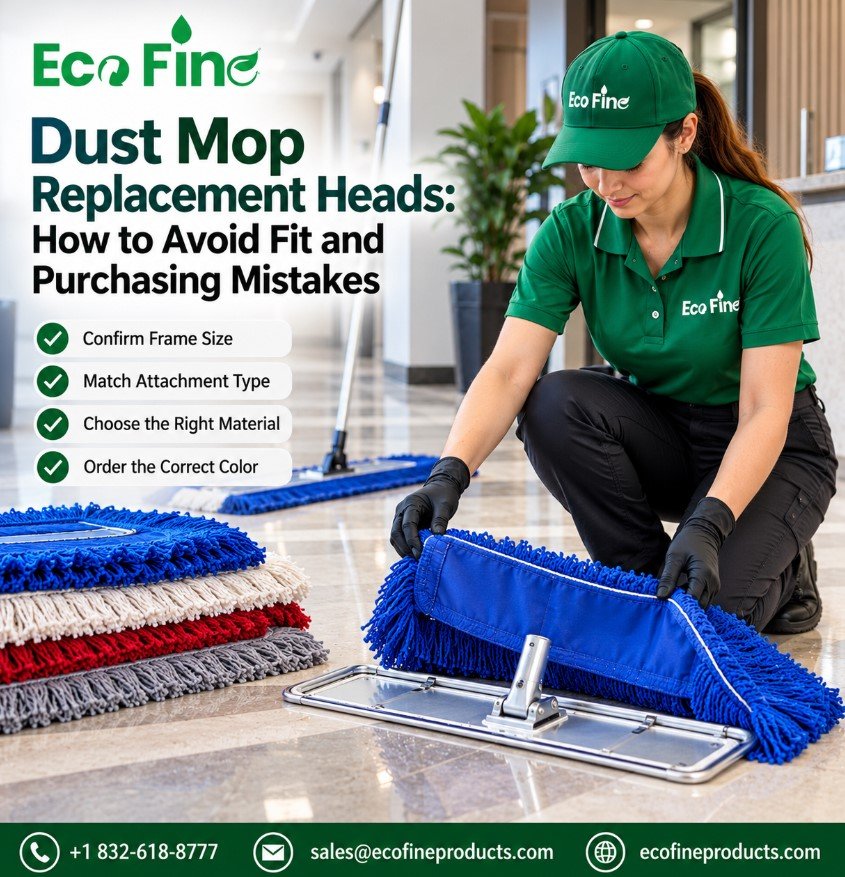
Choosing dust mop replacement heads requires more than matching the advertised length. Confirm frame dimensions, backing fit, closure design, material,