EcoFine Products

Need help?

+1 832-618-8777

Commercial Cleaning Guides

Explore EcoFine’s commercial cleaning guides for product selection, microfiber care, floor-maintenance equipment and business purchasing. The articles support facility managers, cleaning contractors, distributors and other commercial buyers evaluating practical cleaning decisions.

Browse the latest articles below, or open the reader guide to find a topic matching your question. Product-specific instructions and facility procedures should guide the actual cleaning process.

Reader guide, topic directory and FAQs

Find the Guide That Matches Your Question

Start with the decision you need to make. A question about when to retire a cloth is different from a question about how many clean cloths to keep in reserve. Selecting a focused article helps avoid transferring advice from one problem to another.

Describe the observed issue before comparing products. Note the equipment, surface, cleaning solution and care process involved. That context makes an article’s explanation easier to assess against your operation and helps identify information still needed.

Choose a starting topic
Your questionSuggested reading
When should stock be retired?Microfiber cloth replacement decisions
How should costs be compared?Cloth cost per use
How much reserve stock is needed?Inventory and laundry turnaround
Why is a finish streaking?Tracing microfiber streaks
How can samples be compared?Testing wholesale samples

Product Selection and Equipment Fit

Read product comparisons as explanations of relevant differences. Material, construction, dimensions and attachment details can each affect selection. A comparison between two product families is a starting point for reviewing the exact items available.

For floor-care equipment, look for the relationship between the pad or head and the frame or handle. If a pad slips, bunches or fails to cover the working surface, the pad slipping and bunching guide organizes the system checks. Confirm the selected specifications before purchasing replacements.

Care and Cleaning Process Questions

Maintenance articles help identify variables to inspect. A change in residue, lint or handling may involve the cleaning textile, detergent, drying process, surface or operator method. Keep observations connected to the process actually used.

Use the product’s care instructions as the reference for approved washing and drying conditions. Do not transfer a temperature limit, chemical tolerance or service-life figure from a different item simply because both products are described as microfiber.

Inventory and Purchasing Decisions

Buying guides distinguish product quantity from operational demand. Stock in use, material awaiting laundering and clean reserve stock all affect the purchasing discussion. Read inventory examples with your own daily demand and turnaround records available.

Cost comparisons also need a consistent basis. Identify whether a quoted amount refers to an individual cloth, pack or carton. Consider the scope described in the article and replace illustrative assumptions with records from your business before drawing a purchasing conclusion.

Private Label and Distributor Planning

For branded products, begin with the private-label towel specification guide. It connects the intended use with measurable product details, artwork, packaging and sample review.

When a project involves several items, keep each specification separate. A cleaning cloth, drying towel and mop pad may require different construction and evaluation. General branding guidance should support a specific project brief rather than replace it.

Using an Article During a Team Review

Share the article relevant to the current question and identify the section you want the team to consider. Collect observations from the people using, laundering and receiving the products. Their records may explain differences that a product name alone cannot resolve.

For a proposed change, document what is being compared and what result would count as acceptable. Keep the approved product reference with the decision. This makes later review possible without relying on memory or a generic recommendation.

Reading the Full Article

The cards below provide titles and excerpts. Open an article for its complete explanation, examples and qualifications. Use the page controls to browse older entries when a relevant subject is not among the newest posts.

Product availability and order details require confirmation for the selected item. Explore the commercial product catalog or send a focused question through the contact page when the article does not address your exact configuration.

Two Other Useful Starting Points

The color-coded cloth workflow guide addresses how assignments move through storage, use and laundry. Use it when the question concerns organizing a team’s process rather than choosing a color in isolation.

The cut-end versus looped-end comparison separates construction from material and size. Use it to identify the variables in a mop comparison before attributing a price or handling difference to one feature alone. Review the linked article before applying its explanation to a different setting or item. Both topics benefit from specific information about the products and procedures being considered.

Frequently Asked Questions

Who are these commercial cleaning guides for?

They are written for facility teams, cleaning contractors, hospitality operators, distributors and business buyers reviewing cleaning textiles and floor-care processes.

Where should I start with a microfiber problem?

Choose the guide matching the observed problem, such as streaking, pad movement, stock shortages or replacement decisions. Record the conditions before changing products.

Do examples establish my facility’s actual costs?

No. Apply your own purchase, laundry, loss and usage records. An example explains a method; it does not establish your result or a guaranteed saving.

Can a guide confirm a particular frame fit?

Use the exact product and equipment specifications to confirm compatibility. General explanations cannot establish fit for every pad, frame or attachment.

Are article recommendations a replacement for care instructions?

Follow the selected product’s approved care instructions and your facility procedures. Read a guide within that specific operational context.

How do I find older articles?

Use the article listing and its pagination. Select a title to read the full article rather than relying only on the card excerpt.

Where can I check a product mentioned in a guide?

Open the linked product listing and confirm its current specification, pack quantity and availability for the item you are considering.

Can I ask about a business purchasing question?

Yes. Contact EcoFine with the relevant article, product reference and operating requirements so the question can be addressed specifically.


36 Inch Acrylic Dust Mop
Blog

36-Inch Acrylic Dust Mop for Schools and Offices

The 36 Inch Acrylic Dust Mop occupies an important position between compact cleaning equipment and extra-wide industrial systems. For Texas schools and office facilities, that three-foot cleaning width can make practical sense because these buildings often combine open corridors with classrooms, offices, reception areas and furnished spaces. A building’s location does not determine the appropriate cleaning width. The benefit comes from the physical layout: it provides more floor coverage than a 24-inch mop while remaining

Read More »
48 Inch Acrylic Dust Mop
Blog

48-Inch Acrylic Dust Mop: Plan Floor Coverage

The value of a 48 Inch Acrylic Dust Mop becomes easier to understand when the four-foot width is translated into actual floor passes. A 48-inch mop does not clean a fixed number of square feet per hour because walking speed, floor condition, overlap, turning and obstacles vary from one facility to another. What it can do is reduce the number of parallel passes required across a large open floor. Start With Cleaning Width Instead of

Read More »
60 Inch Acrylic Dust Mop
Blog

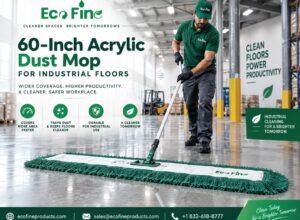
60-Inch Dust Mop: Assess Industrial Cleaning Efficiency

For large industrial floors, cleaning efficiency is often connected to one simple question: how much usable floor can a worker cover with each pass? A 60 Inch Acrylic Dust Mop creates a five-foot-wide cleaning path, making it one of the widest practical options in EcoFine’s commercial Dust Mops / Dry Mops range. That extra width can be extremely useful in warehouses, distribution facilities, manufacturing support areas, exhibition buildings, gymnasiums and other large open spaces. However,

Read More »
60-Inch Acrylic Dust Mop
Blog

60-Inch Acrylic Dust Mop: Plan Suitable Cleaning Routes

A 60-inch acrylic dust mop is not intended to be the universal solution for every room in a building. It is a high-coverage tool for facilities where large, unobstructed floors make width valuable. When used in the right environment, the five-foot cleaning path can help a janitorial worker cover large sections efficiently. When used in the wrong environment, that same width can make turning and positioning unnecessarily difficult. Best Environments for a 60-Inch Dust Mop

Read More »
48-Inch Acrylic Dust Mop
Blog

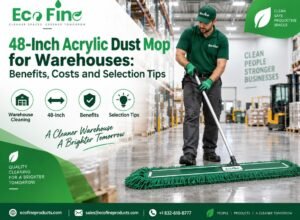
48-Inch Acrylic Dust Mop: Warehouse Selection Guide

A 48 Inch Acrylic Dust Mop is designed for facilities where open floor space makes cleaning width a productivity advantage. Warehouses are the clearest example. Long aisles, staging zones, loading-adjacent interior areas and broad sealed floors can take significantly longer to maintain with compact equipment. A four-foot-wide commercial dust mop gives operators the ability to collect loose dry soil across a larger path with every pass. What a 48-Inch Acrylic Dust Mop Is Designed to

Read More »
36 Inch Acrylic Dust Mop
Blog

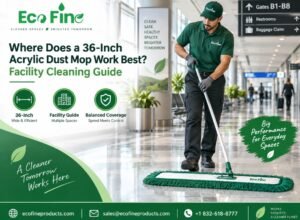
36-Inch Acrylic Dust Mop: Facility Applications Guide

A 36 Inch Acrylic Dust Mop is one of the most flexible sizes for commercial floor maintenance because it sits between the maneuverability of a 24-inch mop and the high coverage of 48-inch and 60-inch systems. For many Texas facilities, that middle position is exactly what cleaning teams need. The head is wide enough to reduce passes in corridors and medium-sized rooms while remaining manageable around doors, corners and moderate amounts of furniture. Schools and

Read More »
24-Inch Acrylic Dust Mop
Blog

24-Inch Acrylic Dust Mop for Small Commercial Spaces

Choosing a 24 Inch Acrylic Dust Mop is less about buying the smallest commercial mop and more about matching the cleaning width to the building. For offices, classrooms, clinics, retail areas, hotel service spaces and other compact commercial environments, 24 inches can provide an effective balance between useful coverage and easy movement around furniture. Why 24 Inches Works Well in Compact Areas A commercial mop needs enough width to make dry floor cleaning efficient, yet

Read More »
Dust Mop vs Dry Mop
Blog

Dust Mop vs Dry Mop: Understand the Buying Terms

For Texas facility managers, choosing between a dust mop and a dry mop is often less complicated than the terminology suggests. In professional janitorial purchasing, these terms frequently overlap because both describe cleaning tools designed to collect loose dust, hair, lint and light debris from hard floors without introducing water. The important purchasing question is not simply whether a supplier calls a product a dust mop or dry mop. Is a Dust Mop the Same

Read More »
20-Inch Microfiber Wet Mop Pad
Blog

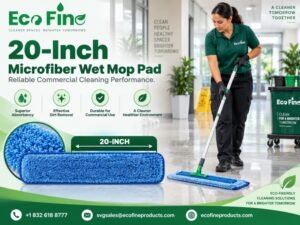
20-Inch Microfiber Wet Mop Pad: Hotel Operations Guide

A 20-inch microfiber wet mop pad can be evaluated as part of a hotel’s planned floor-maintenance routine. The useful question is where this size fits the property’s surfaces, equipment and staffing. Guest corridors, service routes and furnished public areas present different working conditions. Assign the pad to an approved task, confirm its holder and prepare enough clean replacements before introducing it across shifts. Review the 20-inch replacement pad against your equipment specification rather than relying

Read More »
Scroll to Top

Become a Distributor

By checking this box and submitting the form you are consenting to be contacted by SMS text message from EcoFine Products. Message frequency may vary. Message & data rates may apply. Reply STOP to opt out of further messaging. Reply HELP for more information. See our Privacy policy.

Request a Quote

Book a Call

By checking this box and submitting the form you are consenting to be contacted by SMS text message from EcoFine Products. Message frequency may vary. Message & data rates may apply. Reply STOP to opt out of further messaging. Reply HELP for more information. See our Privacy policy.

Contact Form