
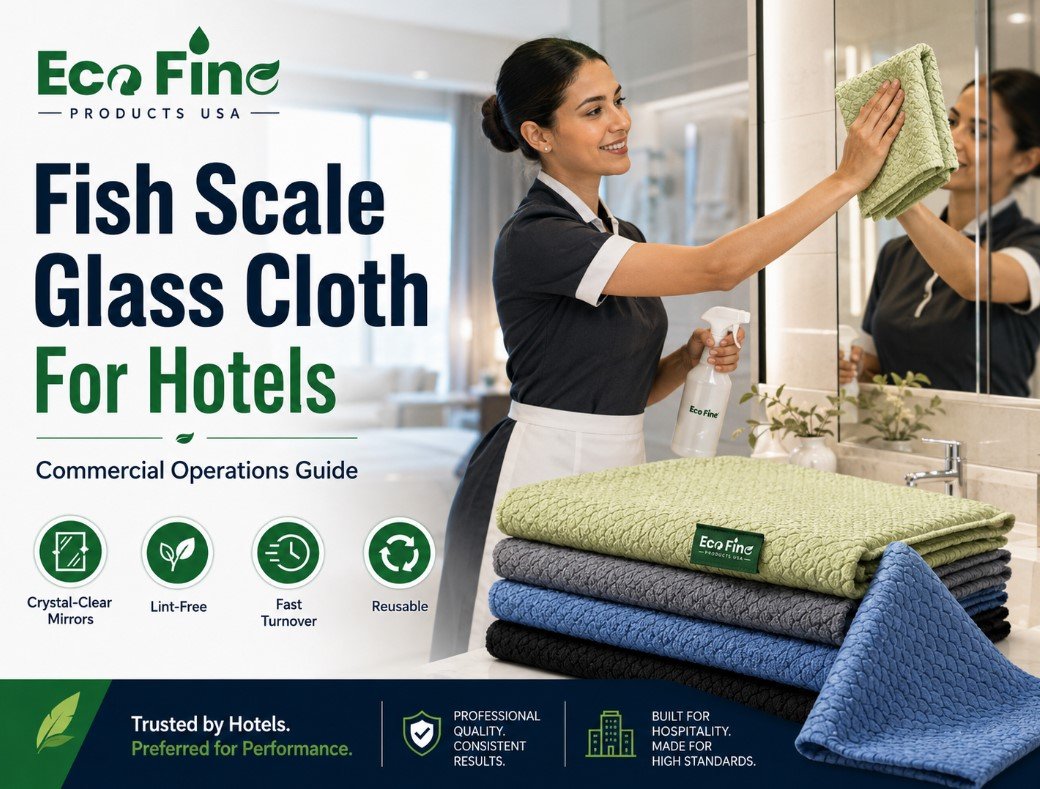
A well-planned product program improves consistency because teams know which item to use, how to maintain it and when to replace it. Premium Fish Scale Glass Cloth can be evaluated against cotton rags or disposable paper towels by measuring productivity, visible results, care needs and total cost per use. This article focuses on fish scale glass cloth for hotels and shows how hotels, janitorial firms, restaurants and auto detailers can introduce the product without keyword stuffing or unsupported performance promises.
Where Fish Scale Glass Cloth For Hotels Fits in the Workflow
The product is designed for glass, mirror and stainless-steel cleaning and may be assigned to windows, mirrors, windshields and stainless steel. A written task assignment matters because even a strong reusable product can underperform when employees use it on the wrong surface or with an incompatible chemical. Define the approved zone, soil type, method and care process before introducing it across multiple shifts.
Fish Scale Glass Cloth Versus Common Alternatives
Compared with cotton rags or disposable paper towels, fish scale glass cloth offers a different balance of low-lint, streak-free glass finishing. The alternative may still be appropriate for another task. The goal is not to claim that one product is universally superior; it is to select the option that completes the approved task with less rework, safe handling and a predictable replacement schedule.
Operational Benefits for Hotels
For hotels, consistency is often more valuable than a dramatic one-time result. Employees need a product that is easy to identify, use and return to the correct storage point. Premium Fish Scale Glass Cloth can support this process when its fish-scale microfiber weave is matched with clear instructions and adequate clean stock.
Specification and Compatibility Checklist
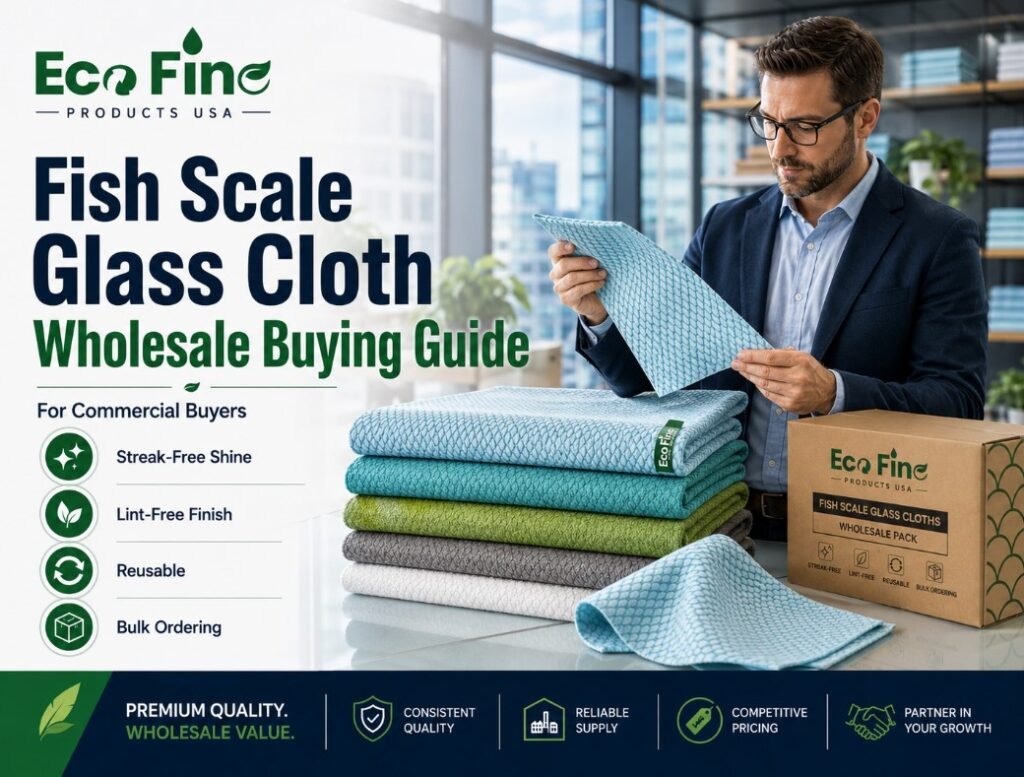
Confirm the product’s Confirm available sizes, construction, compatible tool or surface, color, packaging and maintenance method. Ask whether specifications can change between retail and wholesale packs. For private-label orders, confirm the tolerance for size, weight, shade and packaging. This checklist makes fish scale glass cloth for hotels more useful for procurement-focused readers.
| Workflow Stage | Decision | Metric |
| Task assignment | glass, mirror and stainless-steel cleaning | Correct product selection and reduced cross-use |
| Work area | windows, mirrors, windshields, stainless steel | Compatibility and visible result |
| Employee setup | Confirm available sizes | Preparation time and handling |
| Performance review | low-lint, streak-free glass finishing | Task time, rework and employee feedback |
| Care and storage | Follow current EcoFine and facility instructions | Condition after repeated cycles |
| Reorder control | Record approved URL, pack and specification | Consistent repeat supply |
Real Market Prices Checked for 2026
Indicative market prices are shown below. They combine EcoFine’s current listed price where available with public retail or private-label benchmarks relevant to the product class. Prices are not fixed offers and may change with quantity, specification and freight. Recheck them immediately before publishing or sending a commercial quotation.
| Market Product | Format | Indicative Price |
| EcoFine listed product price | Current product listing | $8.09 |
| Single glass-cleaning cloth | Retail | $1.50–$3.00 |
| Six-piece glass cloth pack | Retail | $8–$15 |
| Commercial 100-piece order | Wholesale benchmark | $80–$150 |
 Building a Cost-Per-Use Model
Begin with the delivered purchase cost, then add labor for setup, use, care and inventory handling. Subtract any reduction in disposables or rework. Divide the total by the number of acceptable tasks or cycles. A product with a higher opening price may be cost-effective when it lasts longer, but only facility data can prove the result. This prevents exaggerated ROI claims in SEO content.
Care, Storage and Replacement Controls
Follow the current product instructions and separate clean items from used or contaminated stock. Avoid treatments that damage the functional construction. Store products dry, inspect connectors or edges, and remove items that no longer produce an acceptable result. Set reorder points that account for products in use, products awaiting care and reserve inventory.
Related Cleaning Guides and Care Resources
For additional planning, review EcoFine’s guide to benefits of reusable eco-friendly microfiber cloths and its explanation of microfiber versus cotton cleaning cloth comparison. These resources help commercial teams connect product selection with laundering, surface care, staff training and reusable inventory management.
You may also find these resources helpful:
- Color-Coded Microfiber Cloths
- 320 GSM Microfiber Cloths
- 300 GSM Microfiber Cloths for Commercial Cleaning
- 360 GSM Microfiber Towels
- Why 12×12 Microfiber Cloths Are Popular
- 16×16 Microfiber Cloths Bulk
- Wholesale Microfiber Towels in the USA
- Best Microfiber Towels for Car Detailing
- Waffle Weave Microfiber Towels Guide
- Microfiber Cleaning Products for Modern Homes
Related Products:
- Microfiber Double-Sided Mop Pad
- 18″ Microfiber Wet Mop Pad
- Microfiber Tube Mop
- Microfiber Waffle Cloth
- Microfiber Shiny Glass Cloth
- Microfiber 3-in-1 Cleaning Cloth
- Microfiber Multipurpose Cloth Roll 12×12
- Microfiber Terry Cloth 16×16
- 60″ Heavy Duty Microfiber Wet Mop Pad
- Microfiber Terry Stripe Cloth
- Flat Mop Frame
- Cotton Mop
- 48″ Microfiber Wet Mop Pads
- 36″ Commercial Wet Mop Pad
- 24″ Commercial Wet Mop Pad
- 20″ Microfiber Wet Mop Replacement Pad
- Microfiber Terry Check Cloth
- Microfiber Terry Cloth 30×30
- Microfiber Glass Cloth
- Scrubbing Kitchen Cloth
- Microfiber Waffle Check Cloth
- Microfiber Scrubbing Cloth
- Fish Scale Glass Cloth
- Bamboo Multipurpose Cloth
- Bamboo Fiber Towel
- Microfiber Car Cleaning Cloth
- Aluminum Mop Handles
- Dust Mop Frame
- Commercial Flat Mop Frame
These products help hotels, healthcare facilities, janitorial contractors, and facility management companies maintain high cleanliness standards while streamlining procurement.
Frequently Asked Questions About Fish Scale Glass Cloth
1. Where should fish scale glass cloth be used first?
Begin in one controlled area that represents the normal workload. Use the trial to confirm task fit, employee handling, care requirements and visible results before expanding.
2. How many fish scale glass cloth units should a facility keep?
Inventory should cover items in active use, items awaiting care, clean reserve stock and expected losses. The correct par level depends on shift frequency and turnaround time.
3. How should staff be trained to use fish scale glass cloth?
Demonstrate the approved surface or route, method, chemical, loading limit and return procedure. Supervisors should observe the first shifts and correct cross-use early.
4. What performance should be monitored for fish scale glass cloth?
Track task time, visible finish, rework, product damage, employee feedback and replacement frequency. For reusable products, monitor performance after repeated care cycles.
5. Can fish scale glass cloth be used with every cleaning chemical?
Not automatically. Follow the surface and chemical manufacturer instructions, review EcoFine’s care guidance and test compatibility before a site-wide rollout.
6. When should fish scale glass cloth be replaced?
Replace it when damage, wear, poor fit or declining performance prevents the approved result. A documented inspection standard gives teams a consistent decision rule.
7. How should used fish scale glass cloth be stored before cleaning?
Keep used items separated from clean inventory and from products assigned to other hygiene zones. Follow the facility’s handling and laundering policy.
8. Does fish scale glass cloth support color-coded cleaning?
Color coding may support task or zone control when the required colors are available. The meaning of each color should be documented on carts, shelves and training materials.
9. What information is needed for a repeat order of fish scale glass cloth?
Record the approved product URL, size, construction, color, pack format, carton quantity and supplier quotation. This helps prevent accidental substitutions.
10. How can buyers request current pricing for fish scale glass cloth?
Send EcoFine the required quantity, application, specification, packaging, destination and delivery timing. Ask for a written quote because market prices and freight can change.